Renter-Friendly Solutions • 12 min read
Best No-Drill Wall Shelves That Don’t Fall
 MyGlowHome Editorial
Introduction
Most advice about no-drill wall shelves ignores how people actually use them. They show perfect setups with light décor, but real life is different. People store books, kitchen items, tools, and daily essentials that add real weight over time.
The result is predictable: shelves fall, adhesives fail, and renters assume all no-drill solutions are unreliable. The truth is more specific. Some systems fail because they are misused, while others fail because they were never designed for heavy load in the first place. This guide focuses only on methods that are actually used successfully in real homes, especially rental spaces where drilling is not an option.
If you're still figuring out which storage approach fits your situation, see which no-drill storage system is right for your rental before committing to wall-mounted options.
Understanding the Real Problem
Before choosing a solution, it’s important to understand why most no-drill setups fail:
- Wall surface incompatibility (paint texture, dust, humidity)
- Overloading beyond safe weight limits
- Uneven weight distribution on shelves
- Ignoring installation curing time
Most failures are not product defects. They are expectation mismatches.
Weight Limits Reference Table
Before selecting a no-drill system, understand what each method can realistically support. These limits account for ideal installation conditions; real-world reliability is often lower under imperfect circumstances.
System | Safe Weight Range | Practical Limit | Key Conditions | Degradation Pattern |
|---|---|---|---|---|
Tension Rod Shelving | 15–40 kg (33–88 lbs) | 30 kg (66 lbs) | Requires proper floor/ceiling contact, even weight distribution | Gradual sagging if pressure contact weakens |
Acrylic Floating (adhesive-mounted) | 2–8 lbs (0.9–3.6 kg) | 5 lbs (2.3 kg) | Smooth painted drywall, 24-hour cure time, clean dry surface | Sudden failure without warning |
Freestanding Leaning Shelves |
Critical notes:
- Ideal conditions (smooth walls, proper curing, even weight) rarely occur in rental environments. Reduce stated limits by 20–30% for realistic planning.
- Humidity and temperature weaken adhesive-based systems within 3–6 months. Mechanical systems (tension rods, freestanding) are unaffected.
- Dynamic loads (doors opening/closing, vibration, repeated access) cause faster failure than static loads in all systems.
- Vertical vs. distributed weight: A single 5 kg item on an acrylic shelf causes greater stress than the same weight spread across multiple smaller items.
The numbers on the packaging rarely reflect what a shelf will hold in daily use how much weight no-drill storage can hold gives you the real working limits.
Tested Products by System Type
Not all products matching the same weight spec perform equally. Here's what actually delivers in real rental environments.
Here's the verified Product Comparison Table with factual 2026 data:
Product | Verified Price Range | Weight Limit (Verified) | Best Use Case | Key Trade-off | Real-World Durability Notes |
|---|---|---|---|---|---|
Tension Rod Systems | |||||
ALLZONE 5-Tier Narrow Bookshelf (tension mount, 92-116") | $85–120 | 30 lbs per shelf | Closets, narrow living rooms, pantries | Requires exact ceiling height; pressure contact is critical |
Best No-Drill Wall Shelf Methods That Actually Work
1. Tension Rod Shelving Systems
This is the only truly mechanical no-drill system that does not rely on adhesives. It uses pressure between floor and ceiling for stability.
Why it works: Force is distributed vertically instead of relying on wall adhesion.
Safe weight range: 15–40 kg (depending on build quality)
Best for:
- Closets
- Pantry storage
- Laundry areas
- Rental apartments needing real storage
Real-world insight: This system is the closest replacement for drilled shelving because it behaves structurally rather than chemically.
Limitations:
- Requires correct height adjustment
- Needs solid ceiling and floor contact
A rare but highly practical option in this category is a floor-to-ceiling tension-mounted bookshelf system designed for narrow spaces, offering a stable no-drill storage solution for books, décor, and light household items in living rooms, bedrooms, and compact apartments.
2. Acrylic Floating Shelves
Acrylic floating shelves are a no-drill wall storage option that uses adhesive mounting strips rather than brackets or screws. They are strictly light-duty display surfaces not functional storage shelves.
Why it works: Adhesive strips bond to smooth, clean wall surfaces and distribute the shelf's weight across the contact area. On well-prepped, smooth painted walls, this bond is reliable for light static loads.
Safe weight range: 2–8 lbs (adhesive-mounted)
The upper end of this range requires ideal conditions: smooth painted drywall, clean and dry surface, 24-hour cure time before loading, and evenly distributed weight. In practice, treat 5 lbs as your real working limit.
Best for:
- Small décor items and figurines
- Makeup, skincare, and small bottles
- Light bathroom accessories
- Candles and plants under 2 lbs
- Minimal wall display setups
Common failure scenarios:
- Overloading with books or anything heavy
- Humid bathroom environments weakening adhesive bond
- Textured, dusty, or freshly painted walls
- Loading before the adhesive has fully cured
Real-world insight: Acrylic floating shelves are display tools, not storage solutions. If you need to store items you actually use and refill bottles, jars, kitchen supplies use a tension rod system or freestanding unit instead. Acrylic shelves are for items you look at, not items you reach for daily.
A suitable option for light wall organization is an acrylic floating shelf designed for minimal, damage-free storage of small items and decorative setups.
3. Freestanding Leaning Shelves
This option removes wall dependency entirely.
Why it works: Stability comes from floor-based structural design.
Safe weight range: 20–60 kg depending on material
Best for:
- Living rooms
- Books and décor
- Plant displays
Advantages:
- No wall damage risk
- High load capacity
- Visually aesthetic
Limitations:
- Requires floor space
- Higher cost than adhesive systems
A ladder-style leaning shelf unit or modern freestanding bookshelf system is one of the most stable no-drill options for long-term home storage and display use.
4. Over-the-Door Storage Systems
Why it works: Uses door frame support instead of walls.
Safe weight range: 5–15 kg
Best for:
- Shoes
- Toiletries
- Light pantry items
Limitations:
- Movement when opening/closing door
- Limited load capacity
Over-the-door storage rack organizers are a practical choice for renters often paired with renter-friendly hook systems or small spaces where wall mounting is not possible and lightweight vertical storage is needed.
5. Nano Tape and Gel Pads
Nano tape and gel pad systems are often marketed as versatile no-drill mounting solutions, but in reality they are only suitable for very light, temporary use cases, not structural storage.
Safe weight range:
1–5 kg (and only under ideal surface conditions)
Best for:
- Small décor items
- Remote holders
- Lightweight wall accessories
- Temporary setups or repositionable items
Limitations:
- Weak performance in heat or humid environments
- Gradual slippage over time rather than immediate failure
- Poor reliability on textured, dusty, or painted walls
- Not suitable for vertical load-bearing storage
Nano grip tape and reusable gel pads are best treated as temporary positioning tools rather than permanent mounting solutions, especially in rental or frequently changing setups.
A heavy-duty Nano grip tape or reusable gel mounting pad system can be useful for light organization tasks where flexibility matters more than long-term load stability.
Critical Mistakes People Make (And Why They Matter)
Mistake 1: Stacking weight vertically instead of horizontally
What happens: You load a 5 lbs acrylic shelf with books: 2 lbs near the wall, 3 lbs at the edge. The adhesive bond experiences shear stress at the bracket joint, not compression. The shelf fails at 3 lbs instead of the rated 5 lbs.
Fix: Distribute weight toward the wall. Heaviest items closest to wall contact. Never overload the edge; treat shelves as 60% wall-side, 40% edge.
Mistake 2: Ignoring surface prep as a "minor detail"
What happens: Your drywall looks clean but has dust, residual paint texture, or humidity-trapped film. You install adhesive shelves without wiping with rubbing alcohol. The strips bond to the dust layer, not the wall. Failure occurs within weeks.
Real example: Bathroom shelf fails after 2 months holding only 3 lbs. Owner thought adhesive was defective. Actual cause: humidity made dust sticky enough to appear bonded, but the bond was to dust, not drywall.
Fix: Wipe the wall with 90%+ isopropyl alcohol 30 minutes before installation. Let it dry completely. Test the surface by rubbing hard if dust comes off, repeat.
Mistake 3: Loading before cure time completes
What happens: Instructions say "24 hours," you load at 20 hours because the shelf feels solid. Adhesive is chemically incomplete. Weight causes microscopic separation that accelerates over days, leading to sudden collapse.
Real example: Shelf holds 5 lbs for 3 days, then fails on day 4 with no warning.
Fix: Cure time varies: standard 24 hours, heavy-duty 48 hours. If unsure, wait 48. Set a phone reminder to load after, not before.
Mistake 4: Assuming all tension rod systems are the same
What happens: You buy a $20 tension rod system rated 15 kg. It wobbles at 10 kg. You think no-drill shelving "doesn't work." Actual issue: cheap systems have poor pressure calibration and loose joints.
Real example: Mid-range tension system ($120) holds 35 kg steady for 3 years. Budget system ($25) holds 10 kg and shifts monthly.
Fix: Tension systems degrade with use. Budget for mid-range ($80–150). If pressure contact is loose, the system is already failing.
Mistake 5: Using wrong system for your actual use case
What happens: You choose acrylic shelves for "light kitchen storage." You stock them with jars, bottles, and containers you refill weekly. Within months, repeated access vibration plus weight cycling causes failure.
Real example: A shelf rated for static 5 lbs fails at 4 lbs when accessed daily because dynamic loading (vibration from door closing, shelf movement from retrieval) weakens adhesive bonds 40% faster than static load.
Fix: Match system to actual usage, not item weight alone. Daily-access items need tension rods or freestanding units. Display-only items can use adhesive.
If you want a detailed breakdown of the most common failure patterns, see Common No-Drill Storage Mistakes Renters Make.
Real Decision Guide
- Heavy storage needs: tension rod systems
- Bathroom/kitchen light storage: adhesive shelves
- Zero wall risk preference: freestanding shelves
- Temporary lightweight use: Nano tape or door systems
There is no universal solution. Selection depends on load type, surface condition, and permanence requirements.
Why These Systems Work or Fail
Mechanical systems distribute force through structure, increasing stability under load. Adhesive systems rely on molecular bonding, which degrades under heat, moisture, and uneven stress. This is why identical products can succeed in one environment and fail in another. Understanding this difference is more important than the product itself.
Conclusion
No-drill shelving is not a single solution but a category of trade-offs between stability, surface compatibility, and weight capacity. The most reliable systems are those aligned with physical load principles rather than adhesive strength alone. When chosen correctly, these systems can replace drilled shelving in rental environments without compromising safety or functionality.
When it's time to move out, the removal process matters as much as the install how to remove adhesive hooks without damage walks through every step.
Suggested Posts
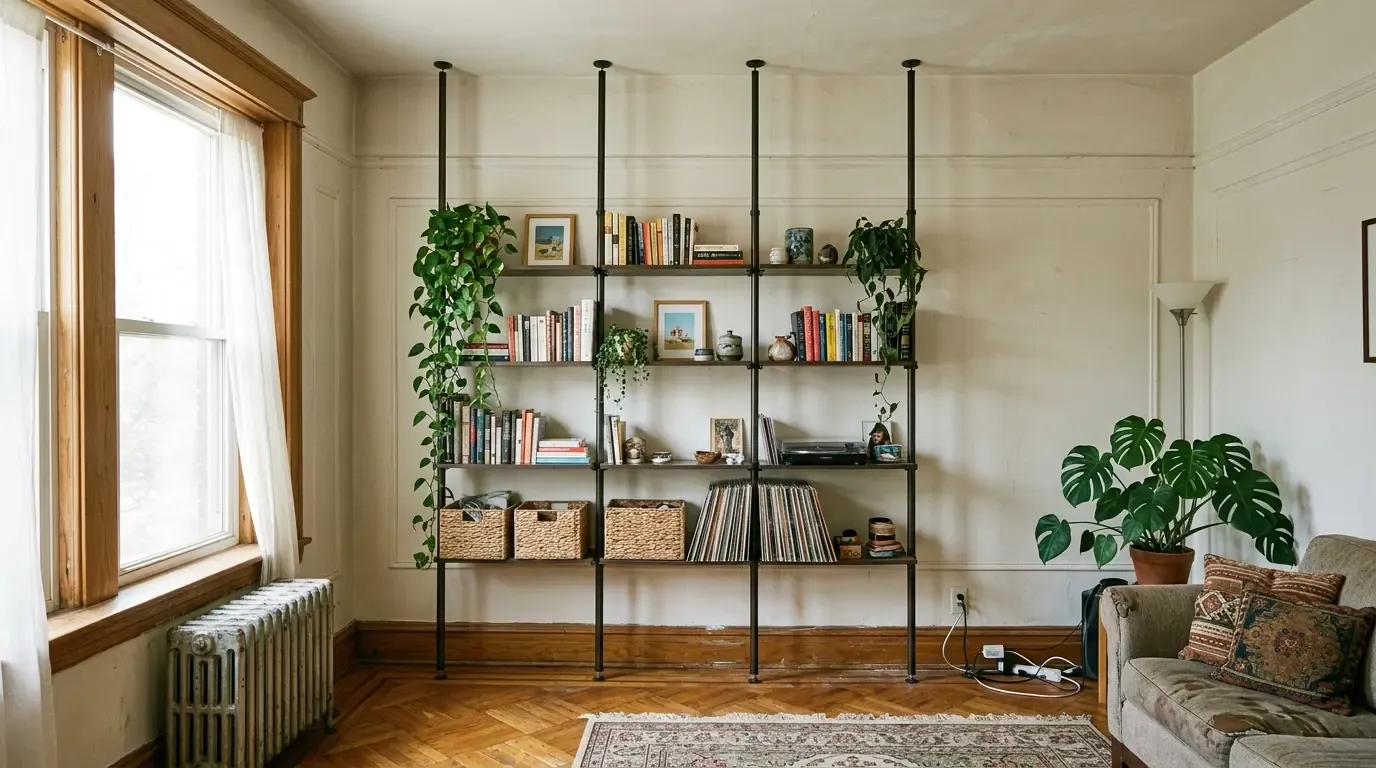 Best Tension Shelf Units for Apartments
A ranked list of the best tension pole shelf units for apartments covering load capacity, ceiling height compatibility, and stability without wall anchoring.
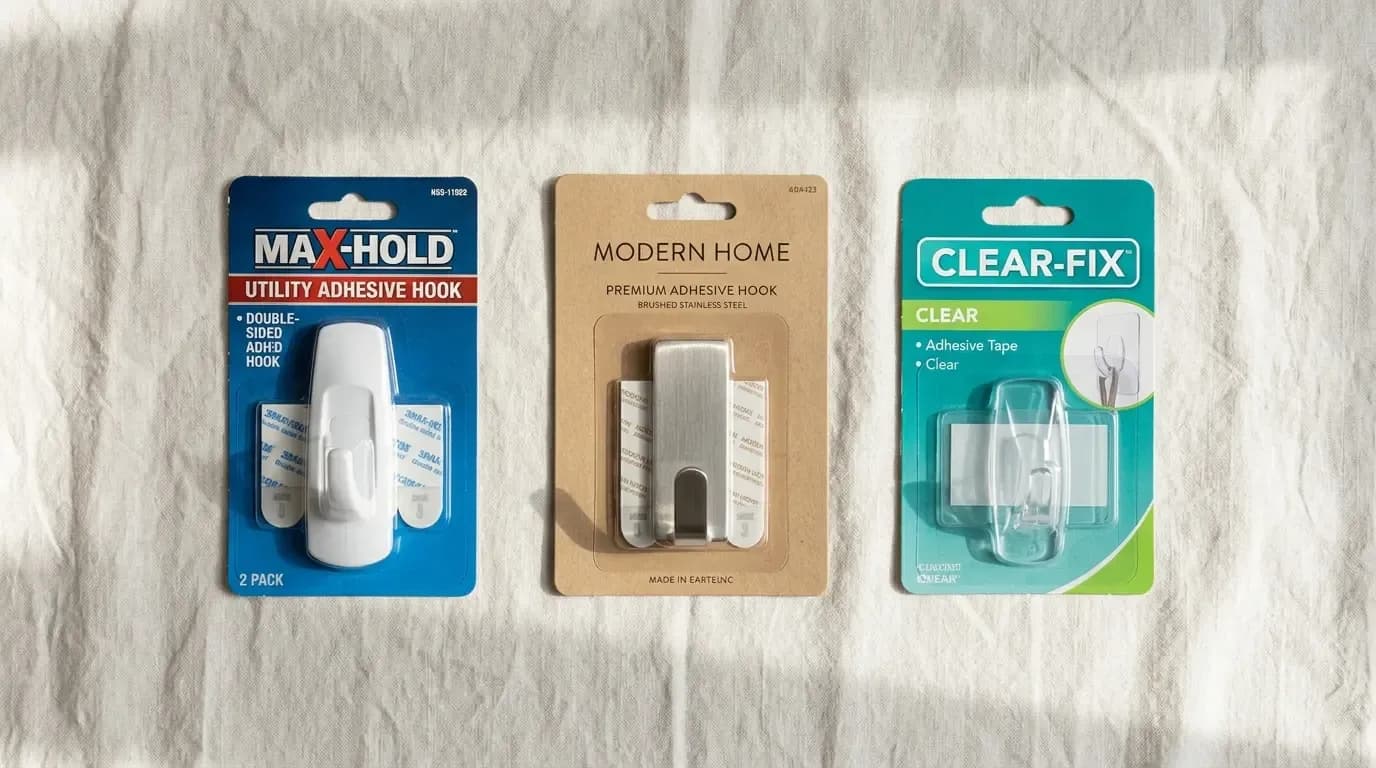 Gorilla vs 3M vs Command: Adhesive Hooks Ranked
A direct brand comparison of Gorilla, 3M, and Command adhesive hooks covering weight performance, surface tolerance, and removal reliability for renters.
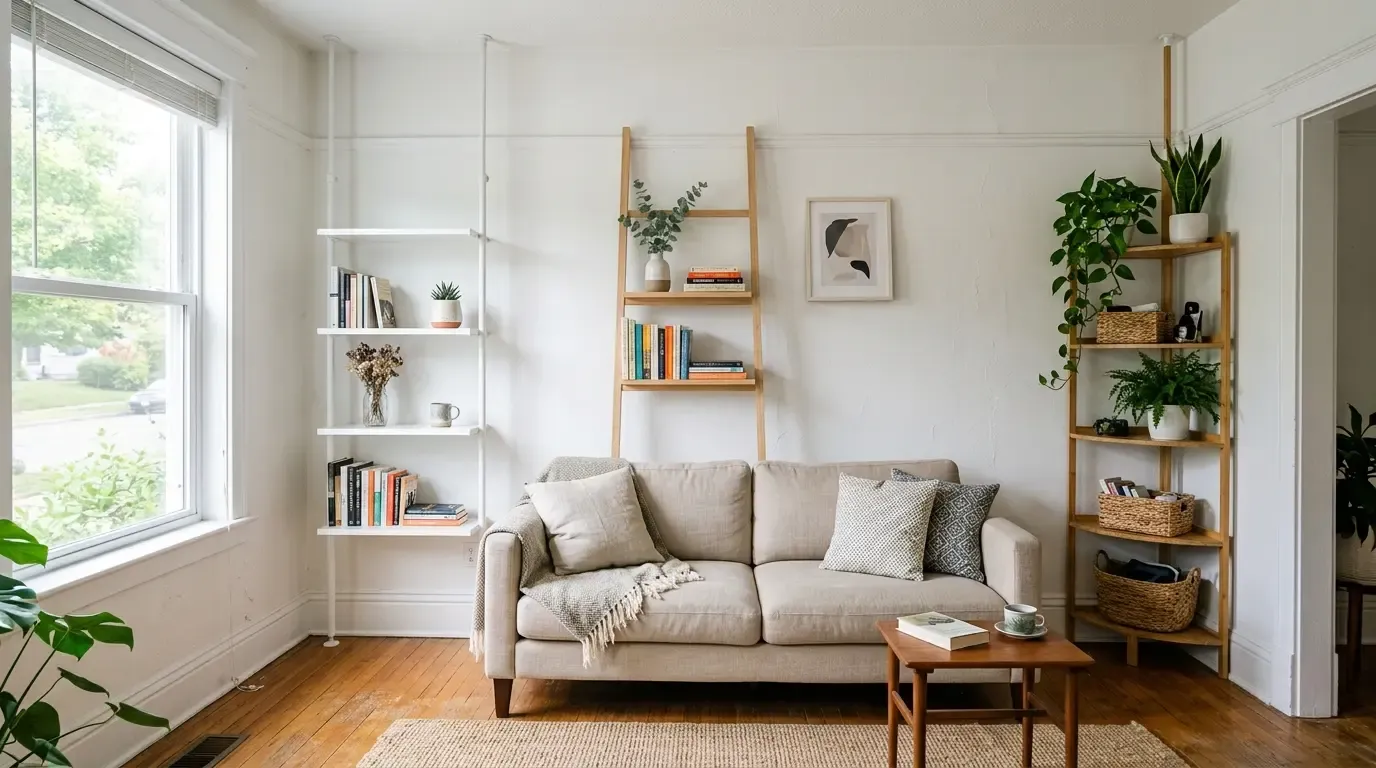 Best No-Drill Shelves for Renters 2026
A ranked list of the best no-drill shelf options for renters in 2026, tested by load type and surface compatibility, with deposit-safe picks for every room.
Comments
No comments yet. Be the first to comment!