Renter-Friendly Solutions • 14 min read
Which No-Drill Storage System Actually Works for You (Full Guide)
 MyGlowHome Editorial
Introduction
Most renters don’t struggle with finding storage products. They struggle with choosing the right one for their situation. That’s why setups fail not because the products are bad, but because they are mismatched to real-world use. Different no-drill systems behave differently under weight, surface conditions, and usage frequency. Treating them as interchangeable is the fastest way to end up with unstable or short-lived setups.
The Core Decision: Match System to Load and Surface
Before choosing anything, evaluate two things:
- What are you storing? (weight + frequency of use)
- Where are you placing it? (wall type + space constraints)
Every no-drill system falls into one of three categories:
- Structural systems (support weight physically)
- Adhesive systems (rely on surface bonding)
- Hybrid systems (use existing structures like doors or rods)
Understanding this difference removes most guesswork.
1. When You Need Real Storage
Use: Tension-Based Systems or Freestanding Units
If you’re storing books, kitchen supplies, or bulk items, adhesive solutions will fail over time. A reliable option for heavier storage needs is a tension storage rack system that uses floor-to-ceiling pressure to create stable shelving without relying on wall mounting.
Why it works:
- Uses floor-to-ceiling pressure
- Distributes load vertically
- Doesn’t rely on wall strength
When to choose this:
- Closets and pantry areas
- Long-term storage
- Medium to heavy weight
When not to use:
- Weak ceiling/floor surfaces
- Spaces with uneven height
For closets and pantry areas specifically, freestanding shelving units for renters covers the full range of unit types and weight ratings. If you're working with a bedroom that has no built-in closet at all, bedroom storage without a closet walks through building a complete freestanding system from scratch.
2. When You Need Light, Accessible Storage
Use: Adhesive Hooks and Lightweight Shelves
For daily-use items like keys, tools, or small accessories, adhesive systems are efficient when used correctly. A suitable option for light wall storage is no-drill floating shelves designed for small decorative items and lightweight organization without damaging walls.
Why they work:
- Quick installation
- No structural setup required
- Ideal for frequent access
Where they fail:
- Heavy loads
- Humid or dusty surfaces
If you're unsure how much weight these can actually handle, the strongest adhesive hooks for renters covers real holding capacity by hook type. For the full numbers on Command strips, tension rods, and suction cups, see how much weight no-drill storage can hold.
3. When You Want Zero Wall Risk
Use: Freestanding or Over-the-Door Systems
If avoiding wall contact is your priority, these systems remove risk entirely. A space-efficient alternative for renters is an over door storage rack that turns unused door space into functional storage for lightweight items without any permanent installation.
Why it works:
- No wall dependency
- Easy to install and remove
Limitations:
- Limited capacity
- Movement with door usage
These setups work best in small apartments where flexibility matters more than maximum storage. Over the door organizers for renters covers the exact hook sizing and door gap requirements that determine whether a specific organizer fits your rental. For small apartments where floor space is the constraint, damage-free wall storage for small apartments covers how to combine wall-free systems effectively.
4. When You Need Flexible Storage
Use: Tension Rod Systems
Tension rods are ideal for modular setups that change over time. A flexible option for closet organization is an adjustable closet tension rod that expands hanging capacity by creating extra support layers inside existing wardrobe space without drilling.
Why it works:
- Adjustable height and width
- Works in multiple rooms
- Easy to reposition
Where it fits best:
- Closets
- Kitchens
- Bathrooms
For full setups using this system, Tension rod storage ideas covers the full range of applications closets, kitchens, bathrooms, and corners including which span widths and surfaces they work on reliably.
5. When Your Walls Are the Problem
Some rental walls reject standard no-drill solutions entirely. Textured, tiled, or brick surfaces change which systems are viable before you even look at products.
If your bathroom or kitchen has tile, the surface type glazed versus matte versus stone determines what will and won't hold. No-drill storage on tile walls covers the surface test, correct installation method, and what to do when the tile fails the test entirely. Or if your walls are brick, exposed stone, or heavily textured plaster, adhesive systems are largely off the table. No-drill storage on brick and textured walls explains why and walks through the wall-independent systems that work regardless of surface.
6. Choosing by Room
The right system for a kitchen is not the same as the right system for a bathroom or a home office. Each room has different humidity levels, surface types, access frequency, and weight requirements.
Use these guides to go straight to the setup that fits each space:
- Kitchen: no-drill kitchen storage ideas - under-sink, cabinet door interiors, counter space, and the refrigerator side panel
- Bathroom: no-drill bathroom storage ideas - tile rules, shower caddies, under-sink, and over-door
- Bedroom: space-saving storage for small rental rooms - vertical zones, closet expansion, and under-bed
- Closet: no-drill closet organizers - hanging doublers, tension shelves, and shelf dividers
- Home office: no-drill home office storage - desk systems, vertical storage, and cable management without drilling
- Shower: no-drill shower organizers - tension pole vs suction vs over-showerhead options
7. Choosing by Situation
Some storage decisions are driven by a specific circumstance rather than a room. These guides cover the scenarios that don't fit neatly into a room category:
- Storing a bike: no-drill bike storage for apartments - freestanding stands and tension pole mounts
- Renting with kids: no-drill storage for renters with kids - safe storage heights, tip-over prevention, and cabinet locks
- Maximizing a small space: how to maximize storage in a rental - zone-based strategy for the whole apartment
- Window treatments without drilling: no-drill curtain rods for renters - tension rods, adhesive brackets, and floor-to-ceiling systems
8. System Deep Dives
If you want to go deeper on a specific system type before deciding, these guides cover each one in full:
- Wall shelves: no-drill wall shelves - tension systems, acrylic shelves, freestanding leaning shelves, and over-door options with real weight ranges
- Command strips: Command strip hacks that hold weight - correct usage, load distribution, and the five applications most renters miss
- Magnetic storage: magnetic storage solutions for renters - where magnets actually work in a rental and what surfaces to test first
- Whole-home setup: no-drill storage setup for each room - a room-by-room system guide that combines all of the above
Where Most Setups Go Wrong
Picking Strength Over Suitability
People often choose what seems strongest instead of what actually fits their storage needs and environment.
Overlooking Wall Conditions
Adhesive-based systems are only as reliable as the surface they’re applied to. Dust, texture, and humidity all reduce performance.
Treating Light Systems Like Heavy-Duty Solutions
Even well-made products will fail if they’re used beyond their intended load or purpose.
For a detailed breakdown of every failure pattern overloading, surface incompatibility, skipped cure time, and load creep see no-drill storage mistakes that cause shelves to fall. And for the move-out side of this: how to remove adhesive hooks without damage covers the exact removal technique that prevents paint damage, including what to do differently on tile versus drywall.
Safety
Childproofing: If you have young children, freestanding unit stability becomes a safety issue, not just a storage one. How to childproof no-drill shelves covers anti-tip straps, correct hook placement heights, and adhesive cabinet locks all without drilling.
Quick Decision Framework
If you need:
- Heavy storage → tension rack systems
- Light daily use → adhesive hooks or shelves
- No wall contact → door or freestanding systems
- Flexible setups → tension rods
There is no universal best system only the best match for your situation.
Final Conclusion
Choosing the right no-drill storage system is less about finding the strongest option and more about selecting the correct type for the job. When systems are matched properly to load, surface, and usage pattern, even simple setups can perform reliably over time.
The mistake most renters make is trying to force one system to handle everything. The better approach is combining multiple systems, each used where it performs best.
Suggested Posts
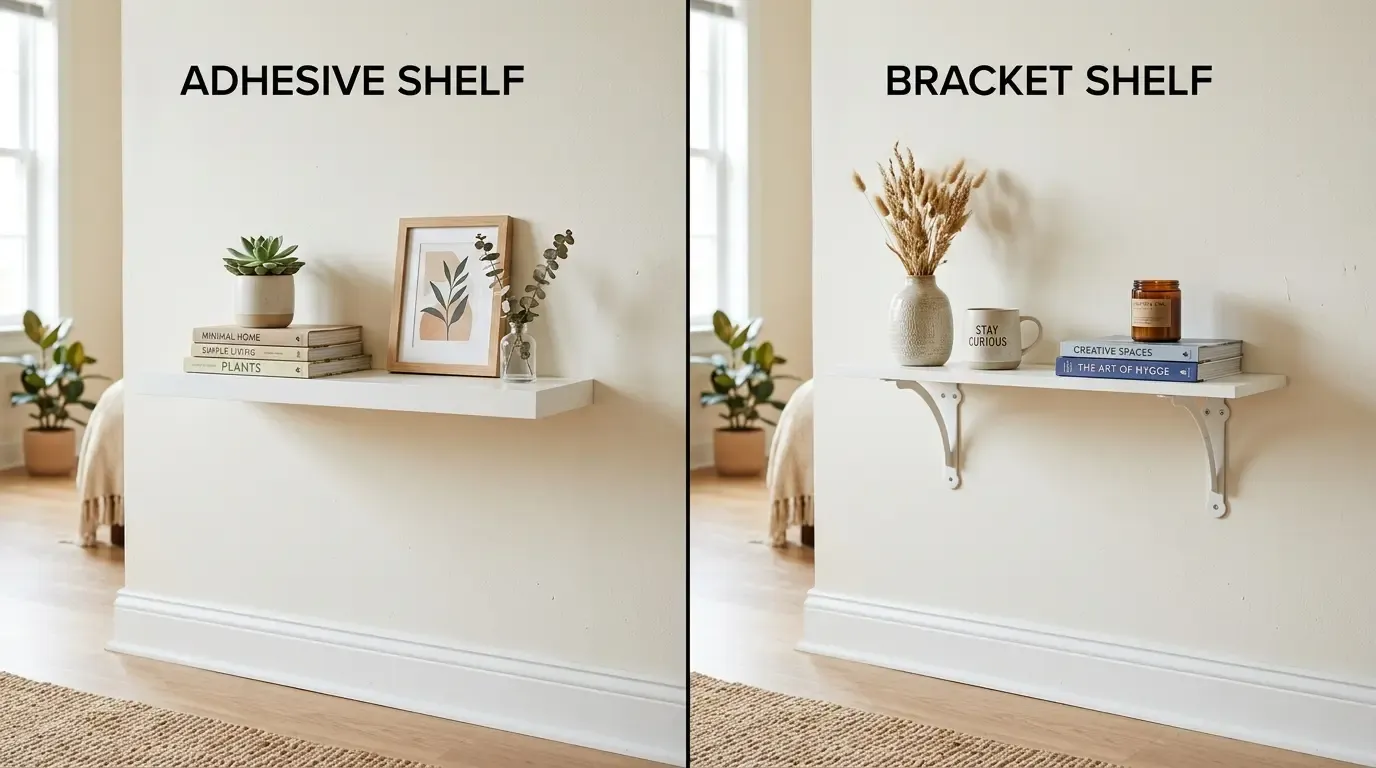 No-Drill vs Mounted Shelves for Renters
A direct comparison of no-drill and traditional mounted shelves weight capacity, surface damage, cost, and when each one makes sense for renters.
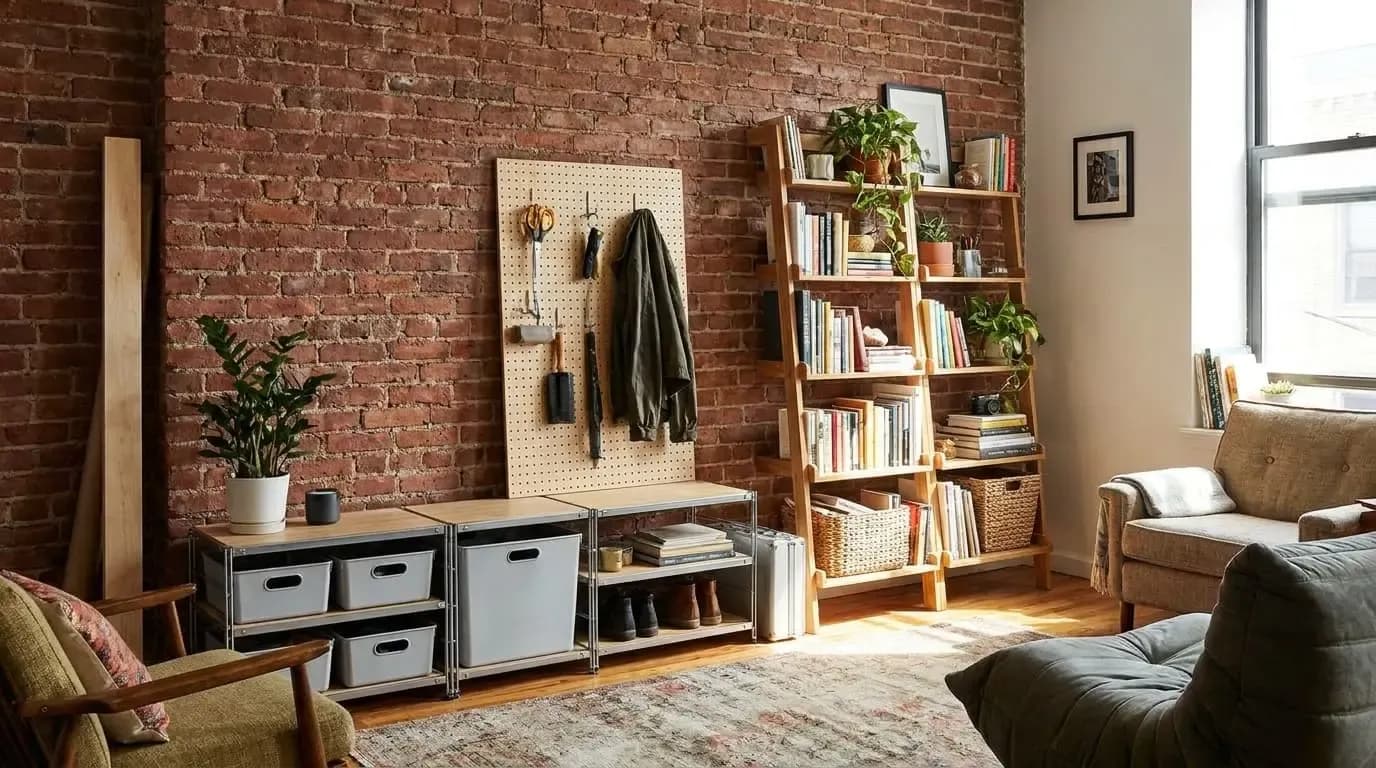 No Drill Storage on Brick and Textured Walls
No drill storage on brick and textured walls why standard adhesive solutions fail and which approaches actually work when your rental walls are not smooth.
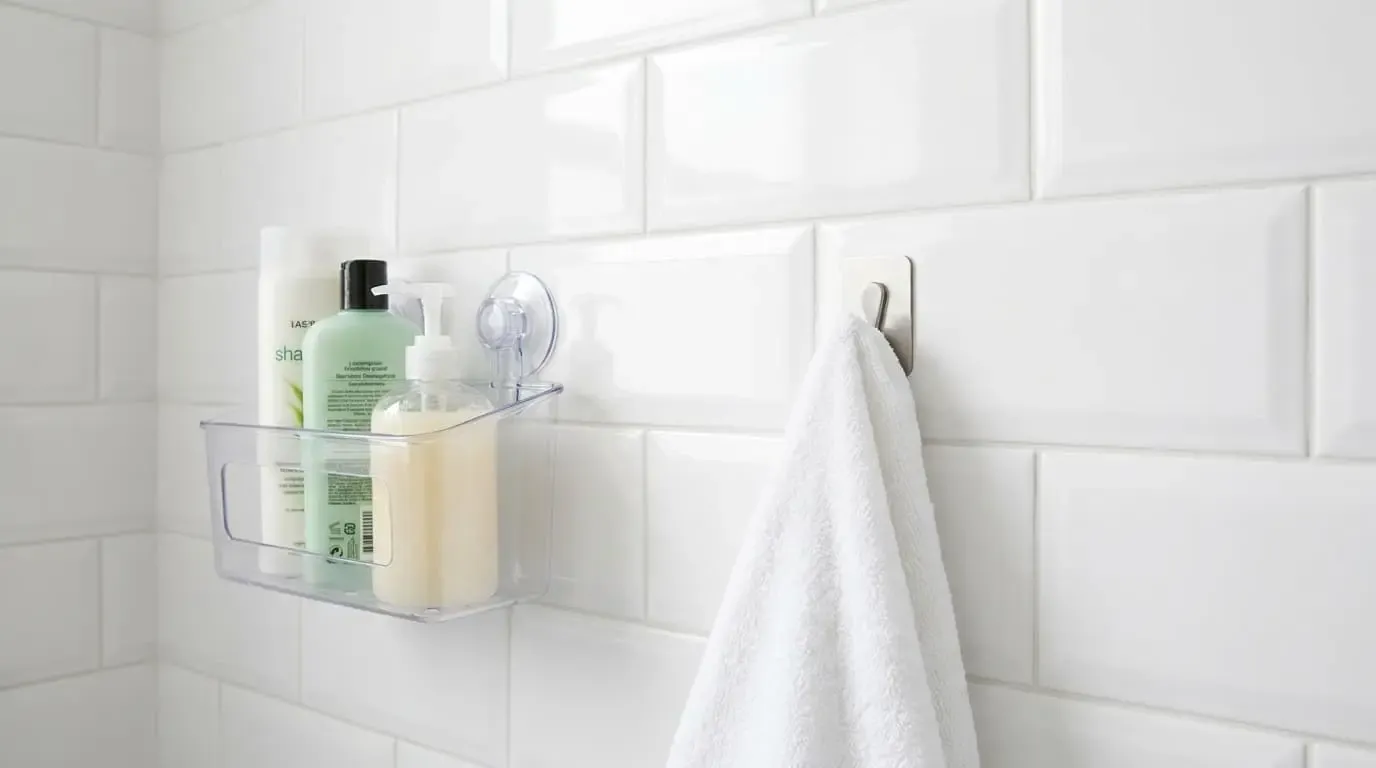 No Drill Storage on Tile Walls and What Actually Works
No drill storage on tile walls what works on glazed tile, what fails on matte and grout, and how to mount things securely without touching a drill.
Comments
No comments yet. Be the first to comment!