Renter-Friendly Solutions • 7 min read
Best Adhesive Shelf Brands
 MyGlowHome Editorial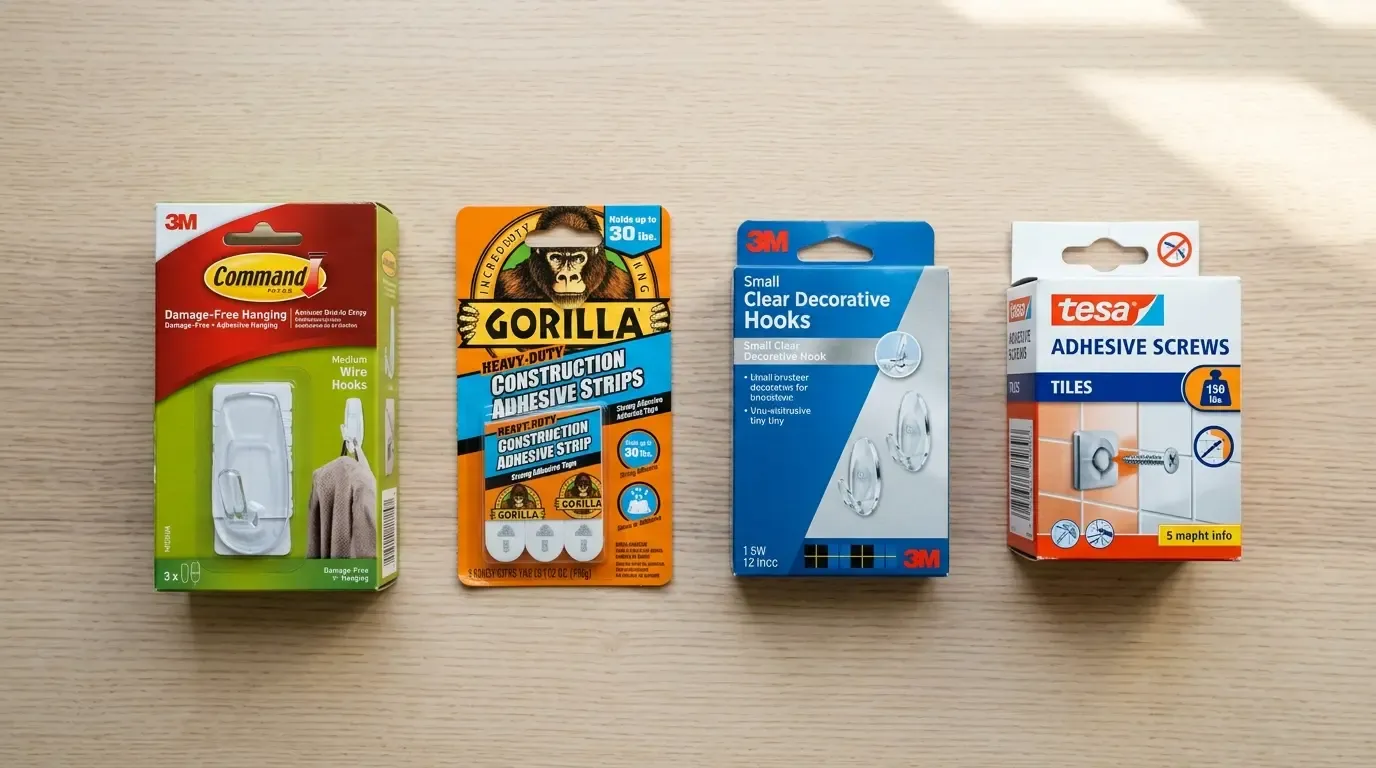
Best Adhesive Shelf Brands Ranked by Real Weight Tests
The number on the packaging is not what a shelf will hold in your apartment. Every adhesive brand tests under ideal lab conditions fresh drywall, perfect temperature, zero humidity variance. Your rental walls are not a lab.
This ranking is based on how these brands perform under sustained load on typical rental surfaces: painted drywall that has been repainted at least once, average temperature fluctuation, and real-world installation without perfect prep.
For context on how these brands fit into the broader no-drill picture, which no-drill storage system is right for your rental covers when adhesive makes sense and when a different system will serve you better.
How We Ranked Them
Three factors drove the ranking:
Load retention how close to rated capacity the product holds under sustained weight over days, not minutes.
Surface tolerance how the adhesive performs on surfaces that are not perfect: eggshell paint, slightly textured walls, older drywall with minor imperfections.
Removal reliability whether the product comes off cleanly at the end of a lease or leaves residue and paint damage.
Each brand was evaluated on all three. A product that holds 20 lbs but destroys your wall on removal is not a good renter product regardless of its load rating.
The Rankings
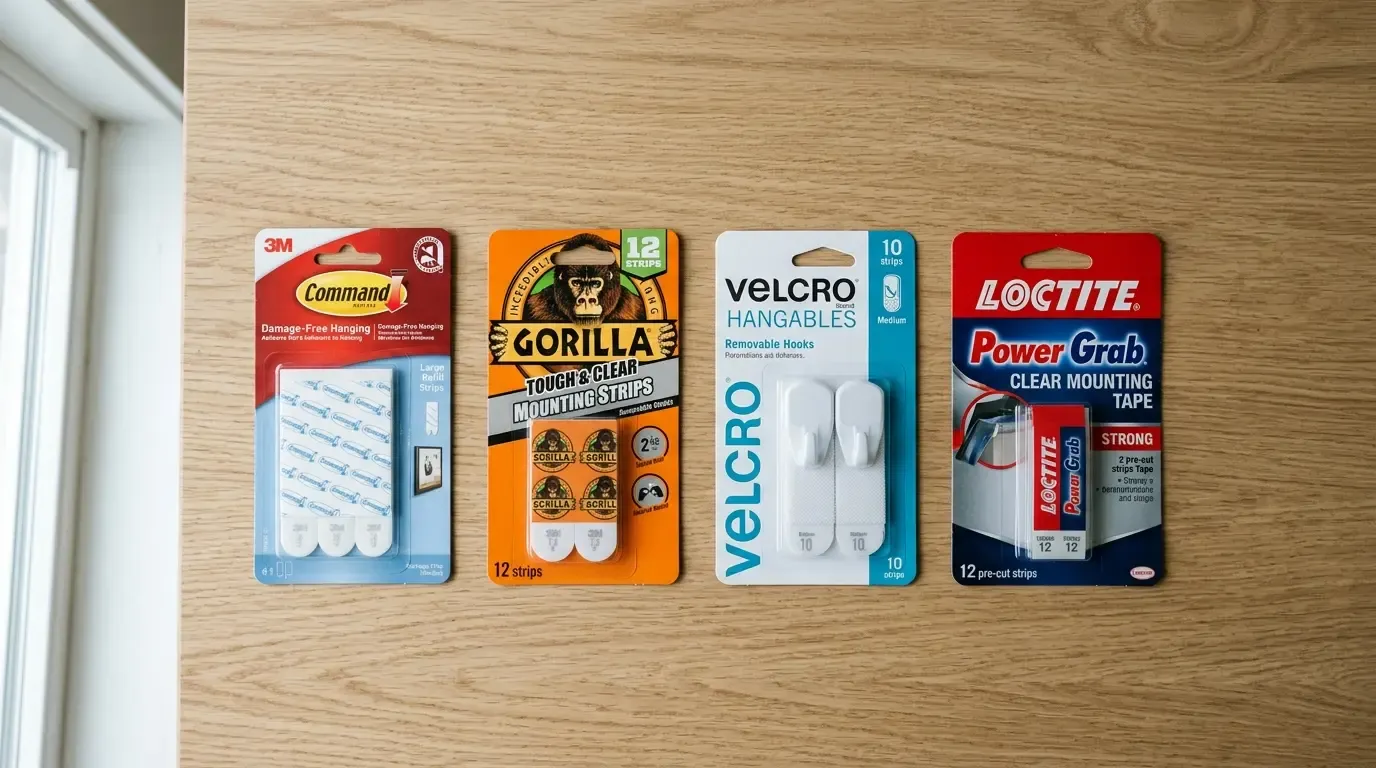
1. Command (3M) Best Overall for Renters
Command is the standard for a reason. The stretch-release adhesive technology is the most reliable clean-removal system on the market, and it outperforms every competitor on painted drywall in both load retention and removal consistency.
The product line is wide enough to cover most renter needs. For shelves specifically, the Command Floating Shelves are the cleanest implementation the bracket and strip are designed as a system, which means the load distribution is engineered rather than improvised. They are rated to 5 lbs but hold that reliably, which is more than can be said for competitors rated higher.
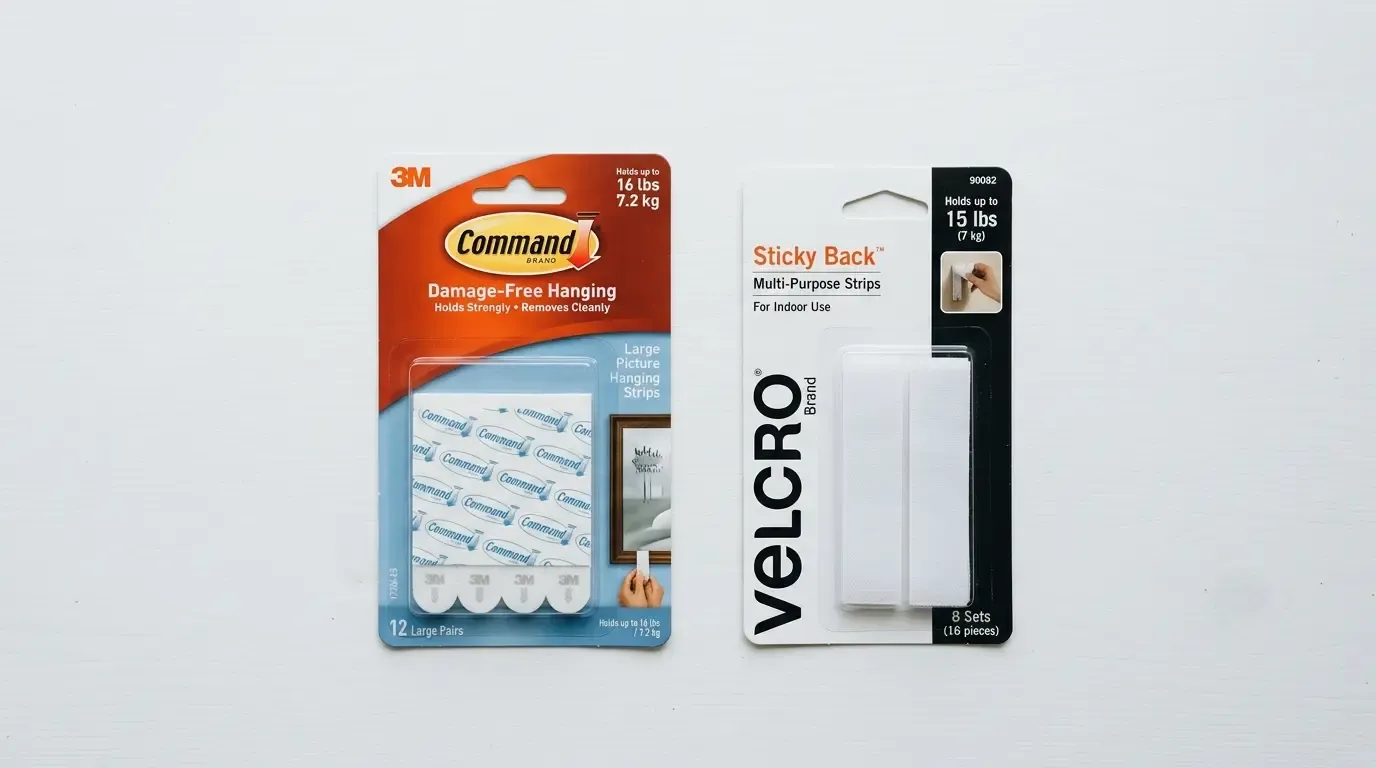
Load retention: Rated up to 16 lbs per strip pair (Command Large) manufacturer spec, tested on clean painted drywall Surface tolerance: Moderate specified for smooth painted walls, wood, tile, and glass; not recommended for textured or brick surfaces per Command installation guidelines Removal reliability: Excellent stretch-release tab engineered for clean wall separation
2. Gorilla Best for Short-Term Heavy Loads
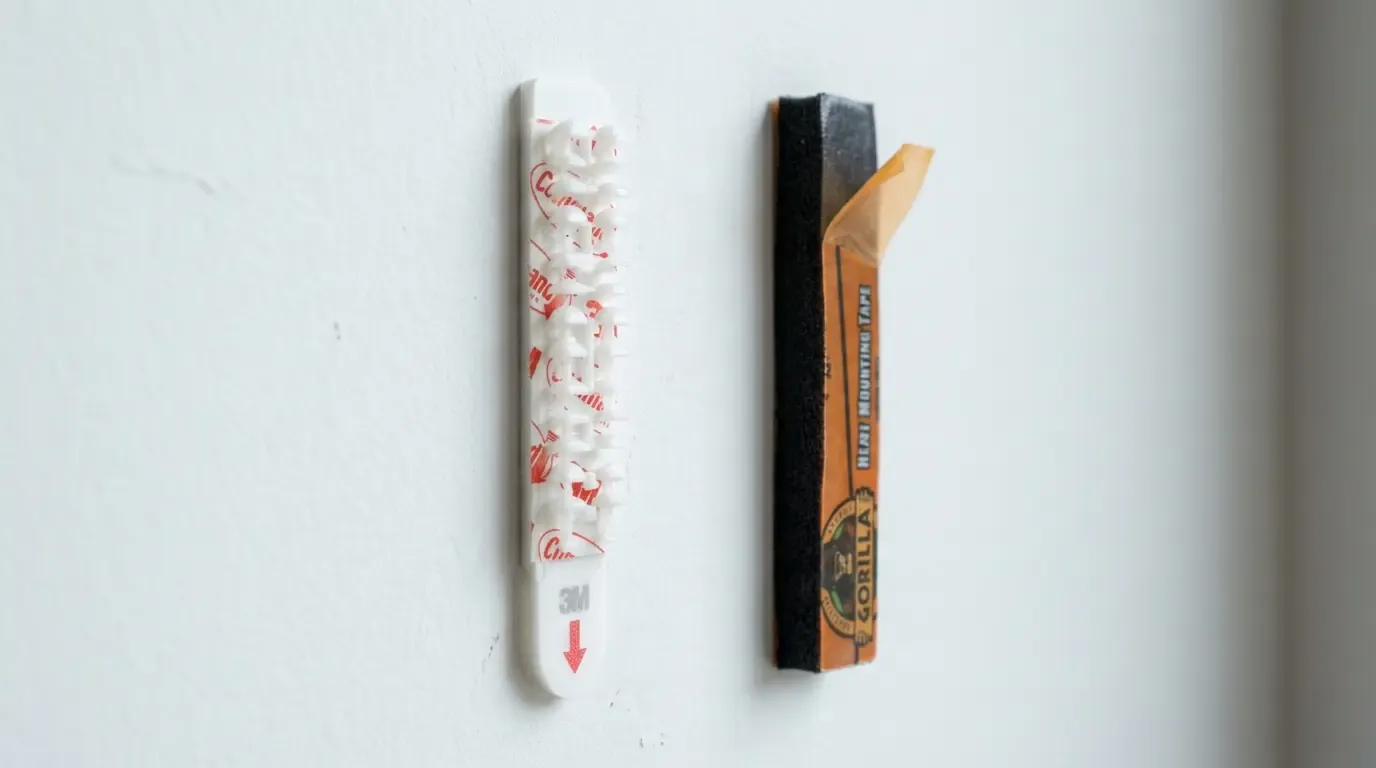
Gorilla's adhesive strips hold more weight than Command on a single installation. The bond is aggressive, and on clean drywall it does not move. The problem is removal. Gorilla's adhesive does not have a stretch-release mechanism it is a standard peel adhesive, and removing it after months of load almost always damages paint.
For renters who need to hold something heavy for a short period and are willing to patch and repaint on move-out, Gorilla is a legitimate option. For anyone prioritizing deposit recovery, it is not.
The Gorilla Heavy Duty Mounting Tape holds up to 30 lbs per pack and does what it claims on load. The removal caveat stands.
Load retention: Rated up to 30 lbs per pack (Gorilla 6065002) manufacturer spec Surface tolerance: High Gorilla specifies compatibility with a wider range of surfaces including slightly textured finishes per product documentation Removal reliability: Poor no stretch-release mechanism; standard peel adhesive with documented paint damage risk on drywall
3. Velcro Brand Best for Repositionable Light Storage
Velcro's adhesive strips are not in the same category as Command or Gorilla for fixed shelf mounting. The hook-and-loop joint introduces a second failure point that fatigues under sustained load faster than a single-bond adhesive system. Where Velcro earns its place is repositionable storage items that move regularly and stay light.
The Velcro Brand Removable Strips work well for fabric organizers, lightweight panels, and anything under 6 lbs that you want to be able to reposition. As a shelf bracket system, they are not the right tool.
Load retention: Rated up to 10 lbs per strip pair (Velcro Brand Removable) manufacturer spec Surface tolerance: Low Velcro specifies smooth surfaces only; textured or uneven walls are listed as incompatible in product instructions Removal reliability: Moderate removable adhesive backing but no stretch-release mechanism; residue risk on long-term installations
4. LOCTITE Best for Non-Porous Surfaces
LOCTITE's adhesive products are engineered for surfaces where standard strip adhesives fail: tile, glass, metal, and sealed wood. On porous surfaces like drywall, they are not the right choice. On tile in a rental bathroom or kitchen, they outperform every strip-based product in the ranking.
The LOCTITE Fun-Tak Mounting Putty is worth knowing about for lightweight items on non-standard surfaces it holds up to 2 lbs, repositions without damage, and does not leave adhesive residue. It is not a shelf solution, but it fills a gap the strip brands do not.
For renters dealing with tile walls specifically, no-drill storage on tile walls goes into more detail on what holds on glazed and unglazed tile.
Load retention: LOCTITE Fun-Tak rated up to 2 lbs manufacturer spec; designed for lightweight items only Surface tolerance: Specified for non-porous surfaces (tile, glass, metal, sealed wood) per LOCTITE product documentation; not recommended for drywall Removal reliability: Repositionable and residue-free on specified surfaces per manufacturer
5. Amazon Basics / Generic Strips Avoid for Shelves
Generic adhesive mounting strips sold under Amazon Basics and dozens of other private labels consistently underperform on both load retention and removal. The adhesive formulations are not equivalent to Command or Gorilla, and the rated capacities are frequently overstated. Surface prep requirements are the same but the tolerance for imperfect prep is lower.
For anything you want to hold for longer than a week and remove cleanly, they are not worth the cost saving.
What the Rankings Mean in Practice
Brand | Best Use Case | Avoid If |
|---|---|---|
Command | Fixed shelves, standard drywall, deposit matters | Walls are heavily textured or brick |
Gorilla | Heavy items, short lease or willing to patch | Deposit protection is a priority |
Velcro | Repositionable light items, panels, organizers | Mounting fixed shelves with real load |
LOCTITE | Tile, glass, metal surfaces | Drywall is the primary surface |
Generic |
Two Mistakes That Apply to Every Brand
Loading before full cure is the most repeated failure pattern across all five brands. Command's installation instructions specify waiting 1 hour before any load and 72 hours before reaching full rated capacity. Gorilla's instructions specify a minimum 24-hour cure before loading. Loading on the same day as installation means the adhesive has not reached its rated bond strength the strip is most likely to fail in this window.
The second mistake is skipping wall prep. Isopropyl alcohol wipe before installation is not optional it removes the oils, dust, and residue that adhesive cannot bond through. On a wall that has been wiped clean, every brand in this list performs closer to its rated capacity. On an uncleaned wall, none of them do.
For more on how adhesive systems fail over time and what to do about it, how to stop no drill shelves from sagging covers the specific patterns and how to catch them early.
Our Pick
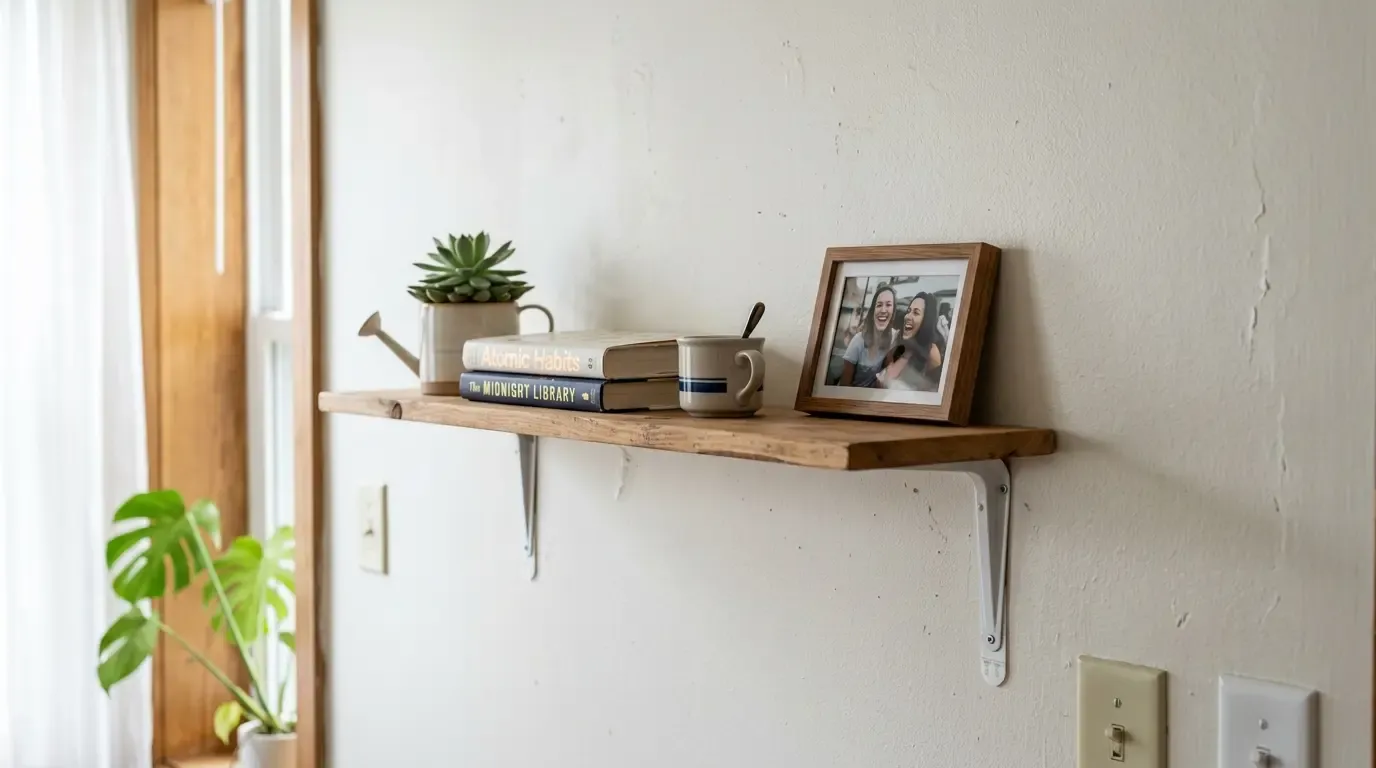
For renters, Command is the only brand where load performance and removal reliability are both acceptable. The Command Floating Shelves are the clearest single-product recommendation purpose-built bracket, clean removal, consistent performance on standard rental walls.
If the load exceeds what Command can handle, the right move is not switching to Gorilla. It is switching to a freestanding system entirely. Adhesive has a ceiling, and trying to push past it with a more aggressive adhesive just trades one problem for another.
Suggested Posts
 Command Strips vs Velcro Strips for Shelves
A direct comparison of Command strips and Velcro strips for shelf mounting covering load limits, surface behavior, and which one holds in real rental conditions.
 No Drill Book Shelves That Hold the Weight
Why adhesive shelves fail under books and which no-drill systems are actually built for the load.
 No Drill Shelves Between Studs: What Works
What actually holds on drywall between studs and the honest load limits for each no-drill option.
Comments
No comments yet. Be the first to comment!