Renter-Friendly Solutions • 6 min read
Gorilla vs 3M vs Command: Adhesive Hooks Ranked
 MyGlowHome Editorial
Gorilla vs 3M vs Command: Which Adhesive Hook Brand Wins
Three brands dominate every adhesive hook search. They are not the same product with different packaging. The adhesive technology, removal mechanism, and real-world load behavior are genuinely different and for renters, those differences determine whether you get your deposit back.
Before buying any of them, it is worth knowing where adhesive hooks fit in the broader picture. Which no-drill storage system is right for your rental covers when hooks are the right call and when a different system handles the job better.
The Core Difference
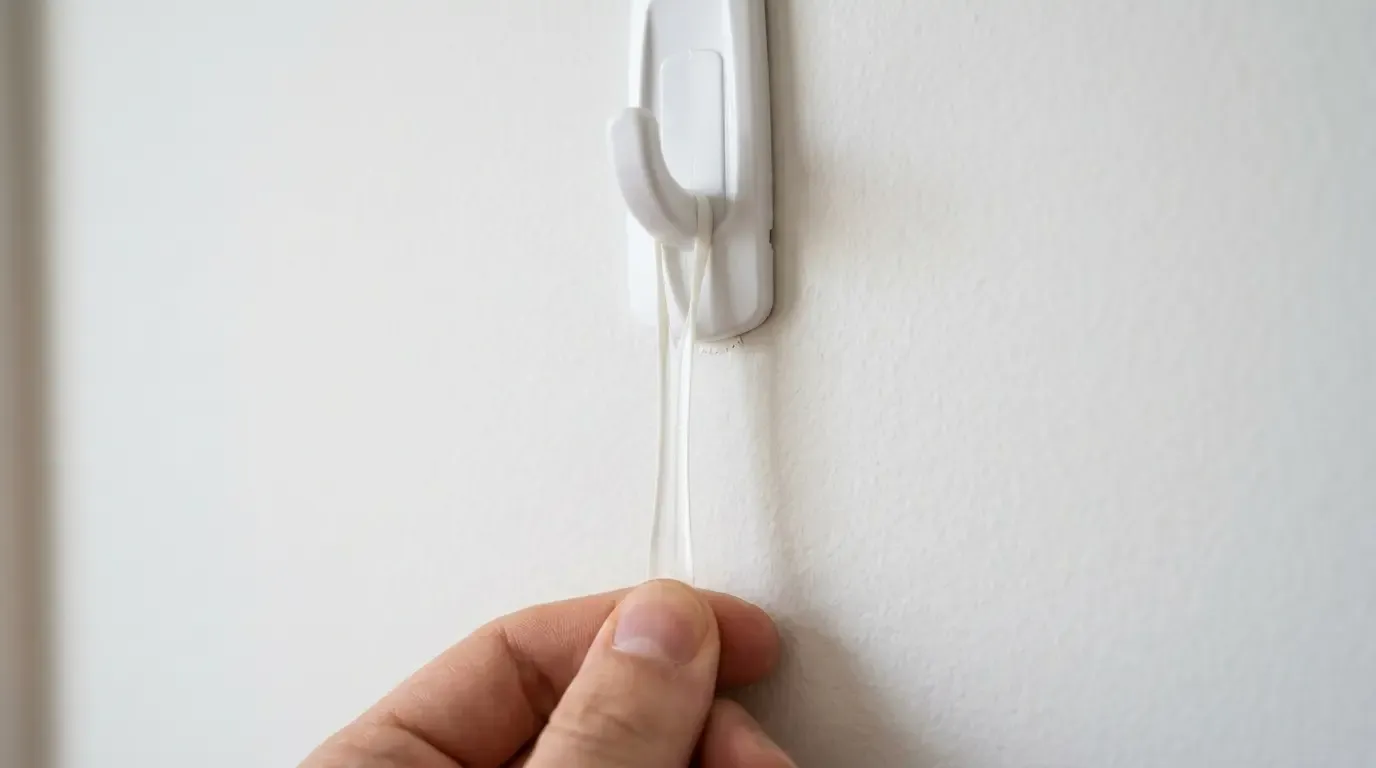
Command (3M) uses a proprietary stretch-release adhesive. The bond is strong under lateral and downward load, and when you pull the release tab straight down, the adhesive stretches and releases from the wall without pulling paint. This mechanism is the reason Command dominates the renter market.
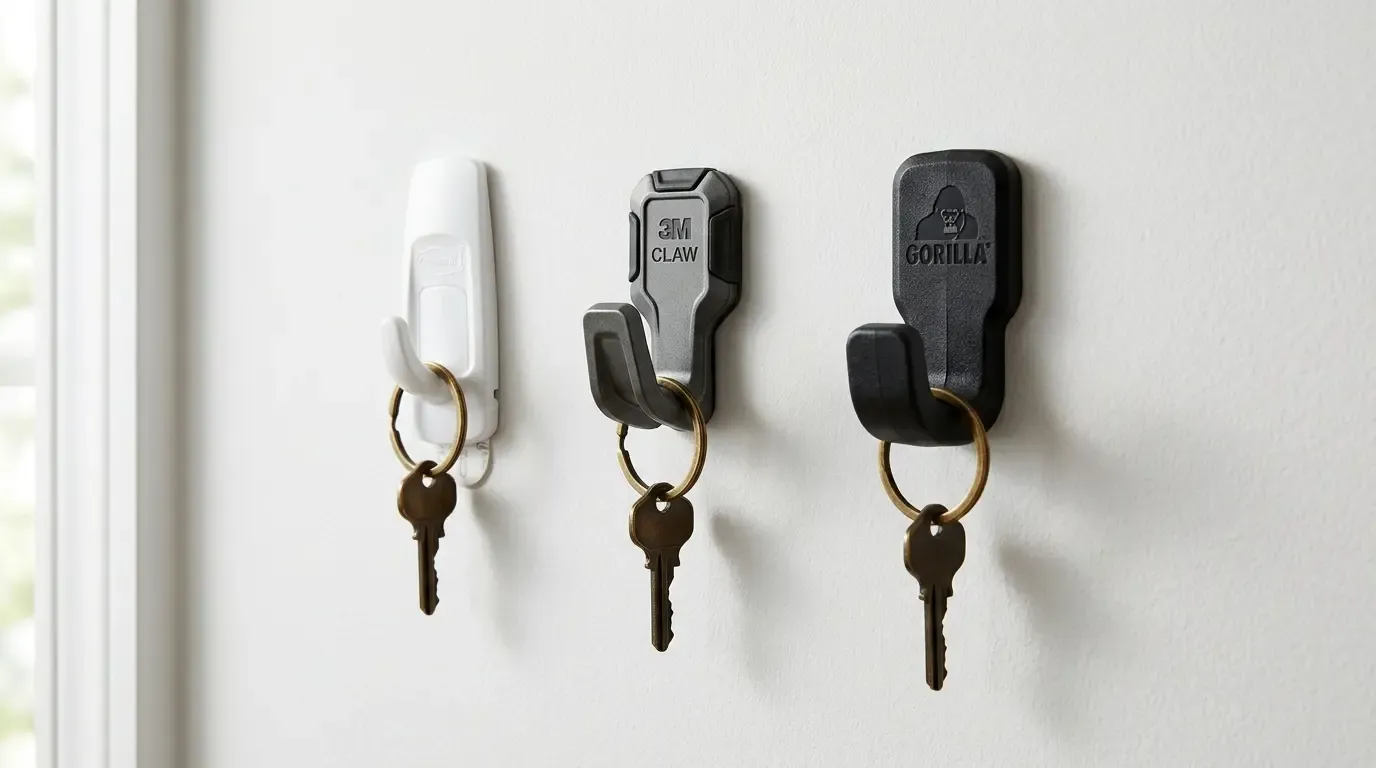
3M general adhesive hooks (outside the Command line products like 3M Claw and 3M independent mounting products) use a standard pressure-sensitive adhesive without the stretch-release tab. Bond strength is comparable or slightly higher than Command, but removal is conventional peel, which increases paint damage risk.
Gorilla uses an aggressive permanent adhesive. It holds more than either 3M product under load, but removal is destructive on painted drywall. It is designed for permanent installation, and it behaves like one.
Load Comparison: What Each Brand Actually Holds
Product | Rated Capacity (manufacturer spec) | Removal |
|---|---|---|
Command Large Hook | 7.5 lbs | Stretch-release, clean |
Command Jumbo Hook | 10 lbs | Stretch-release, clean |
3M Claw Drywall Hook | 25 lbs | Peel — paint risk |
Gorilla Heavy Duty Hook | 50 lbs | Peel — high paint damage risk |
These are manufacturer-rated capacities tested under specified conditions. All adhesive ratings assume clean, dry, smooth painted drywall with full cure time observed. For a full breakdown of how adhesive load ratings work in practice, how much weight no-drill storage can actually hold goes through the numbers in detail.
The gap between Command and the other two is significant on load. Command is not trying to compete at 25–50 lbs it is not engineered for that. The question for renters is whether the load requirement can be met within Command's range, because if it can, the removal advantage is decisive.
Surface Behavior
All three brands require a clean, dry surface wiped with isopropyl alcohol before installation. On smooth painted drywall, all three will bond adequately if prep is done correctly. The differences emerge on imperfect surfaces.
Command is the most sensitive to surface irregularities. On textured walls, orange peel finish, or paint that has been applied over existing paint without sanding, the effective bond area shrinks and the working load drops further than the table above suggests. No-drill storage on brick and textured walls covers the specific failure patterns that happen when Command is applied to surfaces it is not suited for.
3M Claw uses a different mounting mechanism a small metal claw that embeds slightly into drywall. It is less surface-sensitive than Command because the claw gives it a mechanical component beyond pure adhesive bonding. On slightly textured surfaces, it outperforms Command in retention.
Gorilla bonds aggressively to almost any surface, including textured paint and tile. This is part of why removal is so damaging the adhesive does not distinguish between the paint layer and the substrate. It bonds to both and pulls both when removed.
Removal: The Renter-Critical Factor
This is where the comparison is clearest.
Command's stretch-release mechanism is the only removal system among the three that is engineered for clean wall separation. Pulled correctly — straight down, slowly, with the tab fully extended before any lateral movement it leaves no residue and no paint damage on surfaces it was designed for. On surfaces where it was not designed to be used (textured walls, fresh paint under 30 days old), it can still pull paint, but that is an installation error, not a product failure.
3M Claw removes with more paint risk. The metal claw leaves a small hole, and the adhesive backing peels conventionally. For a landlord who does minor repairs routinely, one small hole per hook is not a meaningful issue. For a landlord with a zero-tolerance policy, it is.
Gorilla does not belong in a rental. The adhesive is designed to be permanent. Removing it after weeks or months under load will damage the paint layer in most cases, and on drywall that has not been primed properly, it can pull the paper facing off the drywall entirely.
For the full process of removing adhesive hooks without wall damage, how to remove adhesive hooks without damage covers Command, standard peel adhesives, and what to do when something has already bonded harder than expected.
Two Mistakes That Cost Renters
Loading hooks before cure is complete happens with all three brands. Command requires 1 hour minimum before any load, and 72 hours before reaching rated capacity. Gorilla and 3M require similar cure windows. A hook installed in the morning and loaded the same afternoon is not at full strength this is when hooks fail early and appear to be defective when the issue is timing.
Choosing brand by load rating rather than actual load need is the second. A renter who needs to hang a coat and umbrella does not need Gorilla. A Command Large Hook rated at 7.5 lbs handles it cleanly without the removal risk that Gorilla carries. Overspecifying load rating for simple jobs is how renters end up with adhesive that damages walls unnecessarily.
Which Brand for Which Job
Use Case | Right Brand | Why |
|---|---|---|
Coat hooks, towel hooks, light items under 7 lbs | Command | Clean removal, deposit safe |
Kitchen rail, tool storage, items 10–20 lbs | 3M Claw | Higher load, acceptable removal risk |
Permanent installation, non-rental | Gorilla | High load, permanent bond |
Bathroom hook on tile | Command (tile-rated) | Stretch-release on non-porous surface |
The Verdict
For renters, Command wins by default on anything where deposit recovery matters. The load ceiling is real once the requirement exceeds 8 lbs per hook, Command is not the right answer. But for the majority of hook applications in a rental, the load requirement stays within Command's range, and nothing else in this comparison removes as cleanly.
The Command Large Utility Hook covers most everyday hook needs. For heavier items like bags, coats, or light shelving accessories, the Command Jumbo Hook adds margin without changing the removal equation.
If the load genuinely requires 3M Claw or Gorilla, the more honest answer for renters is to look at a freestanding storage solution that does not require any wall contact at all.
Suggested Posts
 Best No-Drill Shelves for Renters 2026
A ranked list of the best no-drill shelf options for renters in 2026, tested by load type and surface compatibility, with deposit-safe picks for every room.
 Best Adhesive Shelf Brands
A brand-by-brand ranking of adhesive shelving systems based on real weight performance, surface compatibility, and removal reliability for renters.
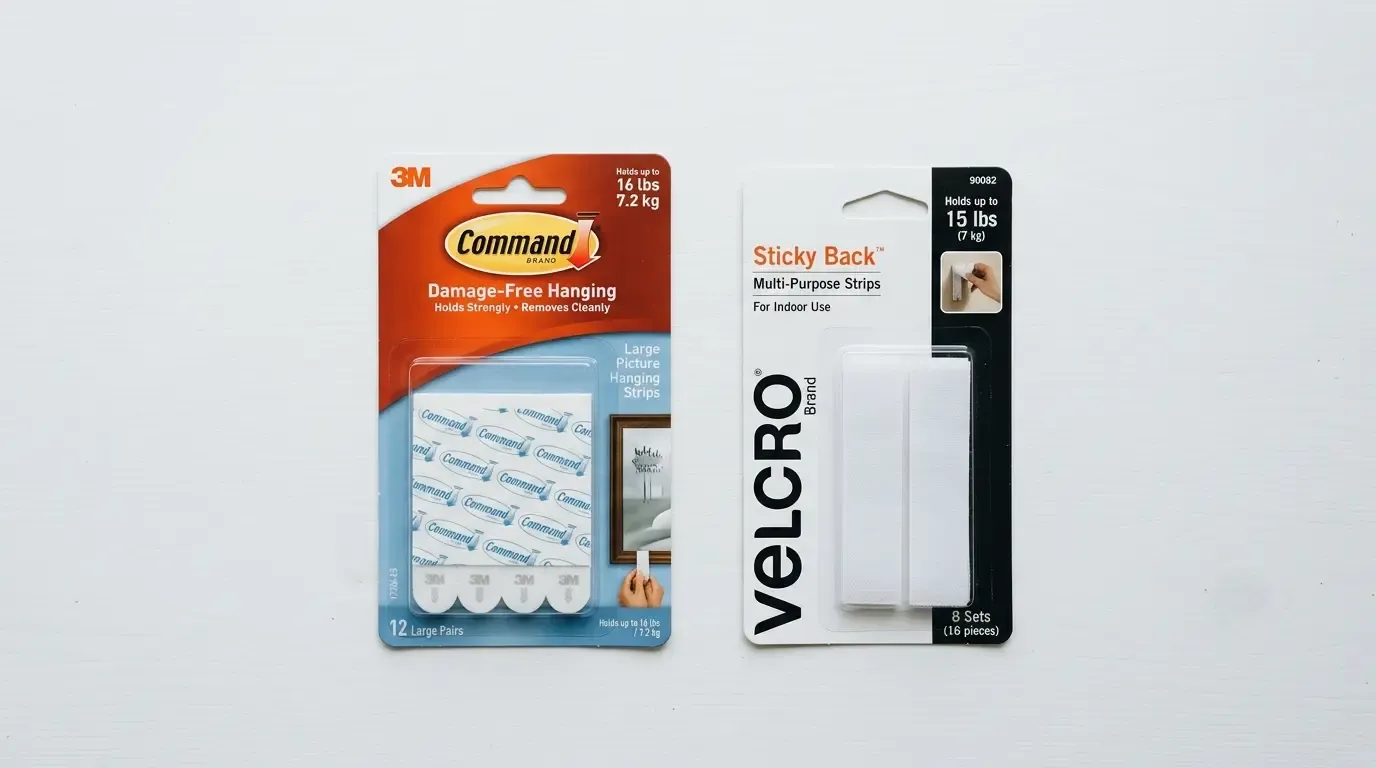 Command Strips vs Velcro Strips for Shelves
A direct comparison of Command strips and Velcro strips for shelf mounting covering load limits, surface behavior, and which one holds in real rental conditions.
Comments
No comments yet. Be the first to comment!