Renter-Friendly Solutions • 6 min read
No Drill Storage on Brick and Textured Walls
 MyGlowHome Editorial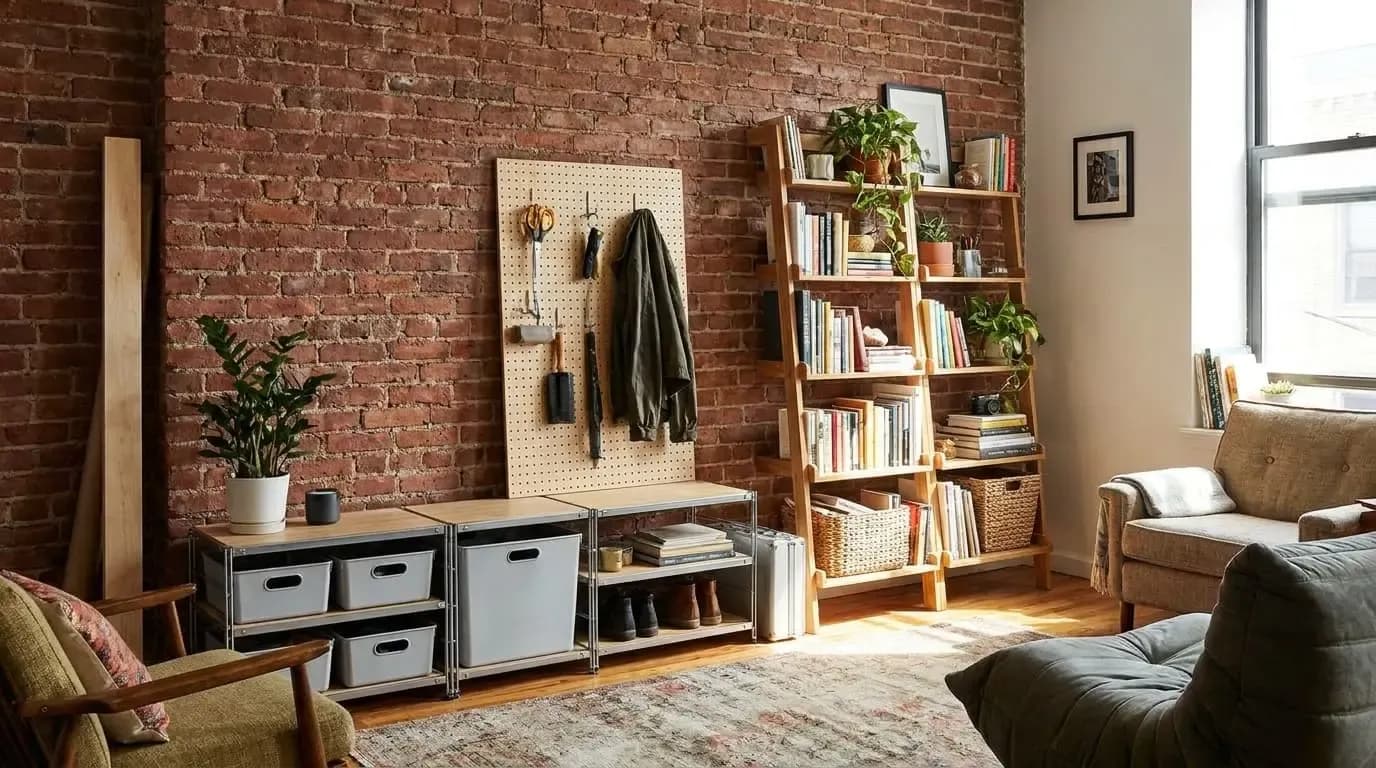
Here is what nobody tells renters with brick or textured walls: most no-drill storage products simply do not work on them. Not because the products are bad because they are designed for smooth surfaces, and brick and texture are fundamentally different.
Adhesive hooks need a flat, sealed surface to bond to. Suction cups need an airtight seal. Brick has neither. Textured plaster, Venetian finish, and stippled paint have neither. The standard renter toolkit fails before it starts on these walls. The solution is not to find better adhesive products. It is to build a storage system that does not use the wall at all.
For a full comparison of no-drill systems that work regardless of wall type, see which no-drill storage system is right for your rental.
Why These Surfaces Reject Standard No-Drill Mounting

Brick walls whether exposed brick in a loft or painted-over brick in an older building have a surface with deep texture variation, porous material, and mortar joints every few inches. Adhesive strip contact area drops to near zero. Suction cups cannot form an airtight seal. Even strong industrial adhesive like 3M VHB tape loses most of its rated strength on a porous surface because the bond forms only at the contact points, not across the full backing area.
Textured walls stippled plaster, orange peel drywall, sand texture, Venetian plaster, popcorn have the same problem at a smaller scale. The bumps and valleys mean the adhesive is only bonding at the peaks. A strip rated to 16 lbs on a flat wall may hold 4 to 6 lbs on a light texture and less than 2 lbs on a heavy one.
Surface Type | Adhesive Strip Performance | Suction Cup Performance |
|---|---|---|
Smooth painted drywall | Full rated capacity | Good on glossy, poor on flat |
Light orange-peel texture | 40–60% of rated capacity | Unreliable |
Heavy stipple/popcorn | 10–20% of rated capacity | Fails |
Painted brick | 10–15% of rated capacity | Fails |
Working with these numbers, the maximum practical load on a textured wall using standard Command strips is often under 3 to 5 lbs which is not enough to store anything meaningful. The wall is not a storage surface in these rentals.
The Right Framework: Work Around the Wall
The pivot is straightforward. Instead of mounting to the wall, build storage that stands on the floor, leans against the wall without attaching to it, or hangs from a structural element (door frame, ceiling, between two opposing walls).
This is not a downgrade. Freestanding and leaning storage is movable, reusable across rentals, and never a deposit risk.
Freestanding: The Primary System

Freestanding shelving units, wardrobes, cube organizers, and bookcases are the backbone of storage in any rental with non-standard walls. They bear their own weight and need nothing from the wall including brick and textured walls to function.
The only consideration for brick and textured walls is that the wall behind a leaning unit may be uneven, which can affect stability. Check that the unit sits flush and does not rock before loading. Non-slip furniture pads on the base feet add friction on smooth floors.
The SONGMICS 4-Tier Storage Rack features a strong alloy steel frame supporting 22 lbs per shelf with an extendable, adjustable-height design. Its freestanding 37.8-inch tall structure includes a stability trio of adjustable feet and an anti-tip kit, ideal for heavy storage without wall drilling.
For lighter storage books, décor, small items a ladder shelf leaning against the brick adds a visual element that works with the wall rather than fighting it. A ladder shelf against exposed brick looks intentional. It is one of the few cases where the wall constraint becomes an aesthetic asset.
The VASAGLE Barnet 4-Tier Ladder Shelf features a sturdy steel frame with X-bar reinforcement that supports up to 97 lbs altogether. Its 54.1-inch freestanding design maximizes vertical storage against tricky walls without requiring any drilling or permanent contact.
Freestanding shelving is the primary storage solution for any rental with brick or heavily textured walls freestanding shelving units for renters covers every type worth considering and the stability factors that matter most.
Tension Rods: Between Walls, Not On Them
A tension rod stretched between two opposing walls across a doorway, inside a closet, across an alcove does not need the wall surface to be smooth. The pressure is lateral, not adhesive-based, and the contact points are the two opposing surfaces of a structural gap.
This only works where two opposing walls are close enough to span with a rod (typically 24 to 144 inches depending on the rod type). But in those contexts, it is a completely reliable solution regardless of wall texture.
Application | Span Needed | What It Holds |
|---|---|---|
Closet interior hanging rod | 24–48 in. | Full clothing load |
Doorway curtain rod | 24–48 in. | Curtain, room divider |
Under-sink tension rods | 12–24 in. | Spray bottles (hung by trigger) |
Pantry or cabinet interior | 12–24 in. | Small items, spice bottles |
The AIZESI Black Spring Tension Rod adjusts from 24 to 46 inches, utilizing an internal high-strength spring for quick, tool-free installation. Its rust-resistant iron build features an anti-slip finish, providing zero-damage hanging for doorways, closets, or windows.
Floor-to-Ceiling Tension Poles: Between Floor and Ceiling
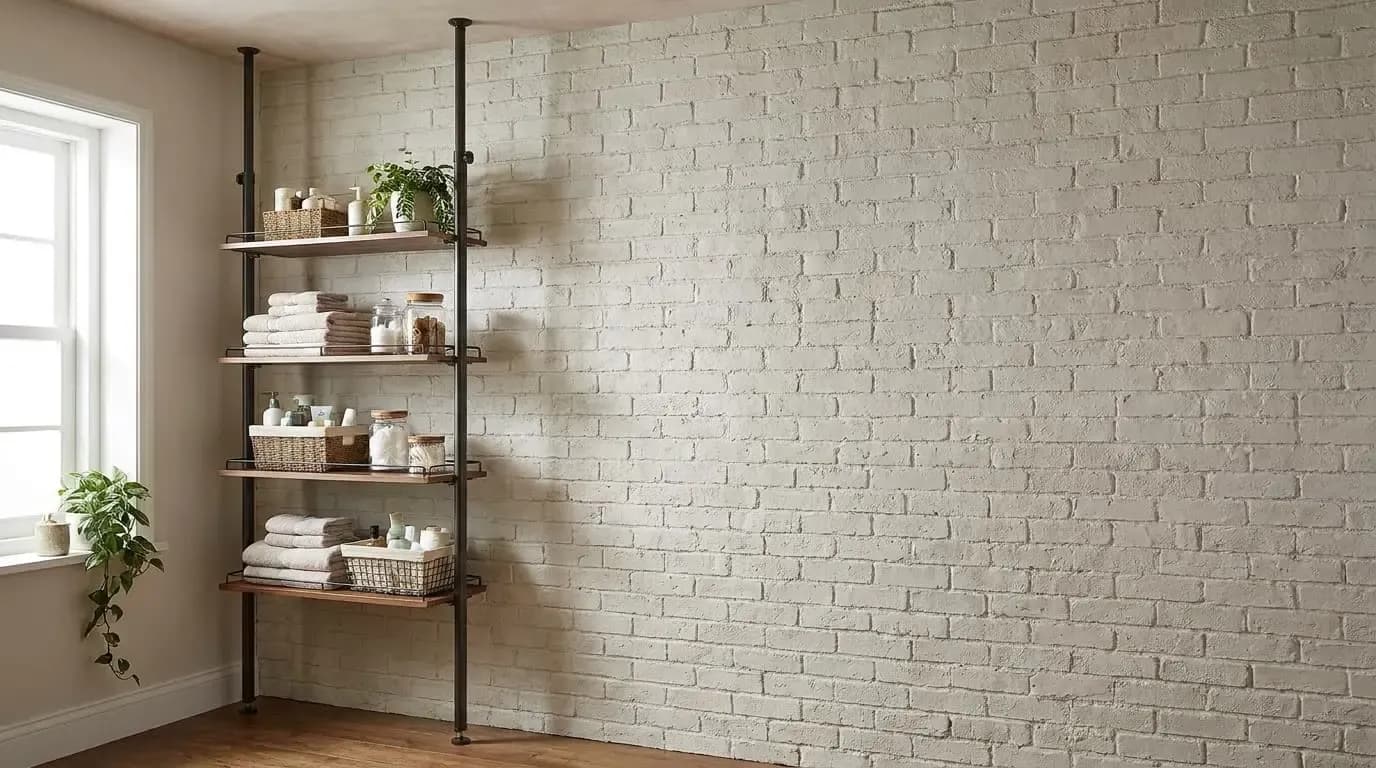
A floor-to-ceiling tension pole does not touch the wall at all. It extends vertically between the floor and ceiling, held in place by compression. The wall brick, textured, or otherwise is entirely irrelevant.
These systems work in corners, beside beds, in bathrooms, and in kitchen areas. They hold shelves, baskets, hooks, and organizers at whatever height is needed. The only requirement is a flat ceiling surface (not a drop ceiling or suspended panel ceiling, which cannot bear the pressure load).
The Yamazaki Home Tower Storage Shelf extends from 87 to 114 inches to provide heavy-duty vertical storage with absolutely zero wall contact. Its ultra-slim 9.4-inch profile fits tight spaces perfectly, featuring four adjustable steel shelves rated at 11 lbs each.
Over-Door Storage: Door Frame, Not Wall
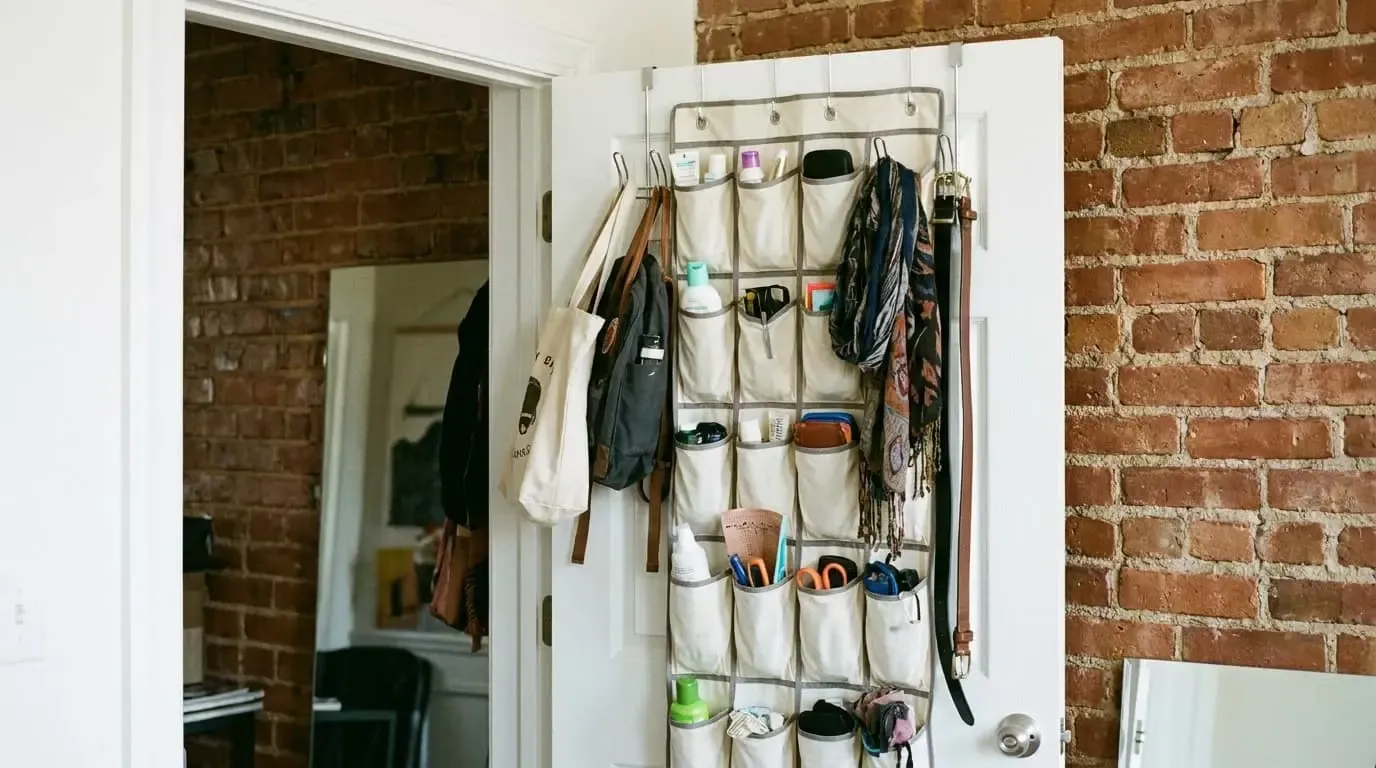
Over-door organizers and hooks hang on the door frame which is structural and smooth regardless of what the surrounding walls look like. In a rental with brick or textured walls throughout, the backs of doors become the most valuable mounting surfaces in the home.
The back of a standard interior door handles a full column of storage: shoes, accessories, pantry items, cleaning supplies, small tools, office supplies. The door frame takes the load, not the wall.
The Simple Houseware Over the Door Organizer holds up to 80 lbs across 10 clear-window pockets with anti-tilt panels. It hangs instantly via metal hooks fitting doors up to 1.7 inches thick, bypassing tricky brick or plaster walls entirely.
Over-door organizers are one of the few wall-independent storage systems that work equally well in brick-wall rentals over the door organizers for renters covers every room where they're worth using.
Two Mistakes on Brick and Textured Walls
Buying stronger adhesive and expecting different results. Gorilla tape, industrial double-sided tape, and construction adhesive all have the same contact surface problem on brick and texture. The issue is not adhesive strength it is that the product cannot make full contact with an irregular surface. More strength applied to 15 percent contact area gives you stronger failure, not stronger holding. And construction adhesive on a brick wall is a deposit dispute waiting to happen. The most expensive mistake renters make on textured walls is buying stronger adhesive expecting different results no-drill storage mistakes that cause shelves to fall explains exactly why that never works.
Underestimating how much a wall-independent system can hold. Renters who cannot use their walls often assume they are stuck with minimal storage. A freestanding shelving unit holds 200 to 400 lbs. A floor-to-ceiling tension pole holds 30 to 50 lbs of shelved items. An over-door organizer holds 25 lbs per door. Between these three categories, a full apartment's storage needs are covered without any wall contact.
Our Pick
For brick and textured walls: stop trying to use the wall surface and build the system without it. A freestanding shelving unit as the main storage backbone, floor-to-ceiling tension poles for narrow spaces and corners, and over-door organizers on every usable door. Ladder shelves leaning against brick look good and work without mounting. Once you've worked out the wall constraints, no-drill storage setup for each room gives you a full room-by-room plan for the rest of the apartment.
The wall is a backdrop. The storage system stands on its own.
Suggested Posts
 Best No-Drill Shelves for Renters 2026
A ranked list of the best no-drill shelf options for renters in 2026, tested by load type and surface compatibility, with deposit-safe picks for every room.
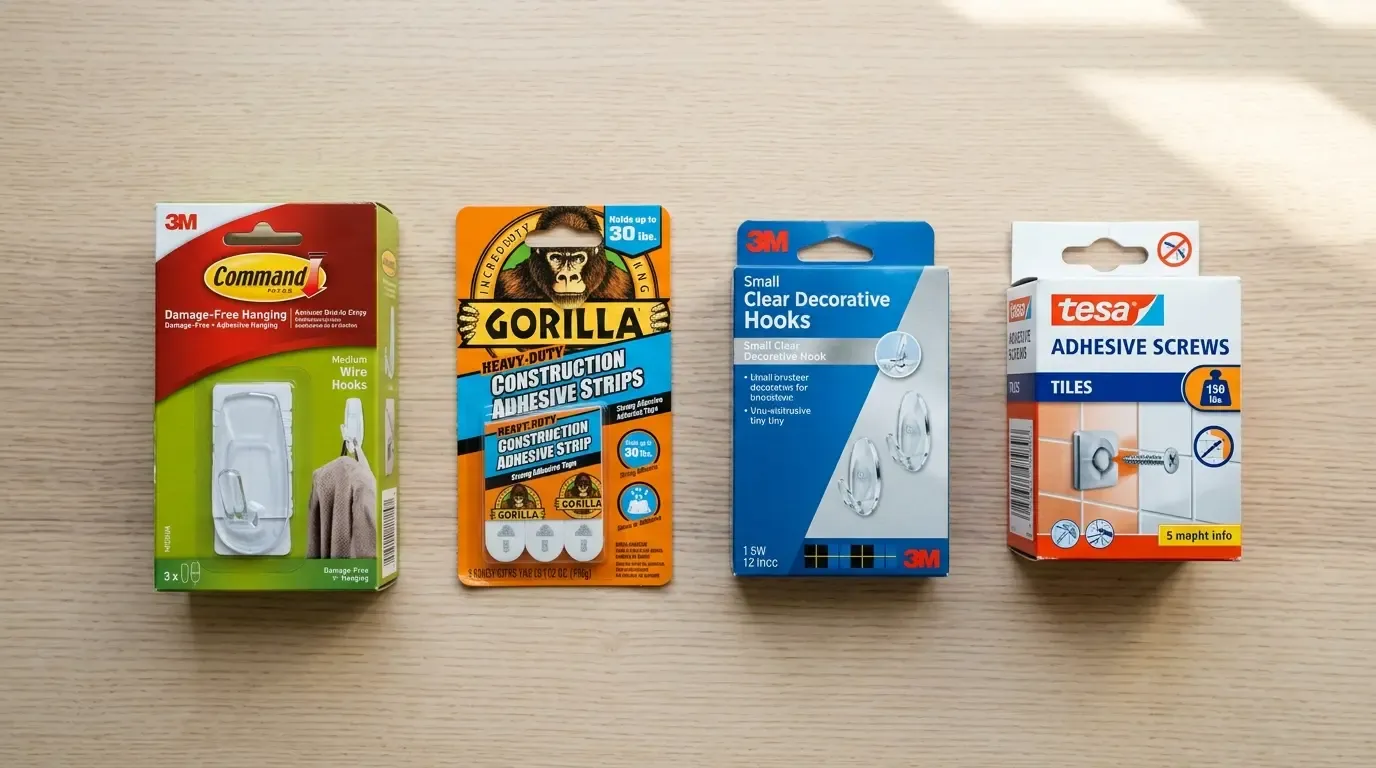 Best Adhesive Shelf Brands
A brand-by-brand ranking of adhesive shelving systems based on real weight performance, surface compatibility, and removal reliability for renters.
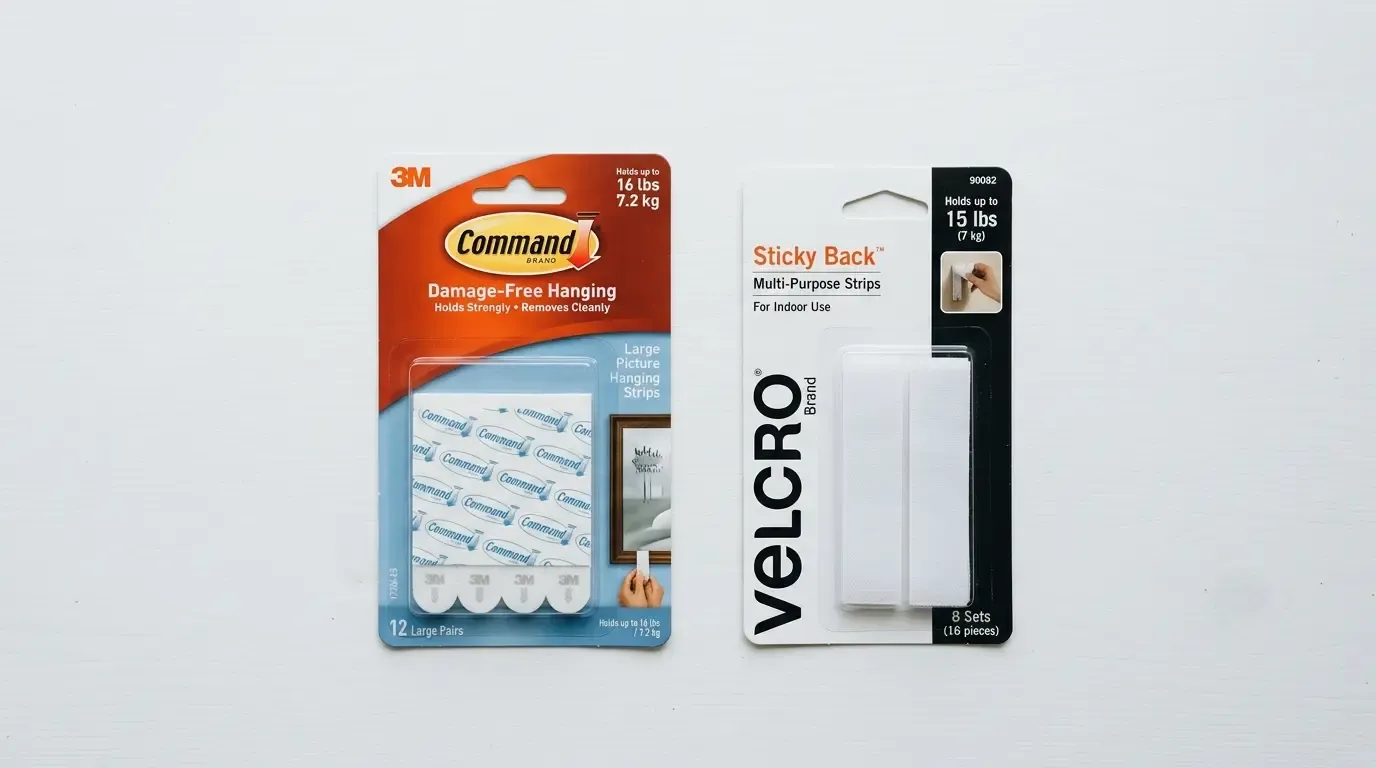 Command Strips vs Velcro Strips for Shelves
A direct comparison of Command strips and Velcro strips for shelf mounting covering load limits, surface behavior, and which one holds in real rental conditions.
Comments
No comments yet. Be the first to comment!