Renter-Friendly Solutions • 6 min read
How Much Weight Can No Drill Storage Actually Hold
 MyGlowHome Editorial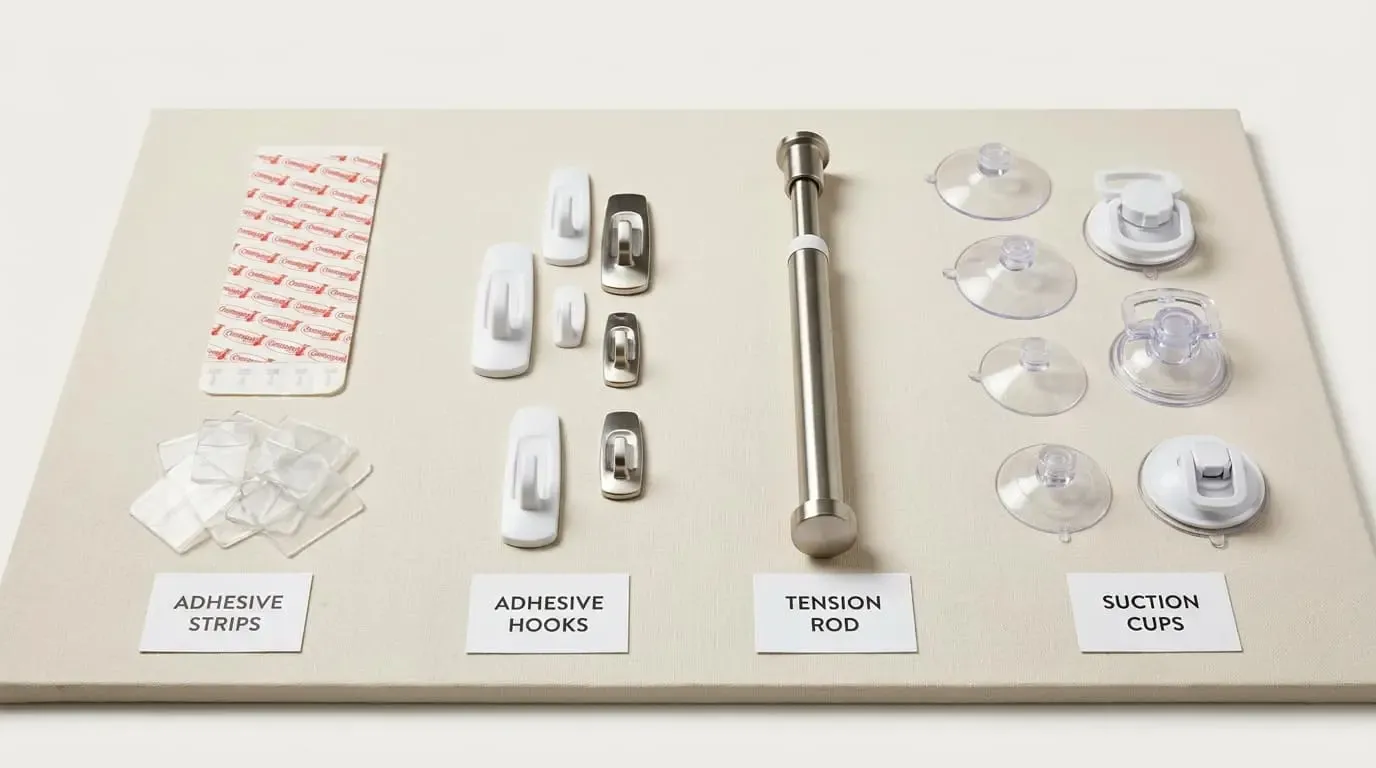
No drill storage fails in two ways: it falls under a load it was never rated for, or it falls because it was installed incorrectly and the rated load was never realistic. Before you trust a shelf, a hook, or a tension rod with anything that matters, you need to know what you are actually working with.
Understanding weight limits is one step in choosing the right system see which no-drill storage system is right for your rental for the full comparison.
A Word on Manufacturer Ratings
Manufacturer weight ratings are almost always listed under ideal conditions: clean, smooth, sealed walls, correct installation, full cure time, and optimal temperature. Real-world performance is often lower.
The factors that reduce real-world holding capacity:
- Painted drywall: Paint adds a bond-breaking layer between the adhesive and the drywall surface. Textured or flat paint reduces adhesive grip further.
- Humidity: Kitchens and bathrooms have higher moisture levels. Adhesive bond weakens over time in high-humidity environments.
- Temperature fluctuations: Adhesive softens in heat. A window in direct sun can heat a wall surface to 95°F or above, which reduces holding strength on strips mounted nearby.
- Cure time skipped: 3M specifies a 1-hour initial set and 24-to-72-hour full cure before loading. Most renters load immediately. This significantly reduces the realized holding capacity.
Use manufacturer ratings as a ceiling, not a target. For anything structural or high-consequence (a shelf above a bed, storage in a child's room), target no more than 60 to 70 percent of the rated capacity.
Adhesive Hooks and Strips
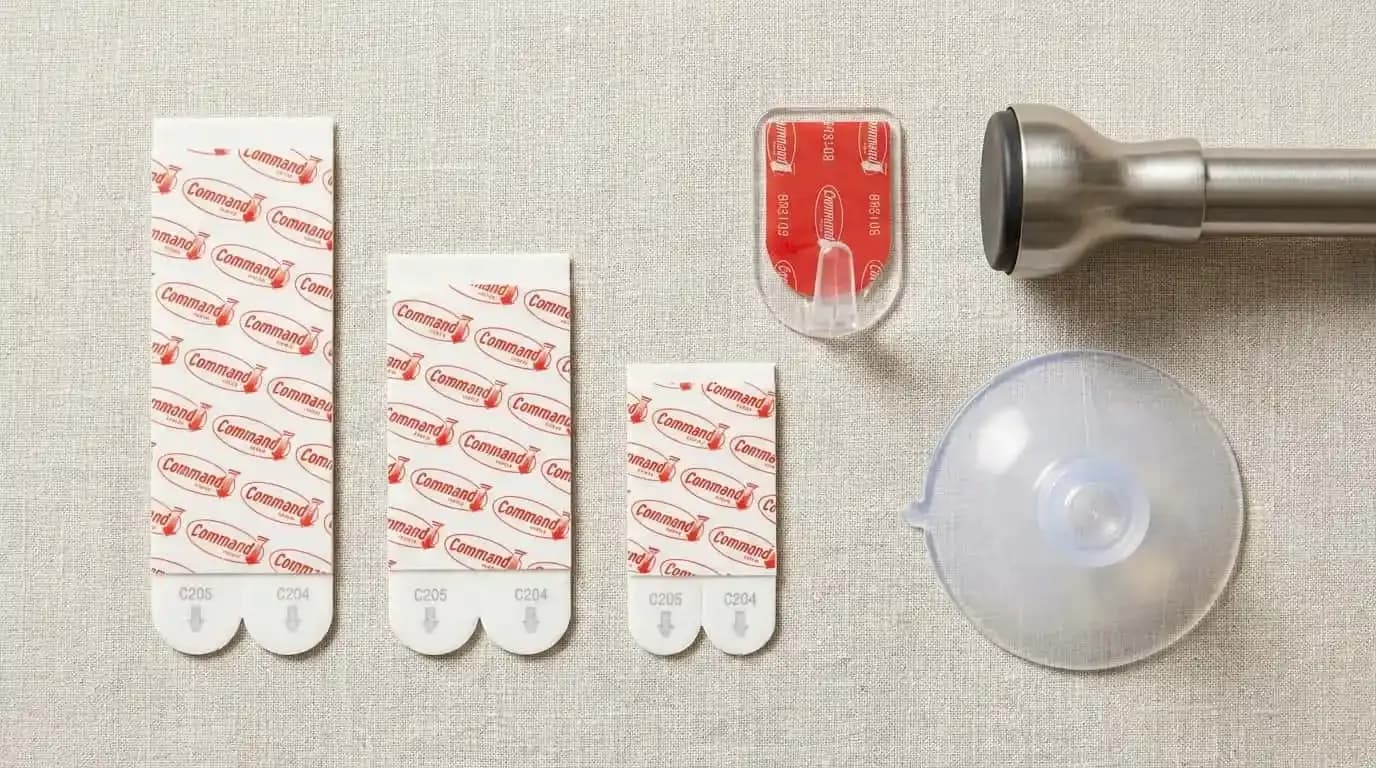
For how wall shelf systems behave at the upper end of these weight ranges in practice, see no-drill wall shelves that don't fall. Command strips and hooks are the most widely used no-drill mounting products. Here are the verified holding capacities from 3M's published specifications:
Product | Max Weight (Ideal Conditions) | Practical Limit |
|---|---|---|
Command Small Hook (17067) | 0.5 lb | 0.3 lb |
Command Medium Hook (17001) | 3 lbs | 2 lbs |
Command Large Hook (17003) | 5 lbs | 3–3.5 lbs |
Command Jumbo Hook (17004) | 7.5 lbs | 5 lbs |
These ratings apply per hook or per strip pair. When stacking multiple strips to hang a shelf, the total capacity is the sum of each strip pair up to the structural limit of the shelf bracket itself. For the product-level breakdown behind these ratings which specific hooks are worth buying for each use case see strongest adhesive hooks for renters.
Third-party adhesive hooks vary widely. Brands like Gorilla and Scotch produce heavy-duty options rated to 10 to 20 lbs per hook on smooth surfaces. Industrial adhesives like 3M VHB tape are rated significantly higher (30+ lbs per strip) but are designed for permanent installation removal without surface damage is difficult and often not possible. High-hold adhesives are the hardest to remove cleanly at move-out how to remove adhesive hooks without damage covers the safest removal process for every adhesive type.
Tension Rods
Tension rods hold by friction pressure between two opposing surfaces. The key variables are the gap width, the surface material, and whether the rod is loaded laterally (things hanging down) or as a shelf support (lateral load).
Tension Rod Type | Typical Holding Range | Failure Mode |
|---|---|---|
Standard spring-loaded rod | 10–20 lbs | Slides under heavy loads or smooth surfaces |
Heavy-duty tension rod | 20–45 lbs | Slow twist-out over time |
Café rod (screw-adjust) | 25–50 lbs | More stable; slips if walls are tile or painted smooth |
Cabinet-interior tension rod | 5–15 lbs | Works on shorter spans only |
Tension rod capacity drops significantly on smooth surfaces like tile and glossy paint. The rubber end caps that come with most rods are the only thing preventing slip. Replace them when worn. Adding a small rubber mat behind each end cap increases friction on slippery surfaces.
Vertical load (something hanging down from the rod) is what tension rods are designed for. Do not use tension rods to support a horizontal shelf carrying stacked items this applies lateral shear force that the friction-only mechanism is not designed to resist.
Suction Cups
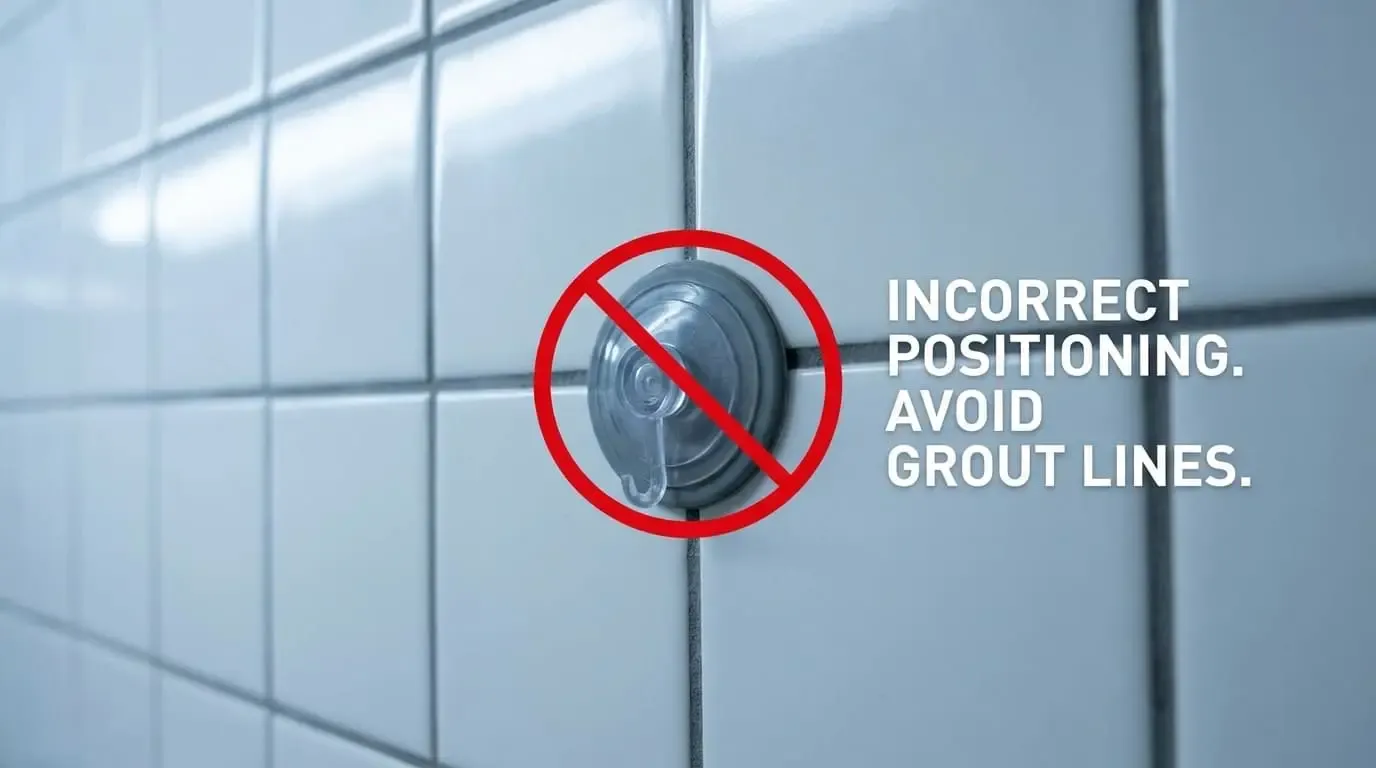
Suction cups are the weakest no-drill mounting option and the most misunderstood.
Suction Cup Diameter | Typical Rating | Reliable in Humidity | Reliable on Matte Tile |
|---|---|---|---|
1–2 inches | 0.5–1 lb | No | No |
3–4 inches | 2–5 lbs | Partially | No |
4–6 inches (heavy duty) | 5–15 lbs | Partially | No |
Suction cups lose grip over time as the seal slowly loses air. They should be re-pressed monthly. In bathrooms, the temperature and moisture cycle causes the cup to contract and expand, which accelerates seal failure. Any suction cup setup that you depend on for meaningful weight should be checked weekly.
Suction cups are appropriate for: bath accessories, lightweight shower caddies, small soap dispensers, and items where a failure means something falls into the sink, not onto someone.
Freestanding Units
Freestanding storage has no wall-dependent weight limit in the same way mounted products do. The limits here are the structural ratings of the unit itself and the stability concern of a loaded unit without wall anchoring.
Unit Type | Typical Shelf Weight Limit | Typical Total Weight Limit | Tip-Over Risk |
|---|---|---|---|
Cube organizer (2x2) | 15–25 lbs per cube | 60–100 lbs | Low (under 30 in. tall) |
Cube organizer (4x4) | 15–25 lbs per cube | 200–300 lbs | Moderate (60+ in. tall) |
Ladder shelf | 20–30 lbs per shelf | 55–100 lbs | Low-moderate (leans) |
For freestanding units over 30 inches tall with meaningful loads, a removable anti-tip strap rated to 200 lbs and using adhesive wall anchoring eliminates the tip-over risk without drilling. The strap costs under $15 and removes cleanly at end of lease.
What Goes Wrong and Why
The majority of no-drill storage failures have one of four causes:
Skipped cure time: Loading adhesive mounts before 24 to 72 hours. The adhesive bond forms over time under pressure. Loading early stresses an incomplete bond.
Wrong surface: Mounting adhesive hooks on textured paint, matte tile, or wallpaper. Adhesive requires a smooth, sealed surface. Anything else and you are working below the rated capacity from day one.
Overloading by assumption: Renters assume a shelf can hold what it looks like it can hold. A no-drill shelf is not an anchored-into-stud shelf. The holding element is the adhesive, not the shelf. The rated capacity is the adhesive, not the visible hardware.
Cumulative load creep: A hook starts with one item. Three months later it has six. The rated weight was for one item. This is how hooks that have held for a year fall suddenly.
Exceeding weight limits is the leading cause of no-drill storage failure no-drill storage mistakes that cause shelves to fall covers that and the other common ways these setups go wrong.
Suggested Posts
 Best No-Drill Shelves for Renters 2026
A ranked list of the best no-drill shelf options for renters in 2026, tested by load type and surface compatibility, with deposit-safe picks for every room.
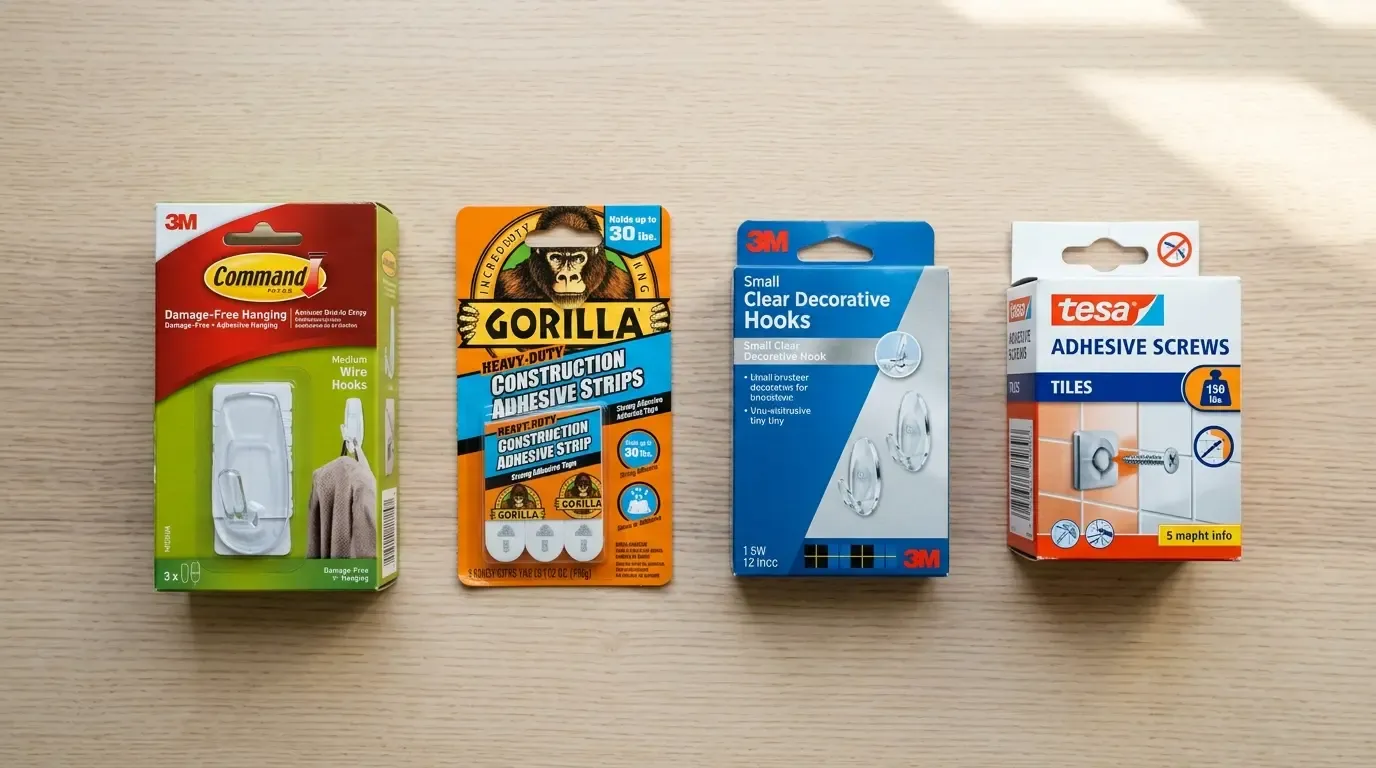 Best Adhesive Shelf Brands
A brand-by-brand ranking of adhesive shelving systems based on real weight performance, surface compatibility, and removal reliability for renters.
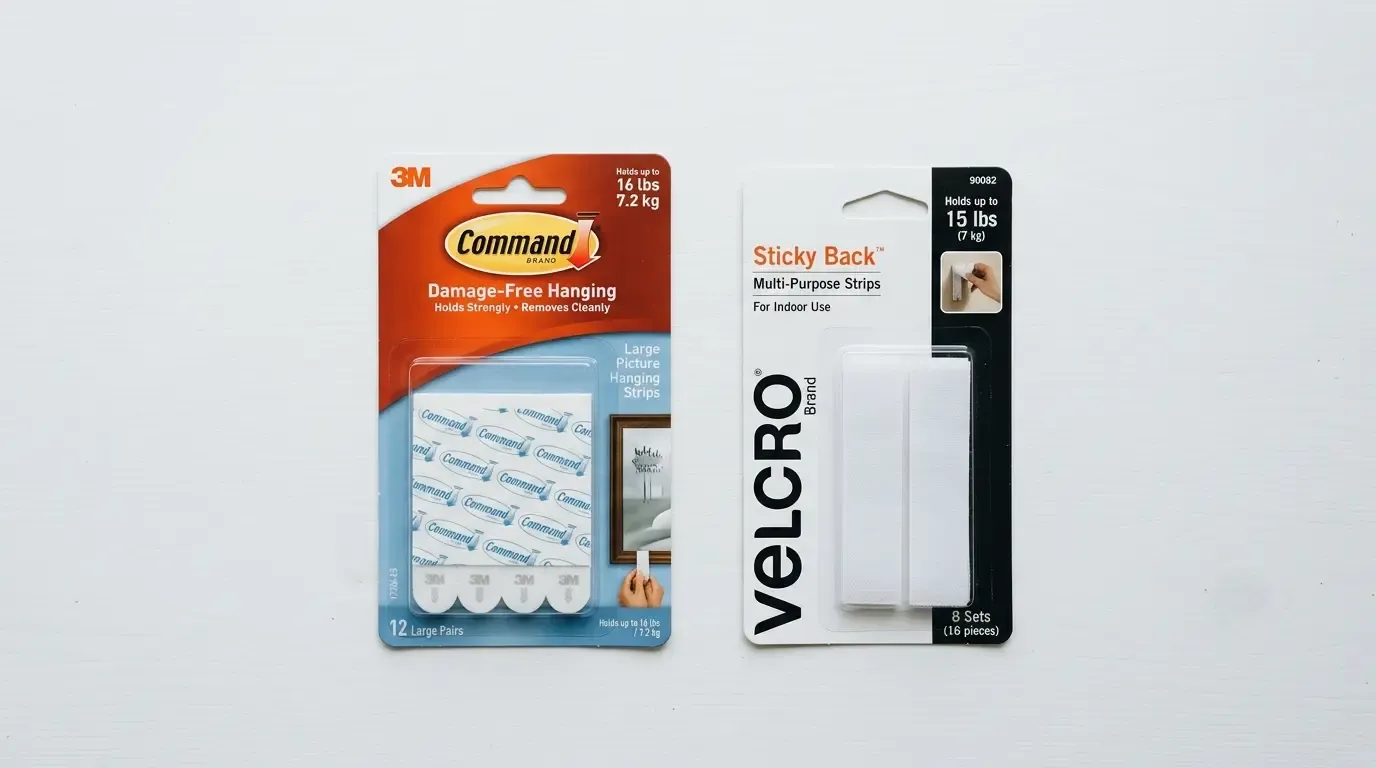 Command Strips vs Velcro Strips for Shelves
A direct comparison of Command strips and Velcro strips for shelf mounting covering load limits, surface behavior, and which one holds in real rental conditions.
Comments
No comments yet. Be the first to comment!