Renter-Friendly Solutions • 7 min read
Command Strip Hacks for Renters (That Actually Hold Weight)
 MyGlowHome Editorial
Introduction
Most renters only use Command Strips for hanging light frames or small hooks, which severely underuses their actual potential. In practice, these adhesive systems can support a wider range of light organizational tasks when applied correctly and within safe load limits.
The key is not treating them as “hanging tools”, but as light structural support for organization systems. When used properly, they can improve vertical space usage without damaging rental walls.
Command strips are one layer of a broader system see which no-drill storage system is right for you for a full comparison.
Why Command Strips Fail for Most Renters
Before using advanced setups, it’s important to understand failure points:
- Overloading beyond rated capacity
- Applying on dusty, textured, or humid surfaces
- Immediate loading without curing time
- Using uneven weight distribution
Most failures come from usage errors, not the product itself.
1. Cable and Wire Management Systems
Command Strips can be used to route and hide cables along walls and desks, creating a cleaner visual setup.
Why it works:
Light tension + fixed routing keeps cables stable without drilling.
Best use cases:
- TV cable routing
- Desk cable organization
- Charging station setups
Limitations:
- Not suitable for heavy or thick cables
- Adhesive weakens under repeated pulling
This works best when combined with broader room organization strategies found in small space storage optimization setups.
2. Lightweight Wall Grid Systems
Instead of hanging single items, Command Strips can support small modular grid panels for organizing lightweight items.
Why it works:
Distributes load across multiple adhesive points.
Best use cases:
- Notes and reminders
- Lightweight tools
- Small accessories
Limitations:
- Cannot support heavy or uneven loads
- Requires flat wall surface
3. Bathroom and Kitchen Micro-Organization
Command Strips are highly effective in moisture-prone areas when used correctly and not overloaded.
Best use cases:
- Toothbrush holders
- Light soap holders
- Small utensil storage
Why it works:
Short-distance load + minimal weight reduces failure risk.
Limitations:
- High humidity reduces long-term adhesion
- Must be replaced periodically
For alternative setups in moisture-heavy spaces, see damage-free wall storage alternatives. Command strips in bathrooms and kitchens often end up on tile no-drill storage on tile walls covers which Command products are rated for that surface and which aren't.
4. Hidden Utility Mounting
One of the most underrated uses is mounting lightweight utility items out of direct sight.
Best use cases:
- Remote holders
- Small controllers
- Lightweight organizers behind doors
Why it works:
Static load with no frequent interaction stress.
Limitations:
- Not suitable for frequently handled items
- Adhesive fatigue over time
5. Light Décor Layering Systems
Command Strips can be used to create layered wall décor without drilling, especially for aesthetic setups.
Best use cases:
- Posters and prints
- Lightweight frames
- Decorative panels
Why it works:
Low weight + static placement reduces failure risk.
Limitations:
- Not suitable for heavy frames or glass materials
- Must ensure even placement across adhesive points
Command Strip Weight Limits: What They Actually Hold
This is where most people go wrong they either assume Command Strips can hold anything, or they dramatically underestimate them. The reality sits somewhere in the middle, and the specifics matter a lot.
Picture Hanging Strips, by strip size (per pair):
Small strips (0.625" × 1.813") top out at 1 lb per pair think posters and lightweight frames. Medium strips (0.75" × 2.75") handle up to 3 lbs, which covers wall clocks, dry-erase boards, and lighter mirrors. Large strips (0.75" × 3.65") hold up to 4 lbs per pair, better suited for bigger frames and heavier wall art.
Using multiple pairs:
The more pairs you use, the more weight you can work with but only if each pair is applied correctly. At the high end, four pairs of extra-large strips can hold up to 15 lbs, which is enough for frames up to 24" × 36", canvas prints, mirrors, and whiteboards.
Hooks, by size:
Small hooks cap at 0.5 lb fine for keys, cables, or lanyards. Medium hooks go up to 3 lbs, which works well for towels, hats, or light kitchen tools.
The honest ceiling:
Some heavy-duty strips are rated up to 20 lbs, but that number comes with a lot of conditions the right surface, perfect application, stable environment. In a real rental apartment, with painted drywall and normal humidity, that ceiling drops. A good rule of thumb: aim for 75% of the rated limit max on anything you're leaving up for weeks or months.
What this means for renters:
Those ratings assume ideal conditions smooth surfaces, room temperature, no humidity, no thermal cycling. Most rental walls don't check all those boxes. That's not a reason to avoid Command Strips; it's a reason to stay well within the limits rather than pushing against them. And to be clear load-bearing shelves are off the table entirely. That's a job for wall anchors into studs, not adhesive strips. Within their actual range though, there's more flexibility than most renters realize. For more detailed weight limits, how much weight no-drill storage can hold has the full breakdown by strip size.
Critical Mistakes to Avoid
1. Overloading beyond design limits
Even strong strips degrade quickly under constant stress.
2. Ignoring wall condition
Dust, humidity, and paint texture significantly reduce adhesion.
3. Skipping curing time
Most setups require time before full strength is achieved.
Removing Command strips incorrectly is one of the most common causes of paint damage at move-out, how to remove adhesive hooks without damage covers the exact process to avoid it.
Real Decision Guide
Use Command Strips for:
- lightweight organization
- visual setups
- temporary or semi-permanent storage
Do NOT use them for:
- heavy shelving
- load-bearing storage
- high-movement items
They are a precision tool, not a structural system. If you need more holding power than Command strips provide, strongest adhesive hooks for renters covers which adhesive systems are built for heavier everyday use.
Conclusion
Command Strips are not general-purpose hanging tools; they are a controlled surface system for solving light, repetitive storage needs in rental spaces. Their effectiveness depends entirely on disciplined use appropriate surfaces, realistic load expectations, and correct application.
When these conditions are met, they stop being temporary fixes and become a reliable layer within a broader no-drill storage strategy. When they are ignored, even high-quality strips fail under predictable conditions.
In rental environments, the most effective approach is not pushing Command Strips beyond their limits, but integrating them precisely where they perform best light, static, and non-structural use cases. That is where they consistently deliver value.
Suggested Posts
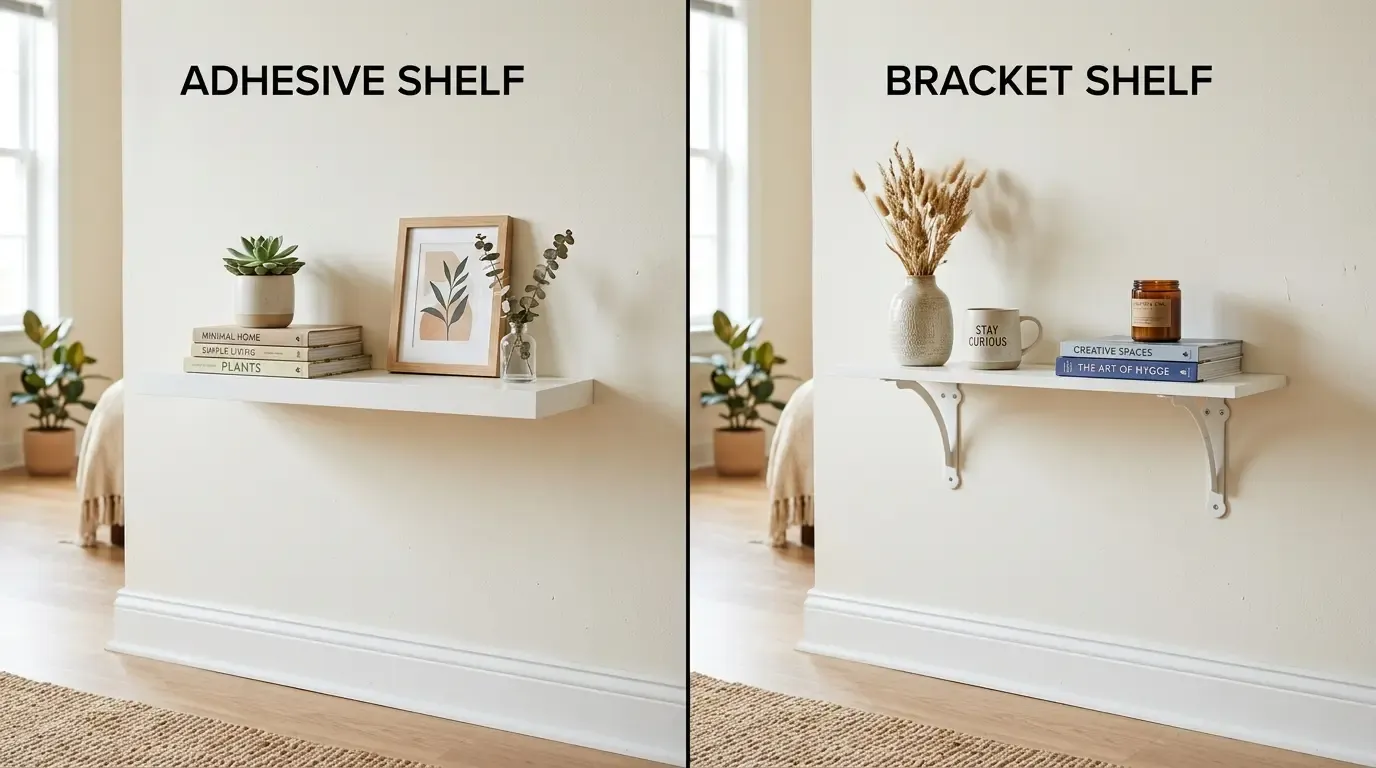 No-Drill vs Mounted Shelves for Renters
A direct comparison of no-drill and traditional mounted shelves weight capacity, surface damage, cost, and when each one makes sense for renters.
 No Drill Storage on Brick and Textured Walls
No drill storage on brick and textured walls why standard adhesive solutions fail and which approaches actually work when your rental walls are not smooth.
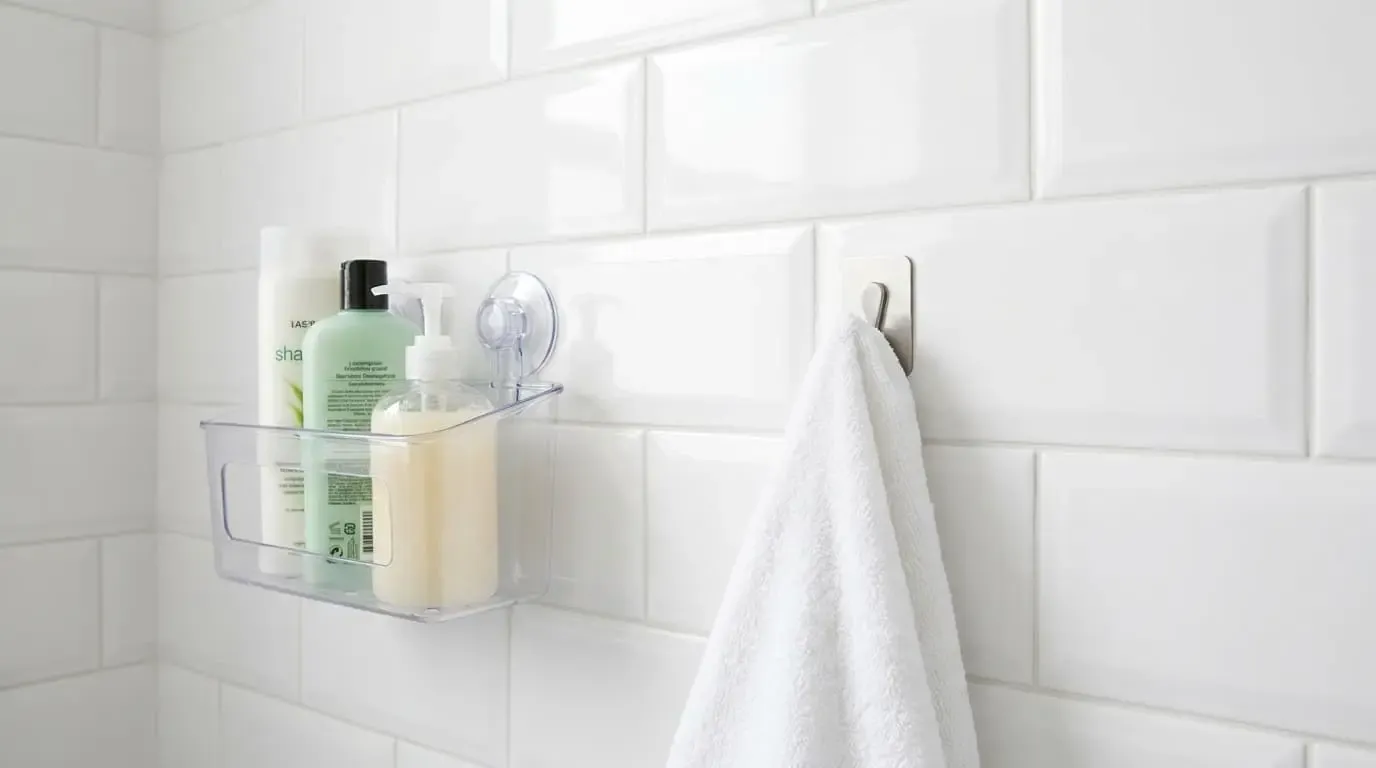 No Drill Storage on Tile Walls and What Actually Works
No drill storage on tile walls what works on glazed tile, what fails on matte and grout, and how to mount things securely without touching a drill.
Comments
No comments yet. Be the first to comment!