Renter-Friendly Solutions • 5 min read
No Drill Book Shelves That Hold the Weight
 MyGlowHome Editorial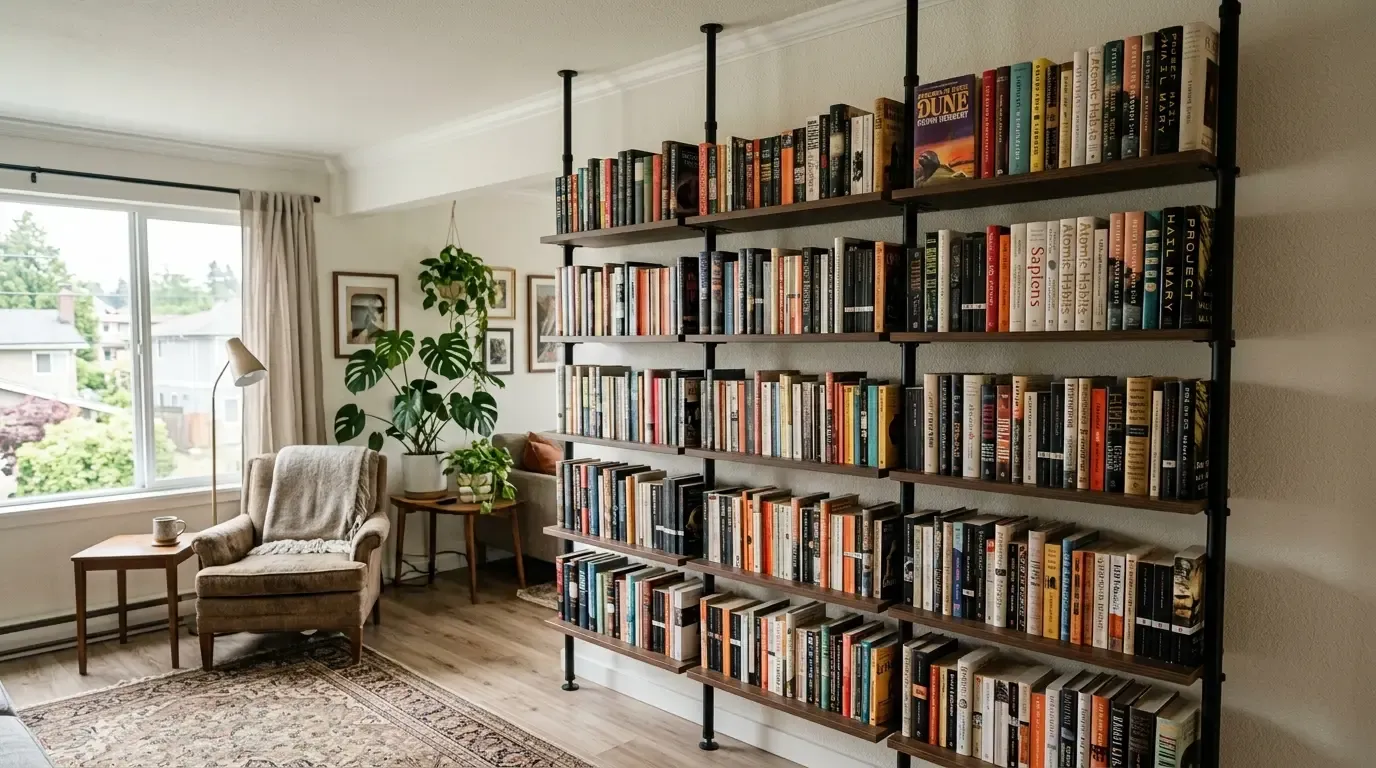
No Drill Book Shelves That Hold the Weight
Here is the problem with books: a small collection looks manageable until you do the math. Most renters put books on whatever shelf they already have, load it gradually over weeks, and then the whole thing comes down. Not because the shelf was cheap. Because the weight was never something adhesive systems were designed to carry.
Before deciding on a system, see which no-drill storage option is right for your rental for a full breakdown of what each type handles and where each one hits its limit.
What Books Actually Weigh
This is the number most people skip, and it is why so many book shelves fail.
Book Type | Weight per Linear Foot |
|---|---|
Paperbacks, single row | 8 to 10 lbs |
Standard hardcovers, single row | 12 to 15 lbs |
Large format and art books | 15 to 20 lbs |
Double-stacked paperbacks | 16 to 20 lbs |
Two feet of hardcovers is 24 to 30 lbs. Add the shelf board itself, which on an MDF board runs 4 to 8 lbs depending on size, and you are at 28 to 38 lbs before a single book goes down. That is past the absolute ceiling of most adhesive systems, not the safe working load.
Real-world adhesive performance on a typical rental wall runs 60 to 70 percent of the stated capacity. A system rated at 20 lbs is reliably holding 12 to 14 lbs in practice. For a full picture of verified weight limits across every no-drill system type, see how much weight no-drill storage can actually hold.
What Goes Wrong With Adhesive Shelves and Books
Adhesive shelves do not warn you before they fail under sustained heavy loads. The bond weakens gradually under constant pressure over days or weeks, and then the shelf drops suddenly. A full shelf coming down hits whatever is below it and often pulls paint or drywall surface material with it.
Two mistakes that accelerate this:
Treating the rated capacity as the target load. For a sustained, unchanging load like a row of books, the practical working limit is meaningfully lower than the label figure. This is one of the most repeated patterns in no-drill storage failures renters deal with.
Choosing MDF shelving for book storage. MDF deforms under constant weight over time, a process called creep. A board that feels rigid on day one can show visible sag by month two under dense hardcovers. Solid hardwood and plywood resist this significantly better.

What Actually Holds Heavy Books Without Drilling
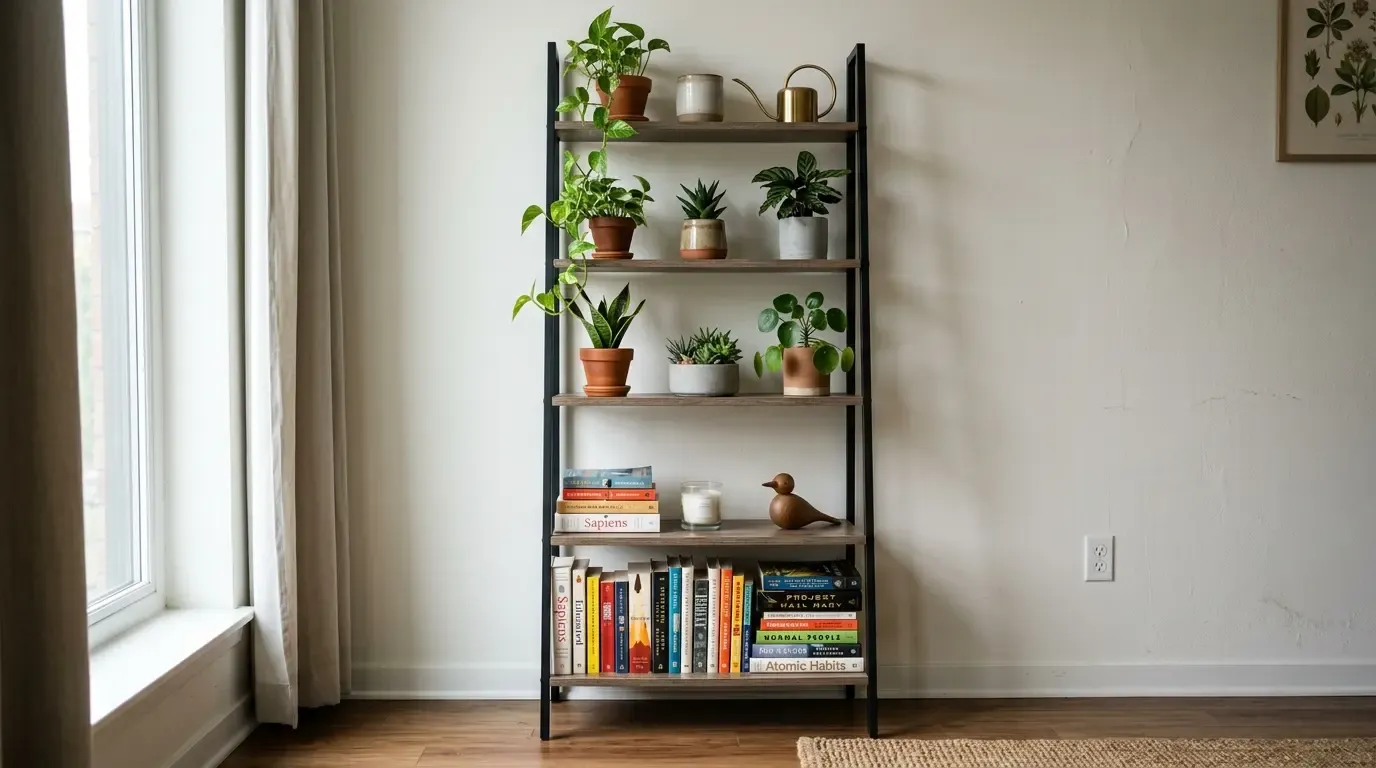
Freestanding bookcases are the direct answer. The VASAGLE 5-Tier Industrial Ladder Shelf (ULLS45BF, 11 lbs per shelf, 110 lbs total) transfers all load through the frame to the floor. No wall dependency, no adhesive ceiling, no sagging risk. For heavier libraries, the VASAGLE 4-tier model ULLS44MB carries a verified total static load of 213 lbs.
One note for renters: tall freestanding bookcases should be anchored at the top with the included anti-tip strap. For most VASAGLE models this means a single small screw at the very top of the wall, which is a substantially smaller wall intervention than the multiple holes a wall-mounted shelf system would need.
Floor-to-ceiling tension shelving presses between floor and ceiling and transfers load downward. No wall adhesion required. Standard systems hold 30 to 40 lbs per shelf, enough for a solid paperback collection or a row of hardcovers. These work well in living rooms and home offices where you want the look of a wall of books without the floor footprint of a freestanding unit. For room-by-room setup ideas that include tension systems, see the best no-drill storage setup for each room in a rental.
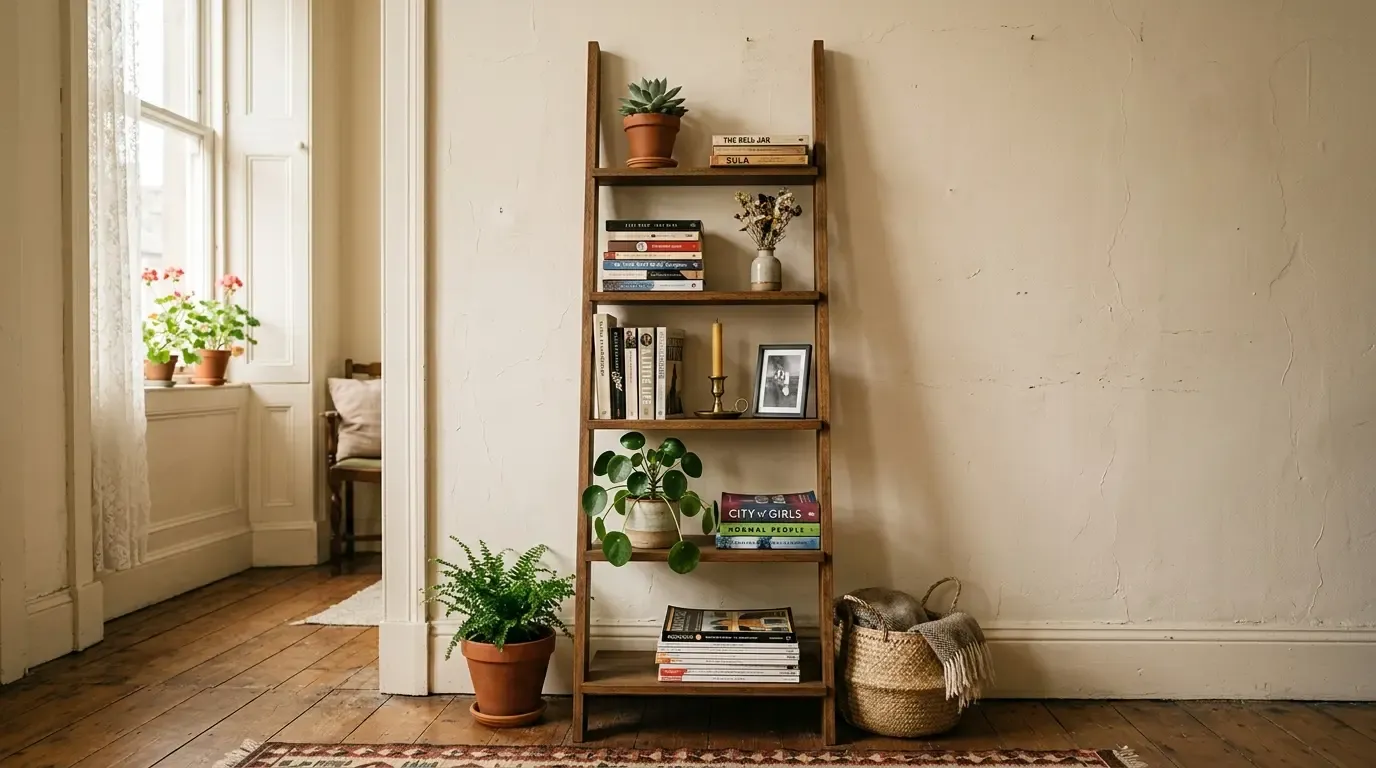
Leaning ladder bookcases rest against the wall under their own weight. No drilling, no adhesive. The critical number to check is per-shelf capacity, not total. The VASAGLE 5-tier narrow ladder shelf ULLS109B01 has a verified per-shelf capacity of 22 lbs, which handles a single row of hardcovers comfortably. Many cheaper ladder shelves advertise a 50 to 55 lb total spread across five shelves, which works out to 10 to 11 lbs per shelf. That is not enough for dense hardcovers. Always check the per-shelf figure.
If That Does Not Work: Smaller Collections
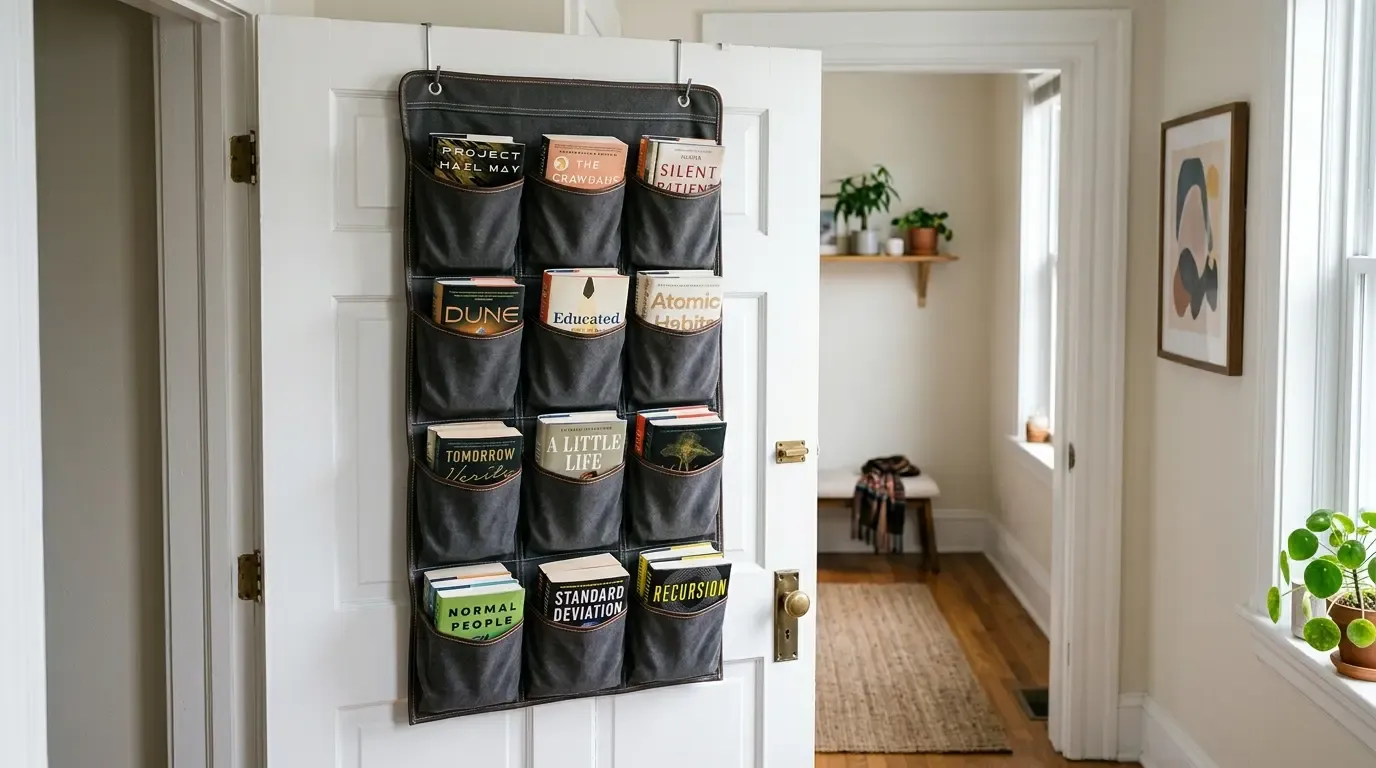
For a rotating reading stack rather than a full library, an over-door book organizer hooks over the back of a door and holds a small selection of paperbacks or lightweight hardcovers with no wall contact. Capacity is typically 10 to 15 lbs. For a wider look at over-door options that work in different rooms, see best over-the-door organizers for renters.
The Right Choice for Most Renters
More than a shelf or two of books means a freestanding bookcase is the honest answer. It handles the load, needs no wall commitment beyond an optional anti-tip strap, and has no adhesive ceiling. For a smaller collection or a more architectural look, a tension system or a leaning case with a verified per-shelf rating above 15 lbs works well.
Adhesive shelves are not the right tool for books. That is not a brand issue. It is a physics issue.
Suggested Posts
 No Drill Shelves Between Studs: What Works
What actually holds on drywall between studs and the honest load limits for each no-drill option.
 No Drill Shelves on Plaster Walls
What works on plaster walls, what to test before committing, and which systems skip the wall entirely.
 No Drill Shelf Sagging: How to Fix It
Why no drill shelves sag and the practical steps that prevent it from the first install.
Comments
No comments yet. Be the first to comment!