Renter-Friendly Solutions • 5 min read
No Drill Shelves on Plaster Walls
 MyGlowHome Editorial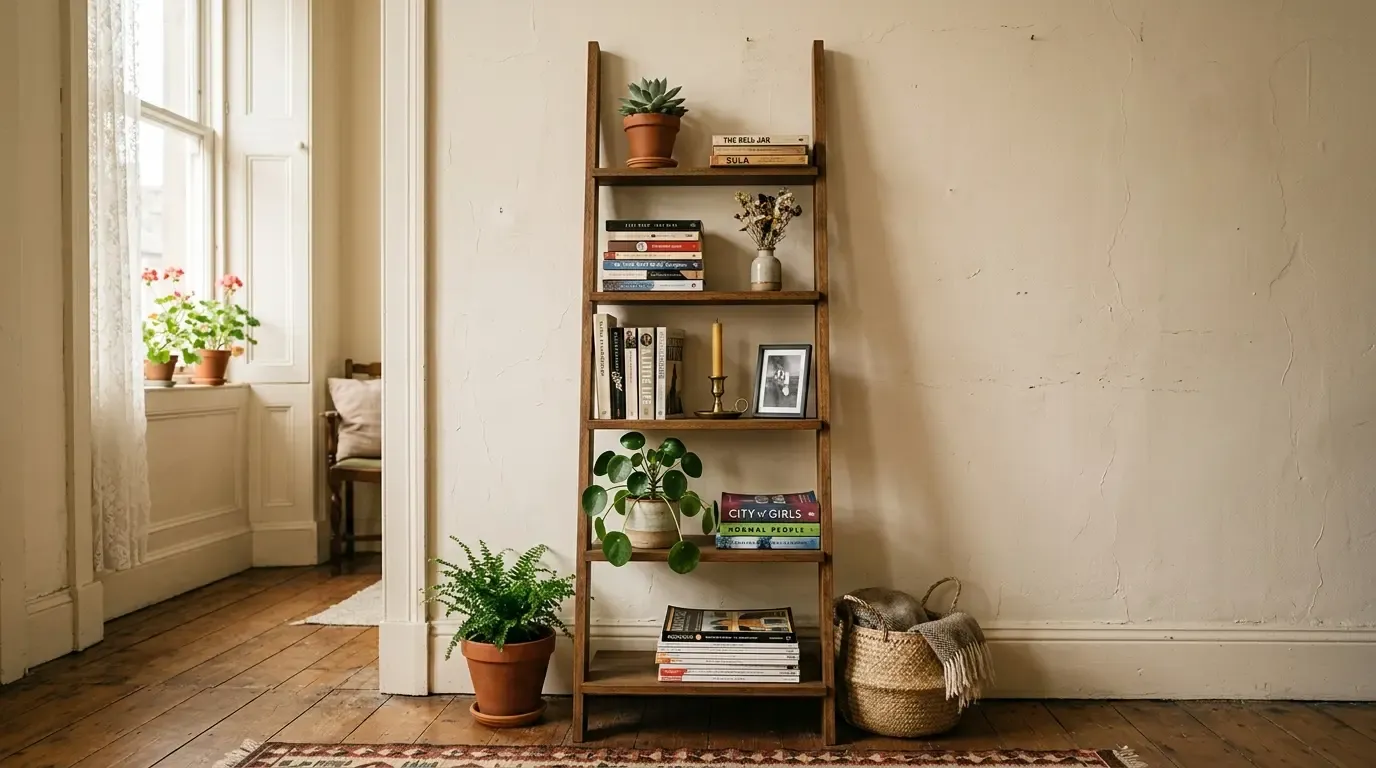
No Drill Shelves on Plaster Walls: What Actually Works
Most no-drill shelf advice assumes drywall. If you are in an older building, that assumption is wrong, and using the wrong approach on plaster does not just mean the shelf falls. It can mean chunks of the wall surface come with it, which turns a storage problem into a security deposit conversation.
Here is what plaster actually is, what works on it, and how to test your wall before committing to anything. For a full overview of how wall surface type affects every no-drill system, see which no-drill storage system is right for your rental.
What Makes Plaster Different From Drywall
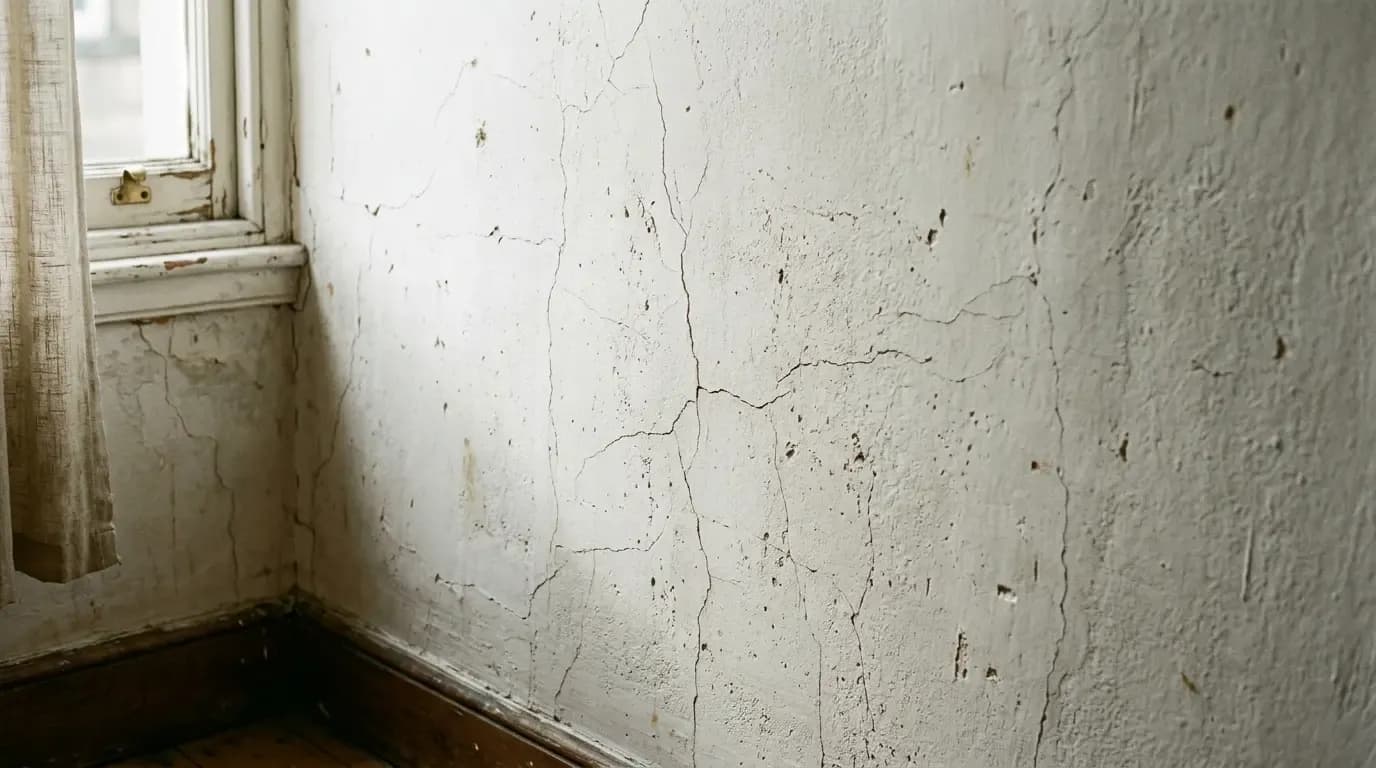
Lath and plaster was the standard for interior walls in the US from roughly the 1700s through the mid-twentieth century, when drywall replaced it. In lath and plaster construction, narrow horizontal wooden strips are nailed across wall studs, and wet plaster is applied over them in three coats: a scratch coat, a brown coat, and a finish coat.
The result is a wall that is denser, harder, and more brittle than modern drywall. It is also more likely to have multiple layers of old paint, minor surface irregularities, and areas where the plaster has partially separated from the lath beneath it over decades of settling.
That last point matters most for adhesive mounting. The adhesive bonds to the surface it touches, not the structural wall behind it. If that surface is a loosely bonded paint layer sitting on old plaster, the strip grips the paint, not the wall. When it comes down, the paint comes with it.
Test the Wall Before You Mount Anything
This takes five minutes and saves a wall repair.
Press a single adhesive strip to a small inconspicuous area of the wall. Let it cure for 24 hours. Then remove it slowly at a 45-degree angle by pulling the tab. If paint or plaster surface material comes away with it, the wall is not suitable for adhesive mounting. The test costs one strip.
Also tap the wall in several spots before deciding. A hollow sound means the plaster has separated from the lath behind it. Mark those areas and avoid them regardless of what you are mounting. For real-world capacity figures on adhesive systems and what they reduce to on compromised surfaces, see how much weight no-drill storage can actually hold.
What Does Not Work on Plaster
Adhesive strips on unpainted or damaged plaster. Raw plaster is porous and irregular. Adhesive bonds to the weakest part of the surface and fails unpredictably. On sections with soft spots, cracks, or delaminating areas, this often means the surface comes away on removal.
Suction cups. Painted plaster, even in good condition, is not consistently smooth or airtight enough for suction to hold under real load.
Standard plastic drywall anchors. These are designed for gypsum drywall. In plaster, they either spin without gripping or crack the plaster around the hole.
What Actually Works
Adhesive strips on solid, well-maintained painted plaster. If the surface passes the test above, quality adhesive strips work for lightweight loads: a small plant, a few frames, light decorative objects. Clean with isopropyl alcohol first, press firmly for 30 seconds per strip, wait 24 hours before loading anything. For the failure patterns that apply to both plaster and drywall adhesive installs, see no-drill storage mistakes that cause shelves to fall.
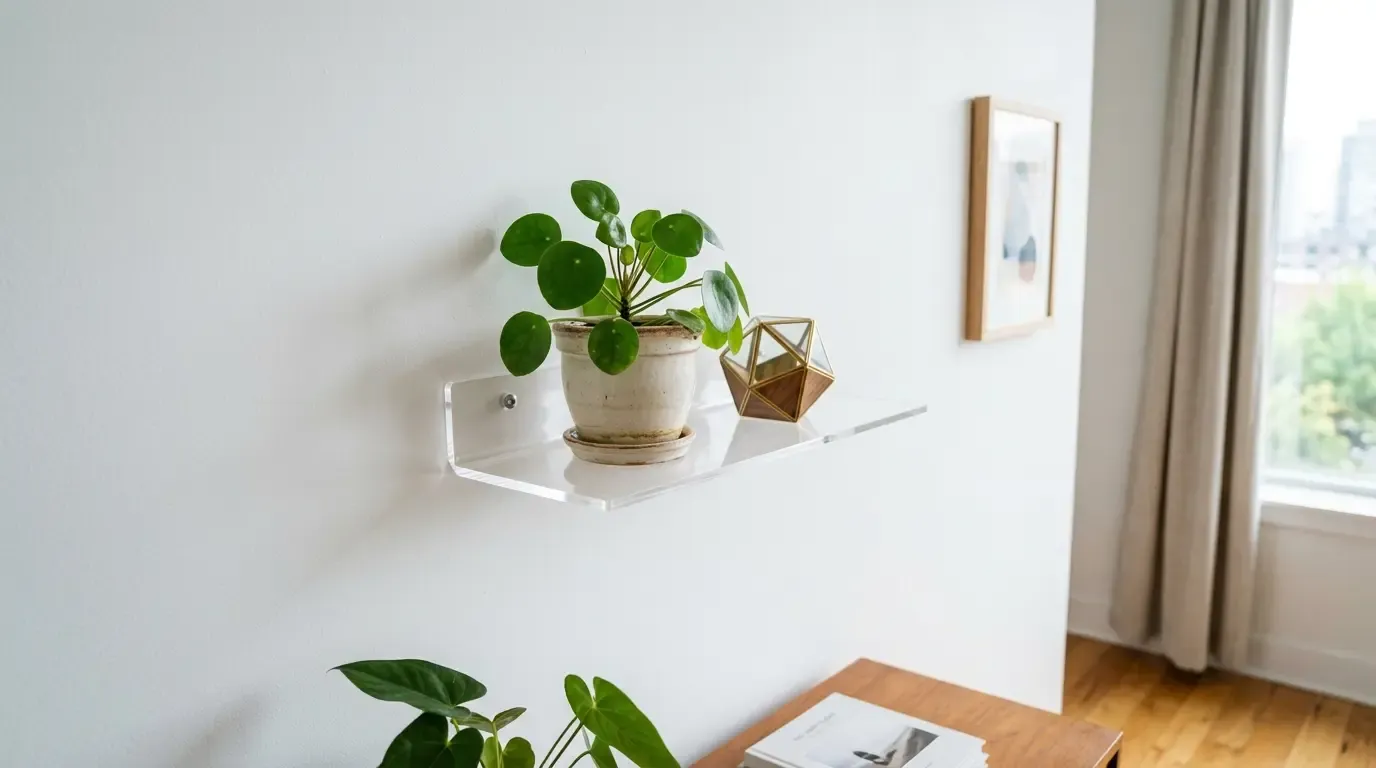
For shelves intended to hold more than light decor, OAPRIRE Acrylic Floating Wall Shelves (OAPRIRE, 7 lbs per shelf at 12 inches) are designed for exactly this use case, with an integrated adhesive system that distributes load more reliably than loose strip pairs on a borderline surface.
Freestanding shelving. The most reliable option for plaster walls at any condition level. A VASAGLE 5-Tier Ladder Shelf (ULLS45BF, 11 lbs per shelf, 110 lbs total) stands on the floor and makes zero wall contact. Surface condition is completely irrelevant. It scales to loads that no adhesive system can match and leaves nothing on the wall when you move out.
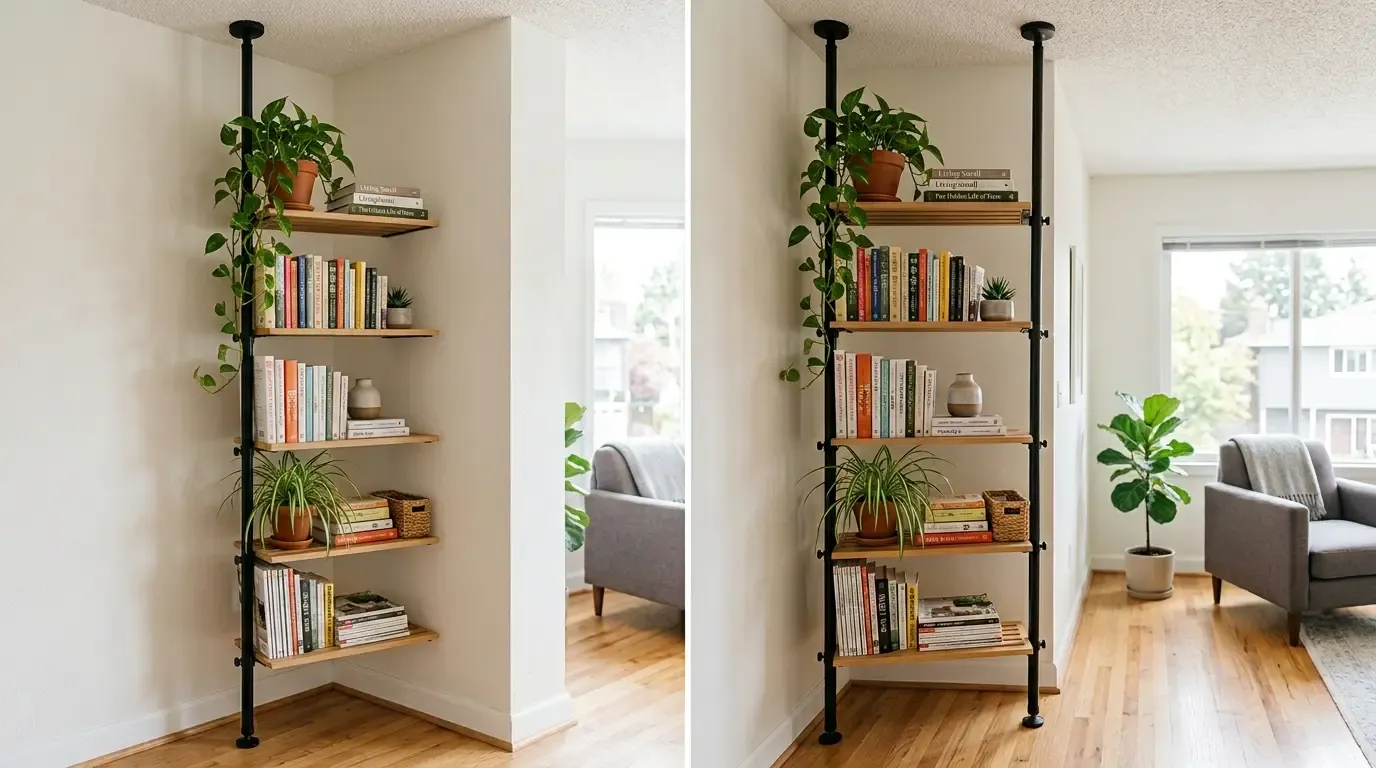
Floor-to-ceiling tension poles. Tension systems press between floor and ceiling and transfer all load downward. No wall contact, no surface compatibility concern, plaster condition irrelevant. Standard systems hold 30 to 40 lbs per shelf. The requirement is a solid flat ceiling with enough clearance for the pole length. In older buildings with decorative molding or slightly uneven ceilings, confirm fit before purchasing. For how tension systems work room by room, see the best no-drill storage setup for each room in a rental.
Worth Considering: The Leaning Shelf
A leaning shelf rests against the wall under its own weight with contact at the floor and a small point at the top of the wall. No adhesive bond means plaster condition has no effect on whether it stays up. It holds through gravity and its own mass.
The trade-off is footprint. Leaning shelves take floor space that wall-mounted options do not. In a small room this matters. In a larger bedroom or a hallway it usually does not.
Our Pick
For plaster walls in anything but perfect condition, skip adhesive entirely. A freestanding unit or tension pole gives you real storage capacity with no surface risk and no deposit exposure. If the wall is solid, painted, and passes the test strip, light adhesive mounting is fine for display-weight loads. Do not push past that.
Suggested Posts
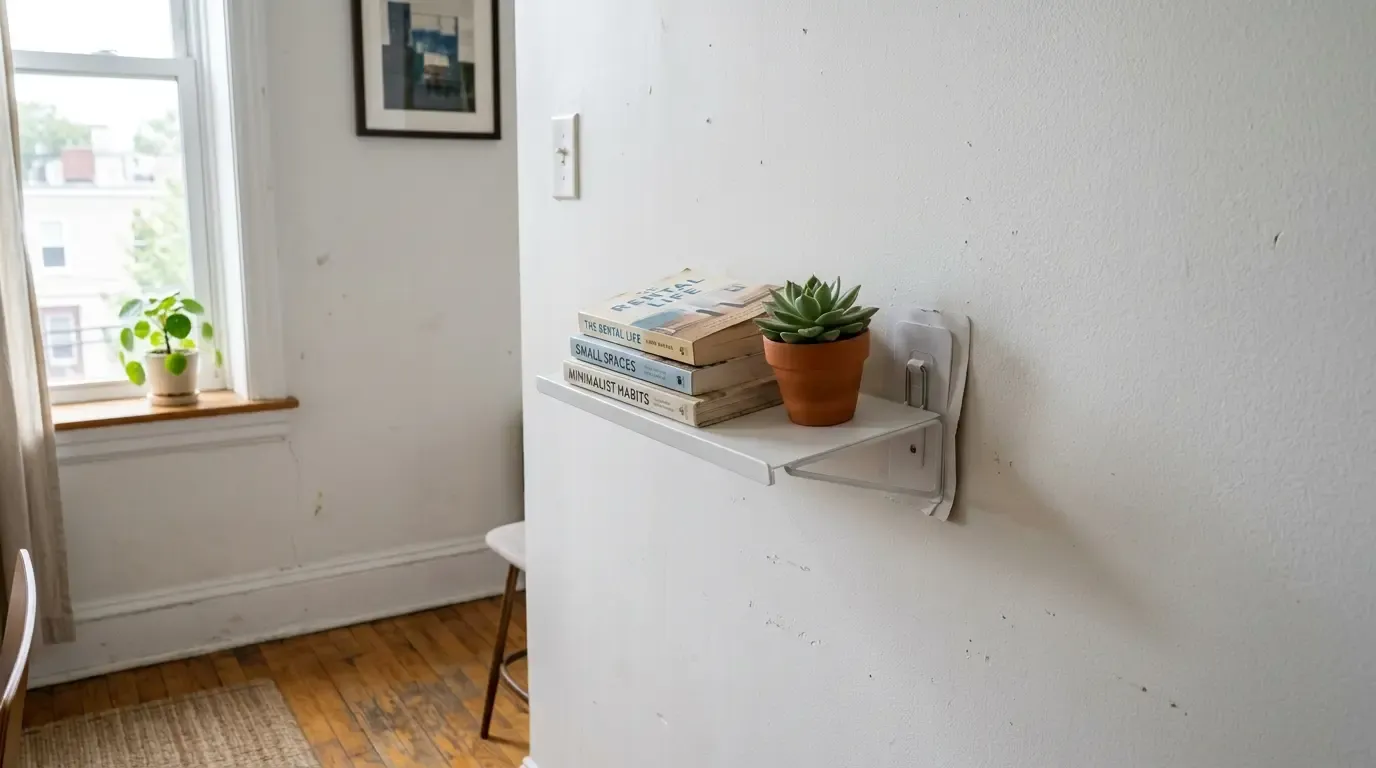 No Drill Shelf Sagging: How to Fix It
Why no drill shelves sag and the practical steps that prevent it from the first install.
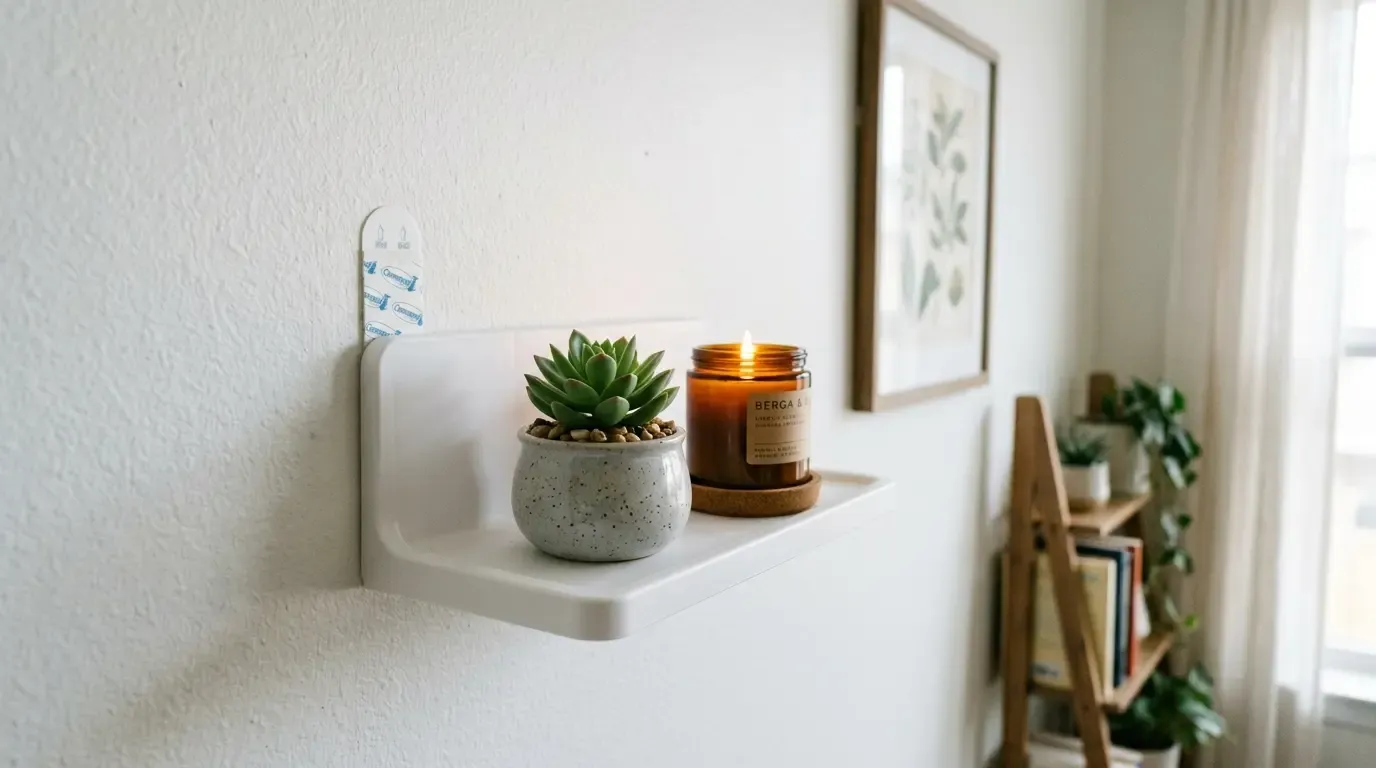 How Long Do Adhesive Shelves Last
on heat, humidity, and surface conditions. Short Description: What actually determines adhesive shelf lifespan and how to get the most out of them.
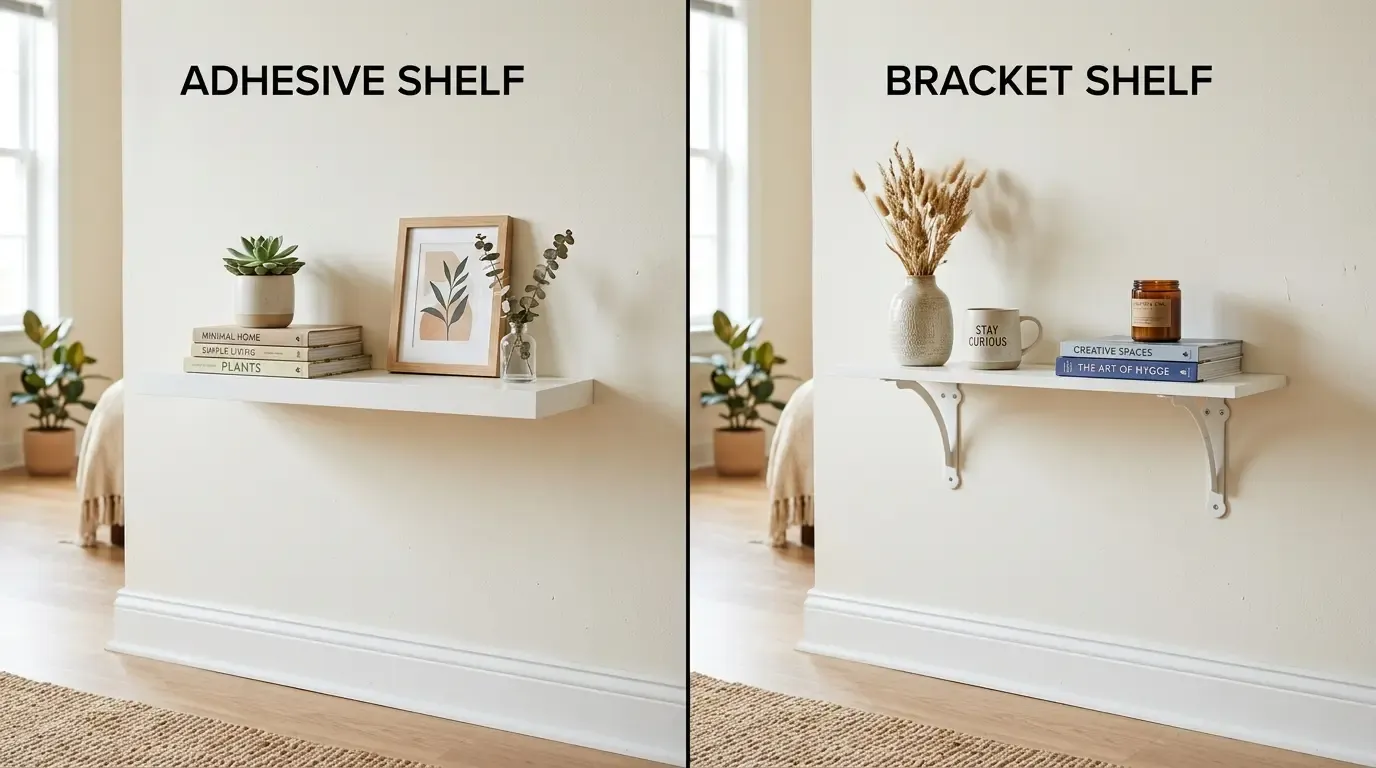 No-Drill vs Mounted Shelves for Renters
A direct comparison of no-drill and traditional mounted shelves weight capacity, surface damage, cost, and when each one makes sense for renters.
Comments
No comments yet. Be the first to comment!