Renter-Friendly Solutions • 5 min read
No Drill Shelf Sagging: How to Fix It
 MyGlowHome Editorial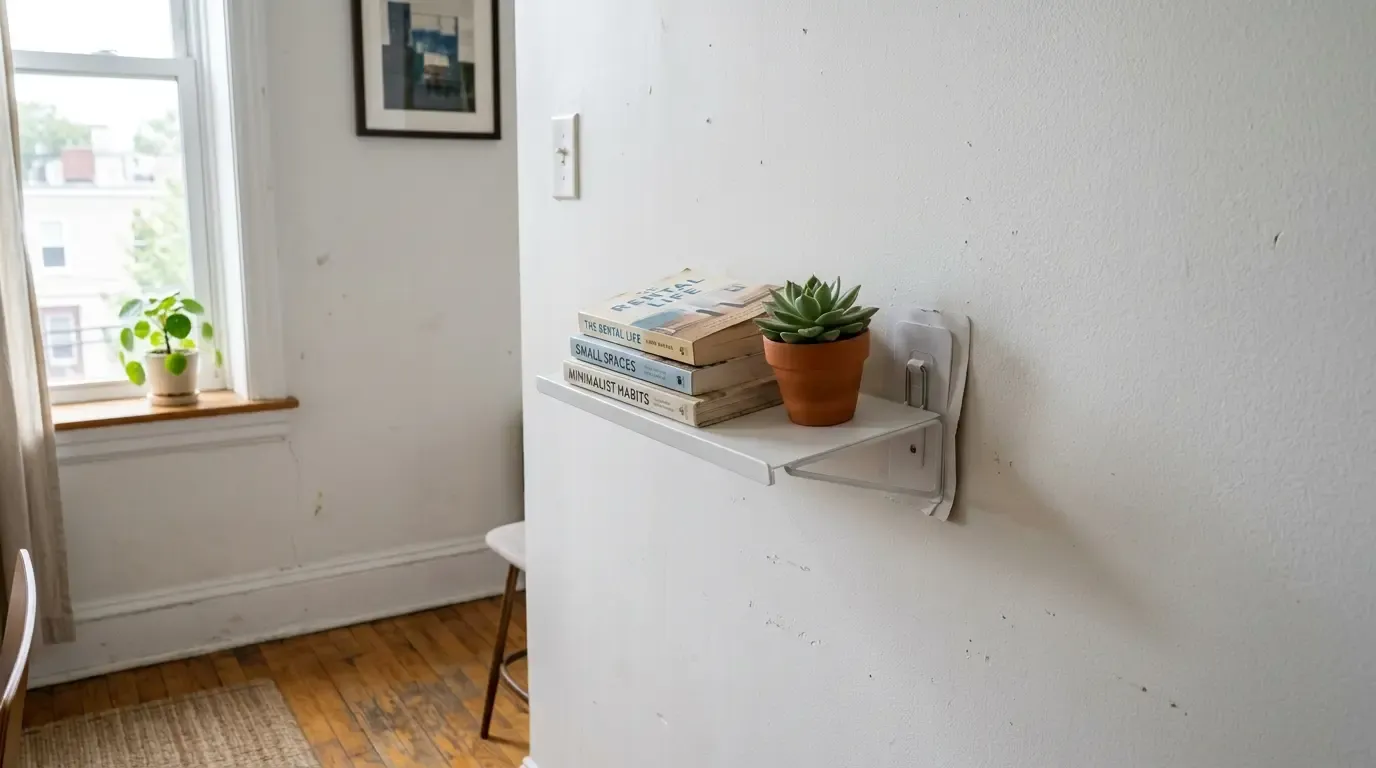
No Drill Shelf Sagging: How to Fix It Before It Starts
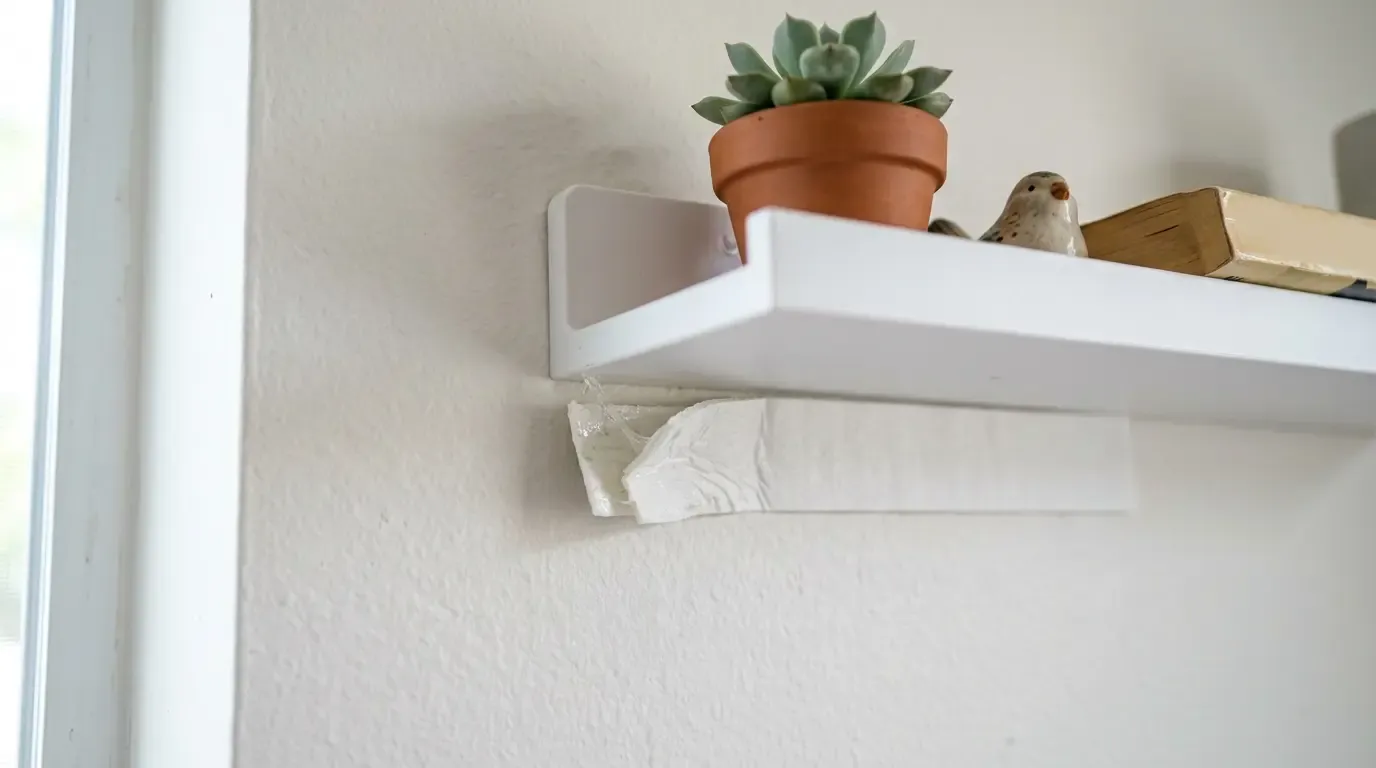
A shelf that goes up level and slowly tilts forward over the next few weeks is not a product defect. It is a setup problem. Almost every sagging no drill shelf fails for the same reasons, and almost all of them were avoidable before the shelf even went up.
If you are not sure which no drill system you are working with in the first place, our guide to choosing the right no-drill storage system for your rental is the better starting point before this one.
Why It Happens
The three causes almost always show up together.
The adhesive is past its practical ceiling. Large Command strips are rated for 16 lbs across four pairs. The XL Heavyweight version tops out at 20 lbs. Those are lab numbers on a clean, smooth, prepped surface. On a typical rental wall with semi-gloss paint, real holding power sits closer to 60 to 70 percent of that. A shelf loaded right at the label limit is already past what the bond can reliably sustain. For verified real-world capacity figures across every system type, see how much weight no-drill storage can actually hold.
The shelf material is deforming. MDF and particle board bend under sustained weight over time. The technical term is creep. The board does not snap; it slowly bows. A shelf that feels solid on day one can show visible sag by month two under even moderate loads. Solid hardwood and plywood resist this significantly better.
Too much weight in the center. A shelf supported only at its two ends has no way to transfer center load except downward. The longer the shelf, the worse this gets. Anything over 24 inches with weight concentrated in the middle will sag faster regardless of the adhesive used.
What Goes Wrong During Installation
Loading before the cure is finished. Most adhesive systems need a full 24 hours before any weight goes on them. Putting items on within the first hour because the shelf feels stuck is one of the most reliable ways to set up a slow failure. The bond is still forming. Stress during that window weakens it before it has set. This is one of the most common patterns in no-drill storage failures that renters repeat.
Using the rated limit as the target. The label capacity is a ceiling, not a loading goal. For a sustained, unchanging load like books or kitchen items, staying below 60 percent of the stated figure gives the bond real room to hold.
How to Prevent It
Factor | What to Do |
|---|---|
Surface prep | Wipe with isopropyl alcohol, let dry fully |
Application | Press firmly for 30 seconds per strip |
Cure time | Full 24 hours before any load |
Load | Stay below 60% of rated capacity |
Shelf length | Under 24 inches for adhesive-only systems |
Shelf material | Plywood or solid hardwood over MDF |
Environment | Away from radiators, stoves, and direct sun |
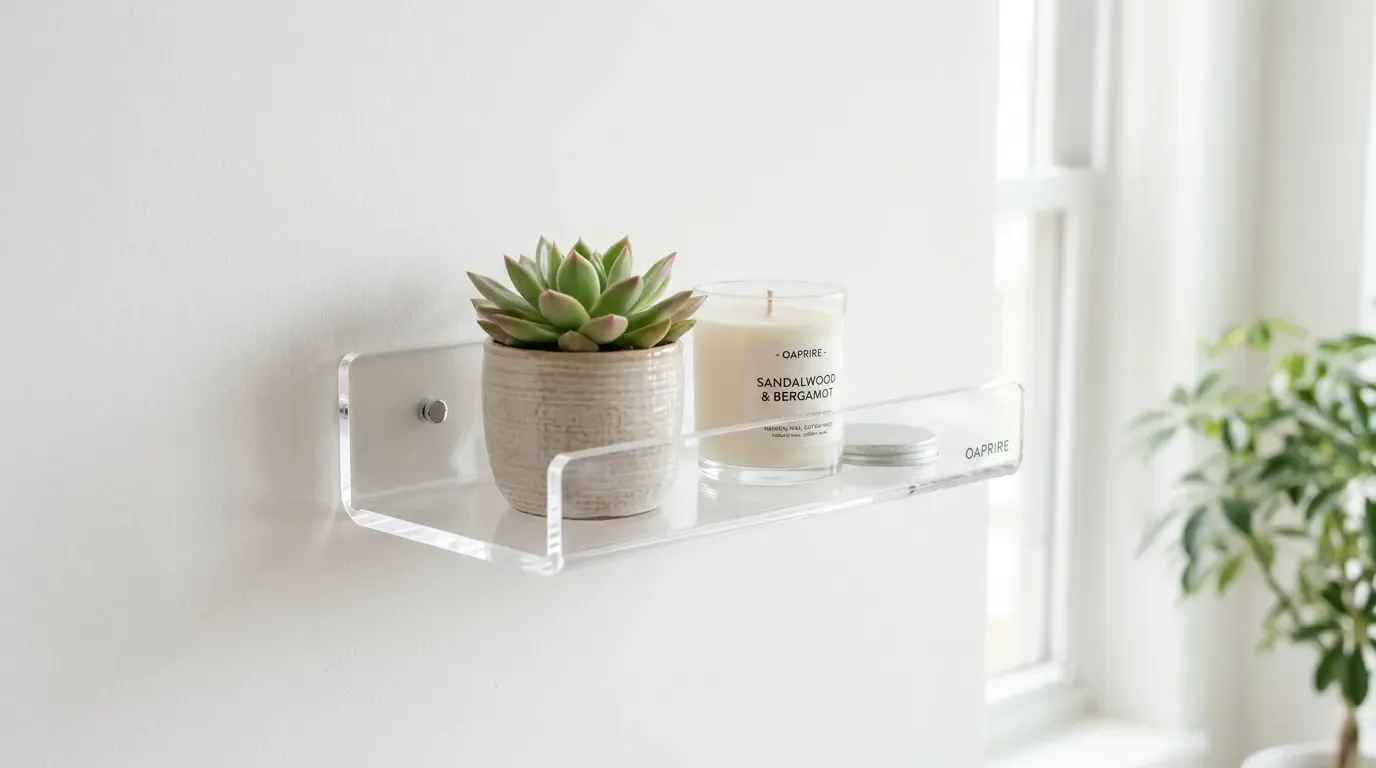
For light display storage, OAPRIRE Acrylic Floating Wall Shelves (OAPRIRE, 7 lbs per shelf at 12 inches) are built specifically for rental use with an honest load rating and clean adhesive removal.
If the Load Needs More Than Adhesive Can Give
Some storage needs should never go on an adhesive shelf. Heavy kitchen items, books, anything that accumulates weight over time: these loads belong on a system that does not depend on wall adhesion at all. The VASAGLE 5-Tier Ladder Shelf (ULLS45BF, 11 lbs per shelf, 110 lbs total) transfers everything through the floor. No sagging, no adhesive ceiling, no wall dependency. For room-by-room advice on matching the right system to the right load, see the best no-drill storage setup for each room in a rental.
The Deposit Side of This
A sagging adhesive shelf usually ends one of two ways: it falls and damages what is below it, or the adhesive pulls away and takes paint with it. Both create move-out problems that are entirely avoidable.
Keep loads light, prep the surface correctly, avoid humid or warm spots unless the product is rated for them. Check each corner every few months by pressing on it. Any gap between shelf and wall is a warning. Take it down before it falls under load. When it is time to remove, see how to take down adhesive hooks and Command strips without damaging paint.
The Bottom Line
Right material, clean surface, full cure time, load well within the rated limit: a no drill shelf stays level for the length of a lease. Skip any one of those and the sag starts early.
Suggested Posts
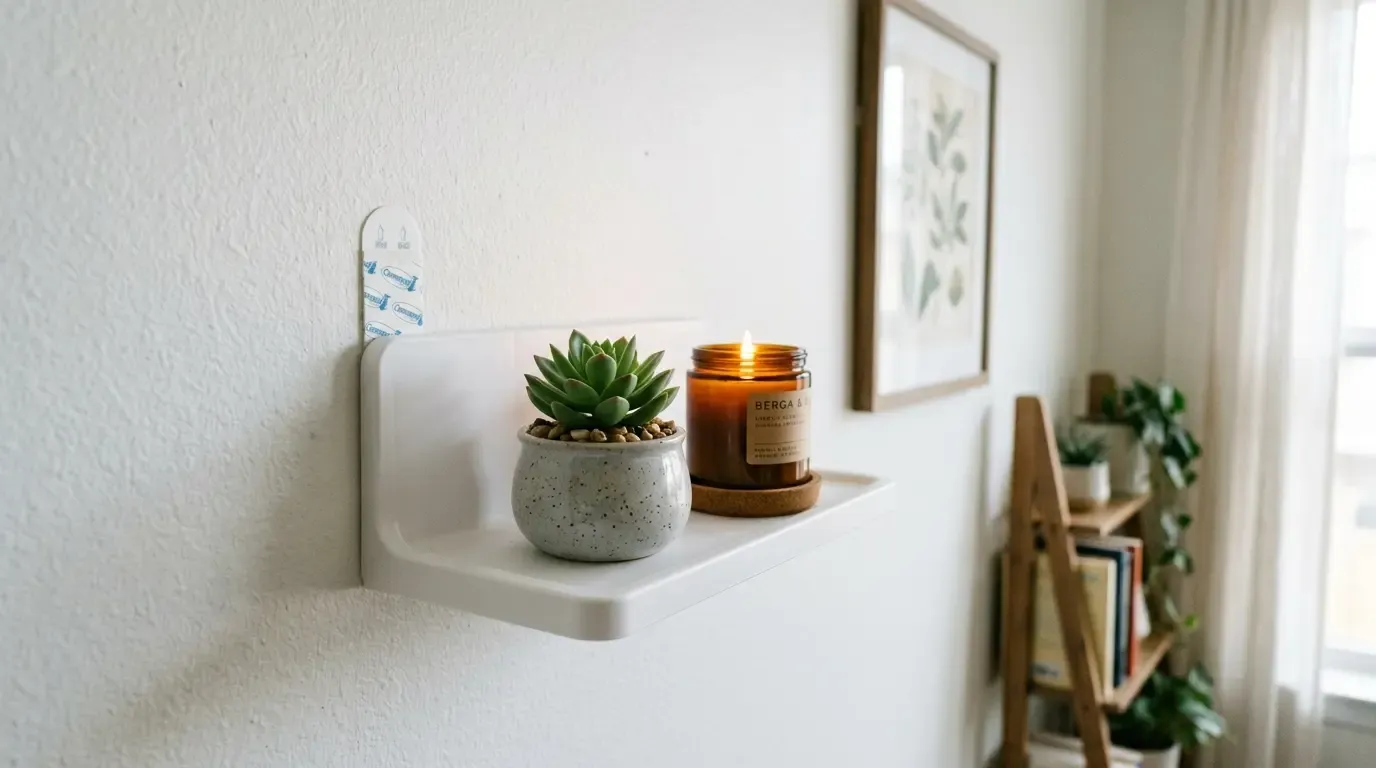 How Long Do Adhesive Shelves Last
on heat, humidity, and surface conditions. Short Description: What actually determines adhesive shelf lifespan and how to get the most out of them.
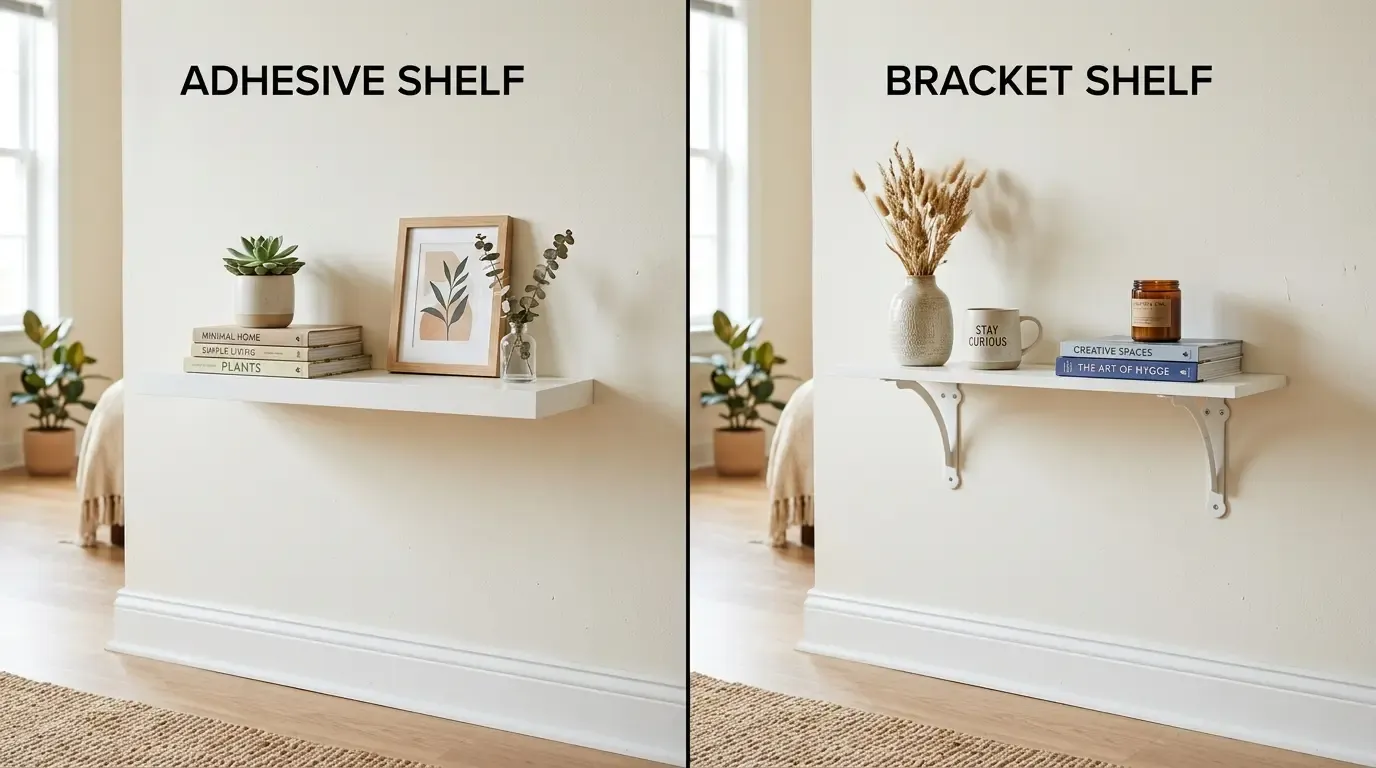 No-Drill vs Mounted Shelves for Renters
A direct comparison of no-drill and traditional mounted shelves weight capacity, surface damage, cost, and when each one makes sense for renters.
 No Drill Storage on Brick and Textured Walls
No drill storage on brick and textured walls why standard adhesive solutions fail and which approaches actually work when your rental walls are not smooth.
Comments
No comments yet. Be the first to comment!