Renter-Friendly Solutions • 4 min read
How Long Do Adhesive Shelves Last
 MyGlowHome Editorial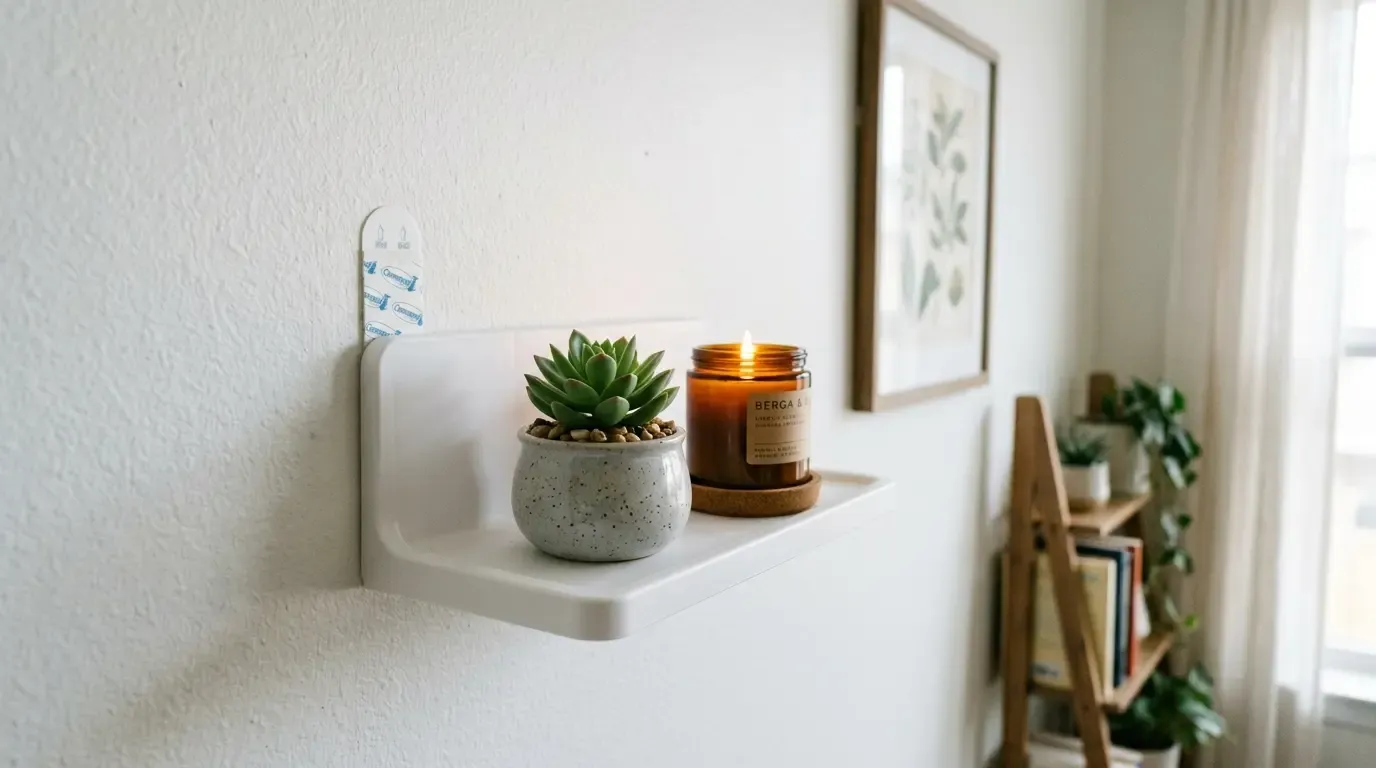
How Long Do Adhesive Shelves Actually Last
According to 3M, Command strips retain their bond indefinitely once properly applied to a wall, until the release tab is deliberately pulled. That is the honest answer for a shelf installed correctly on a suitable surface in a stable room.
The failures most renters experience have nothing to do with the adhesive wearing out over time. They come from conditions that undermine the bond from the day the shelf goes up. Understanding those conditions is the difference between a shelf that lasts a lease and one that falls in month two.
For a full comparison of how adhesive systems hold up against other no-drill options, see which no-drill storage system is right for your rental.
What the Data Actually Shows
3M has confirmed that unused Command strips in their original packaging begin to degrade after 18 to 24 months from manufacture. If you are pulling strips from a pack that has been sitting in a drawer for over a year, test one before committing. Degraded adhesive will not form a reliable bond regardless of how well you prep the surface.
Once installed, the limiting factor becomes environment entirely.
Condition | Effect on Bond |
|---|---|
Dry room, stable temperature | Bond holds indefinitely |
Humidity from showers or cooking steam | Weakens bond progressively over weeks |
Heat above 100 degrees F | Softens adhesive, causes creep under load |
Direct sunlight on wall surface | Gradual degradation over weeks |
Multiple old paint layers on wall | Adhesive bonds to weak outer layer only |
Freshly painted wall under 7 days | Paint pulls away on removal |
What Actually Shortens Shelf Life
Heat is the most common silent failure cause. Acrylic adhesives are rated for 50 to 100 degrees Fahrenheit. A shelf above a radiator, near a stove, or on a wall that gets afternoon sun sits in conditions that continuously soften the bond. Items well within the rated limit fall in these locations because the adhesive never fully firms up. Failures spike in summer for exactly this reason, on shelves that held through an entire winter without issue. If you are planning storage near a stove or sink, see no-drill kitchen storage ideas that work in rental apartments for system recommendations that account for heat and humidity specifically.
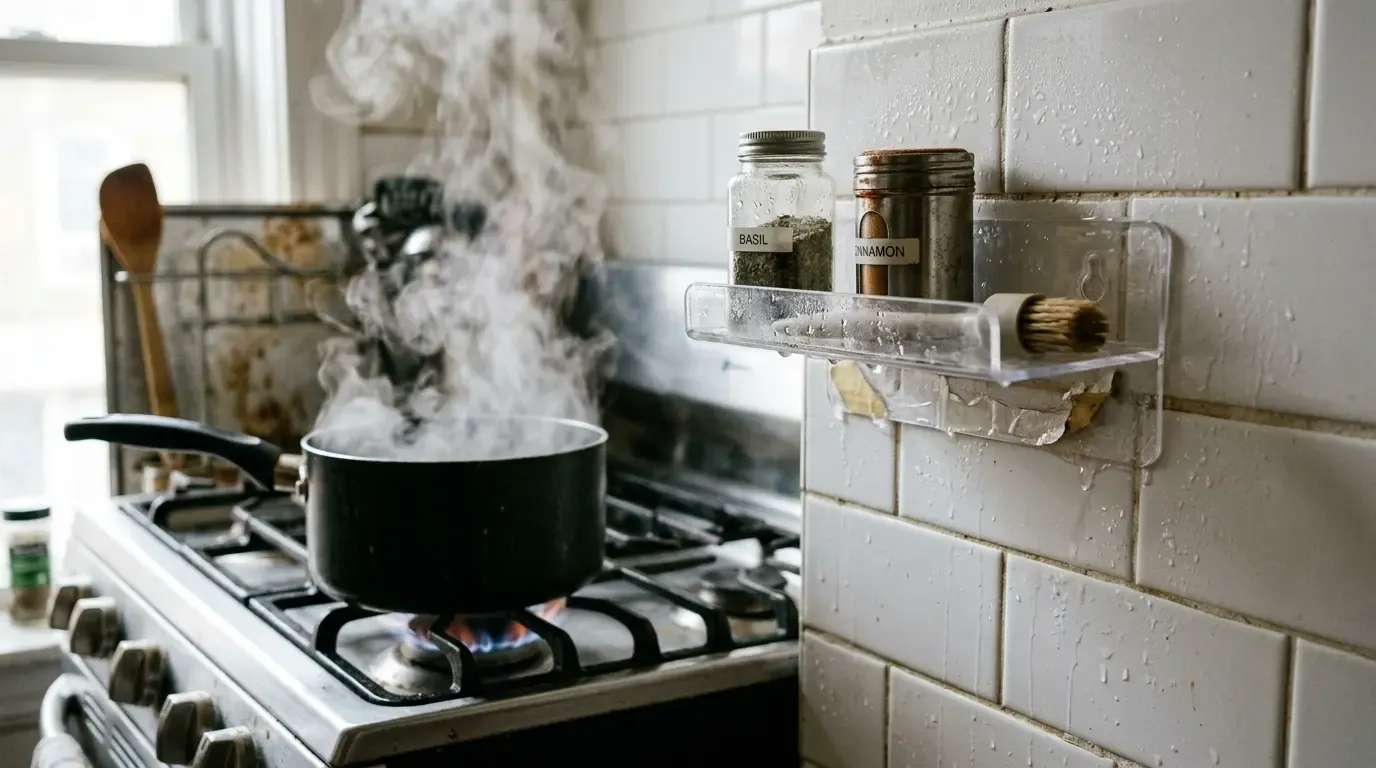
Humidity weakens the bond gradually, not suddenly. Standard Command strips are not rated for wet environments. Steam from showers or cooking loosens the molecular contact between adhesive and wall surface over time. One corner shifts. Then drops slightly. Then the whole shelf goes. Bathroom failures follow this pattern almost every time. For storage options that handle humidity better, see no-drill bathroom storage ideas for rental apartments.
Old paint layers are a hidden problem. The adhesive bonds to the surface it touches, not the structural wall behind it. In a rental with multiple coats of old paint, the strip grips a paint layer that may eventually separate from the wall beneath it. The adhesive does not fail. The surface beneath it does.
Two Things to Get Right From the Start
Rushing the cure. Most adhesive systems need 24 hours before any weight goes on them. Loading within the first hour because the shelf feels stuck stresses the bond before it has set. It is one of the most repeated patterns in no-drill storage mistakes that cause early failures and the easiest one to avoid.
Using old strips. Command packaging does not print a manufacture date. If a pack has been open for over a year, test one strip on a non-visible wall section first and check it after 24 hours before committing.
How to Make Them Last
Clean the wall with isopropyl alcohol and let it dry fully before applying. Press firmly for at least 30 seconds per strip. Wait the full 24 hours before placing anything on the shelf. Keep the load well below the rated limit.
Command Large Picture Hanging Strips (Command Large Picture Hanging Strips, 16 lbs rated across 4 pairs) installed correctly on smooth, clean, painted drywall in a dry room will hold for the length of a typical lease without issue.
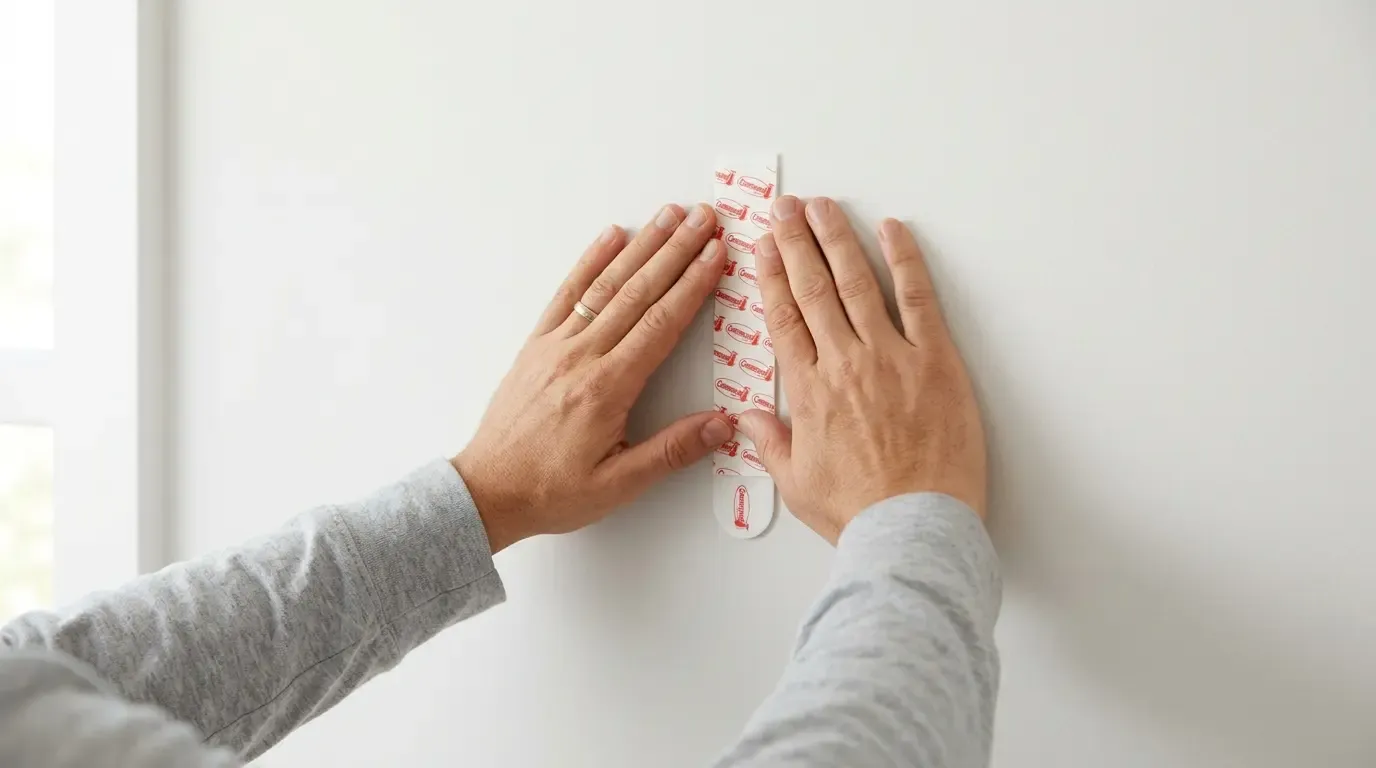
Check the shelf every few months by pressing on each corner and running a finger along the back edge where the shelf meets the wall. Any gap or pull-away is an early warning. Take it down before it falls under load. When it is time to remove, how to take down adhesive hooks and Command strips without damaging your walls walks through the full process.
When Adhesive Is the Wrong Choice
Books, kitchen gear, anything heavy and sustained: these are not adhesive shelf loads. For a complete picture of what each no-drill system can reliably carry, including freestanding and tension options, see how much weight no-drill storage can actually hold. If the load is heavy, the lifespan question is irrelevant because the system was never right for it.
Our Honest Take
On a good surface, in a dry stable room, with a load well within the rated limit, adhesive shelves last. Put them in a steamy bathroom or load them near their rated ceiling on a semi-gloss apartment wall and they do not, regardless of brand. The lifespan question is really a conditions question.
Suggested Posts
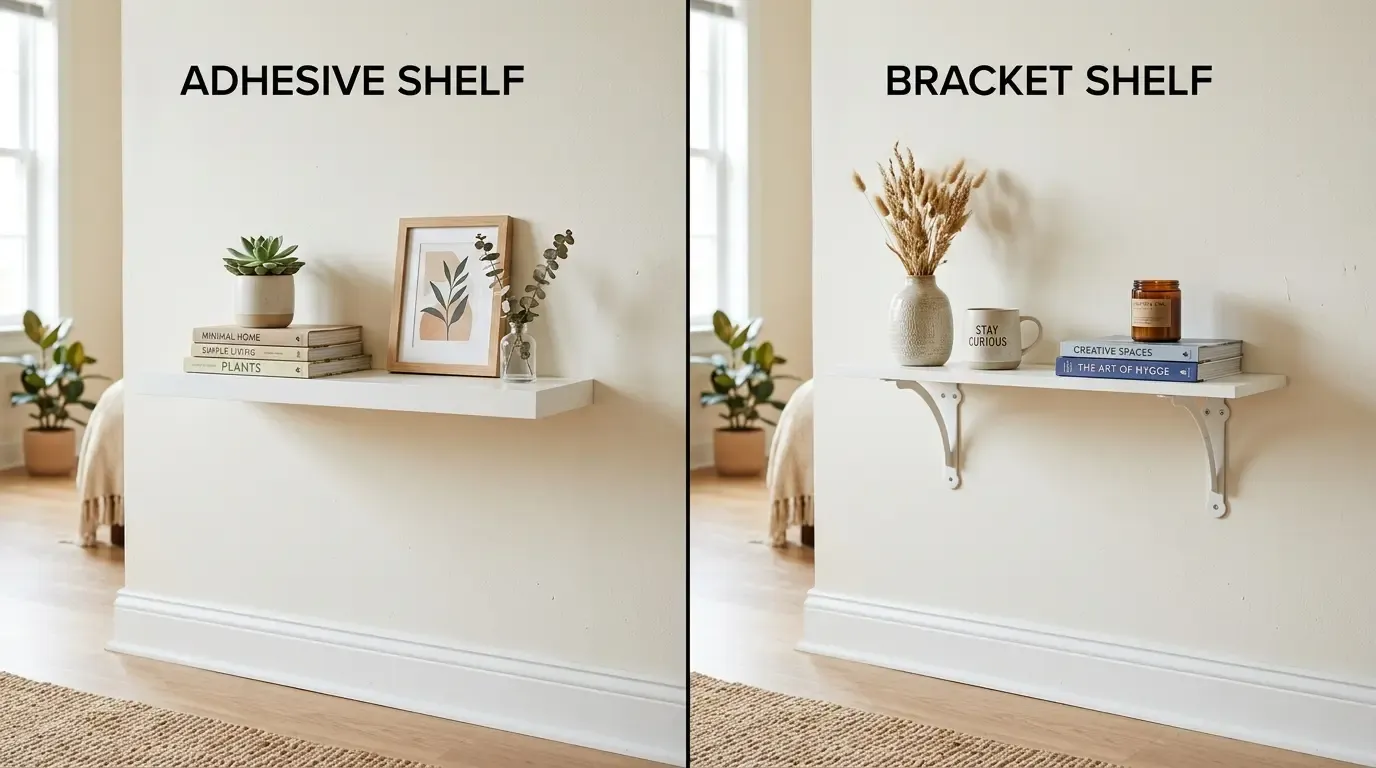 No-Drill vs Mounted Shelves for Renters
A direct comparison of no-drill and traditional mounted shelves weight capacity, surface damage, cost, and when each one makes sense for renters.
 No Drill Storage on Brick and Textured Walls
No drill storage on brick and textured walls why standard adhesive solutions fail and which approaches actually work when your rental walls are not smooth.
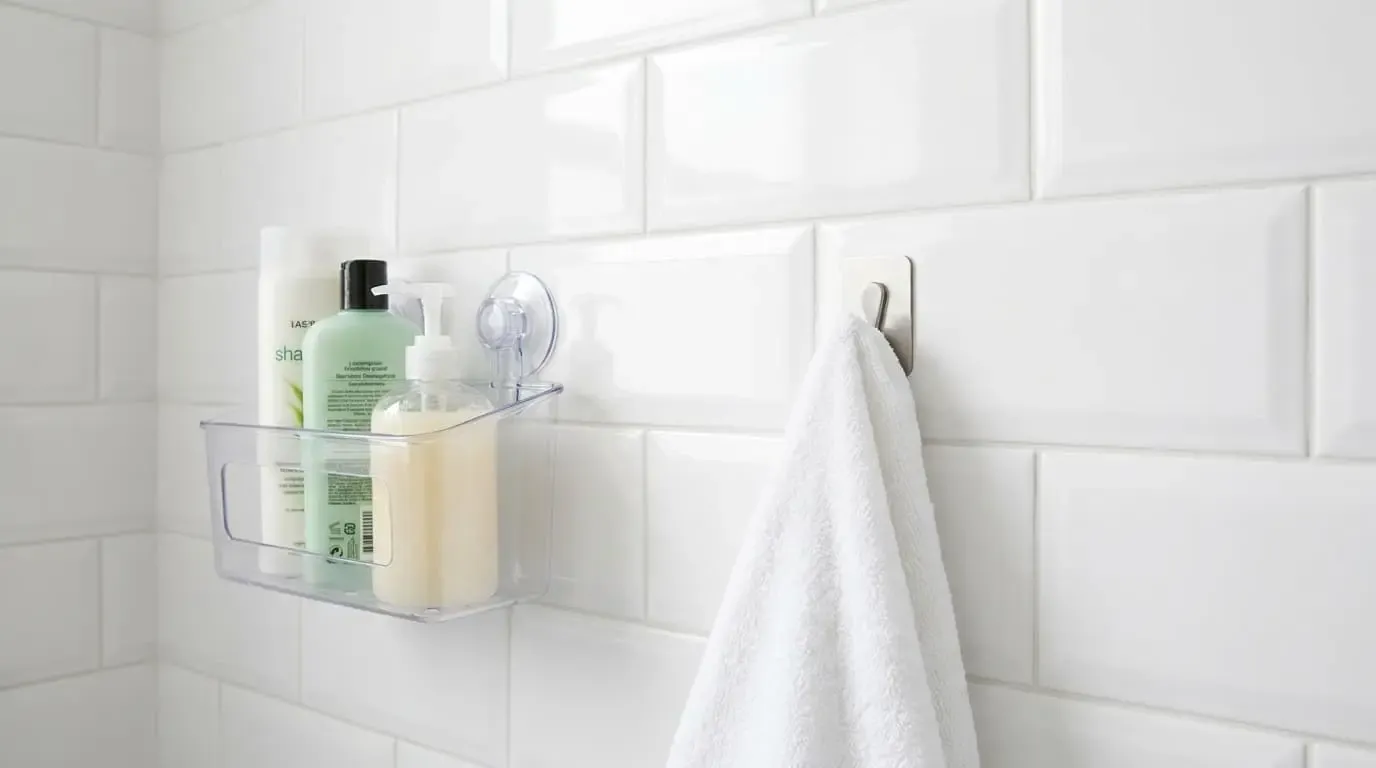 No Drill Storage on Tile Walls and What Actually Works
No drill storage on tile walls what works on glazed tile, what fails on matte and grout, and how to mount things securely without touching a drill.
Comments
No comments yet. Be the first to comment!