Renter-Friendly Solutions • 5 min read
How to Remove Adhesive Hooks and Command Strips Without Damage
 MyGlowHome Editorial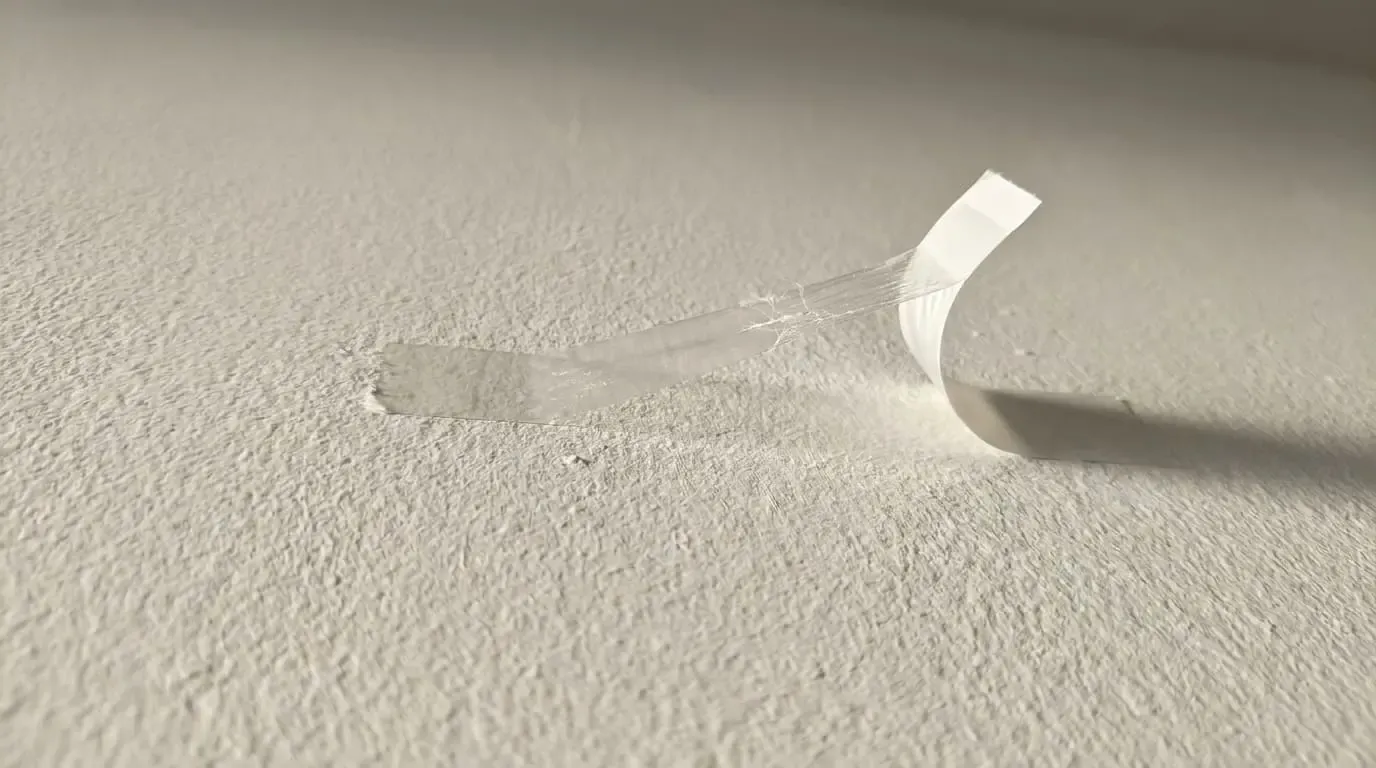
Adhesive hooks fail renters at the end of a lease more often than they fail during one. The product held fine for months. The removal is where the paint comes off the wall. That damage is almost always avoidable. The technique matters more than the product.
For how to set up the right system in the first place, see which no-drill storage system is right for your rental.
Why Adhesive Damages Walls on Removal
Most adhesive wall damage happens for one of three reasons: pulling the strip outward instead of downward, pulling too fast, or skipping the warm-up step in cold conditions.
3M Command strips are designed with a specific stretch-release mechanism. The adhesive is formulated to bond under compression and release under slow, sustained longitudinal stretch. When you pull the tab downward, parallel to the wall, the adhesive stretches and releases cleanly. When you pull it outward away from the wall the adhesive shears instead, which pulls the bond and the paint with it. Industrial adhesives like 3M VHB hold significantly more weight than Command strips, but that strength makes them much harder to remove how much weight no-drill storage can hold explains where that line sits.
This is not obvious from the product packaging, which is part of why so many renters do it wrong.
The Correct Removal Process
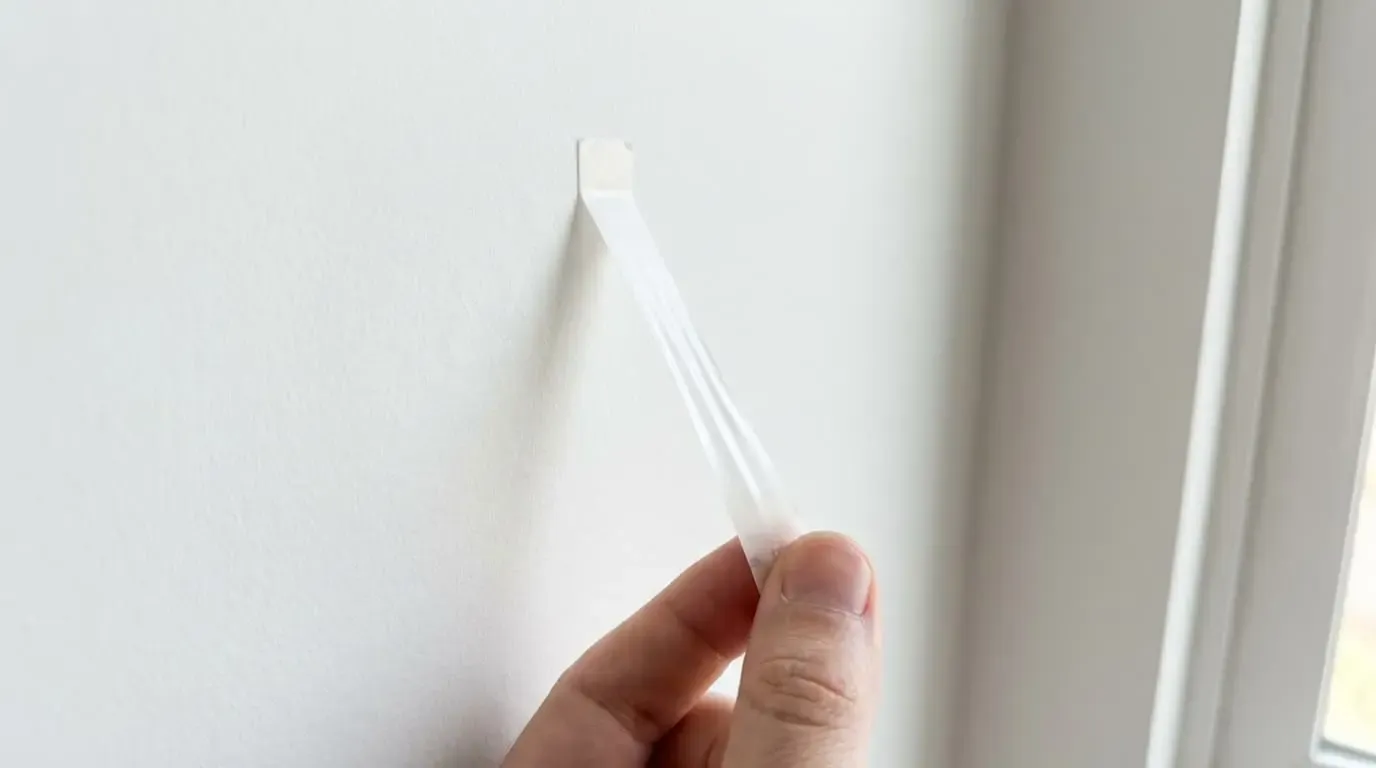
Step 1: Remove the item from the hook or strip first.
Never pull the strip while anything is loaded on it. Even a light load changes the angle of pull and increases shear force.
Step 2: Warm the adhesive.
In rooms below 65°F (18°C), the adhesive stiffens and is more likely to pull paint on removal. Hold a hair dryer 2 to 3 inches from the strip for 20 to 30 seconds on a low heat setting. This softens the adhesive without overheating it. At normal room temperature (68°F and above) this step is optional but still helps on older strips.
Step 3: Locate and pull the tab.
Command strips have a small pull tab at the bottom edge. Hold the strip backing with one hand to stabilize it against the wall and pull the tab slowly and steadily downward parallel to the wall surface, not away from it.
Step 4: Pull slowly. Do not snap.
The stretch-release mechanism requires time. A fast pull generates too much force before the adhesive has released. Pull at roughly 1 inch per second. The strip will stretch visibly as it releases. Keep pulling until it comes free typically 12 to 18 inches of stretch on a standard large strip.
Step 5: For hooks with a stabilizing base strip:
Remove the hook from the base first, then remove each adhesive strip individually using the tab-down method.
Command strips have a specific stretch-release mechanism that's easy to get wrong Command strip hacks that actually hold weight covers the installation and removal side of that system in detail.
Non-Command Adhesive Hooks: A Different Process
Not all adhesive hooks use the stretch-release mechanism. Generic adhesive hooks, foam-backed hooks, and surface-mount adhesives often need a different approach.
Adhesive Type | Removal Method |
|---|---|
3M Command stretch-release | Pull tab downward, slow and steady |
Foam-backed adhesive | Use dental floss or fishing line cut behind the foam |
Generic double-sided tape | Warm with hair dryer, then use fishing line or a plastic card |
Industrial-strength adhesive (Gorilla, 3M VHB) | Solvent required see below |
For foam-backed and tape adhesives, the floss-cut method works reliably: slide a length of dental floss or thin fishing line behind the adhesive mount and use a gentle sawing motion to cut through the bond layer. Work from one side to the other. The adhesive releases from the wall without pulling surface material. Do not use a metal putty knife or a blade to pry adhesive hooks off a painted wall. The tool edge will gouge the paint and drywall regardless of how careful you are. The type of adhesive hook you used during your tenancy affects how it needs to come down strongest adhesive hooks for renters covers the categories and their backing types.
Tile surfaces are particularly vulnerable to damage during adhesive removal no-drill storage on tile walls covers the specific removal risks on glazed ceramic and porcelain.
If It Is Stuck and Will Not Budge
For very old strips, high-humidity installs, or heavy-duty adhesives that have hardened over time:
Isopropyl alcohol (70% or higher): Apply with a cotton ball around the edges of the adhesive base and let it sit for 2 minutes. The alcohol breaks down most adhesive bonds without damaging latex paint underneath. Test on a hidden area first if the paint is flat or matte.
Goo Gone: Works on stubborn adhesive residue after the hook body has been removed. Apply, wait 3 to 5 minutes, and wipe with a clean cloth. Rinse the area with warm water afterward. Safe on most painted walls; do not use on raw wood or unfinished surfaces.
WD-40: A last resort. It works on adhesive residue but leaves an oil film that requires degreasing before any paint touch-up.
Handling the Residue
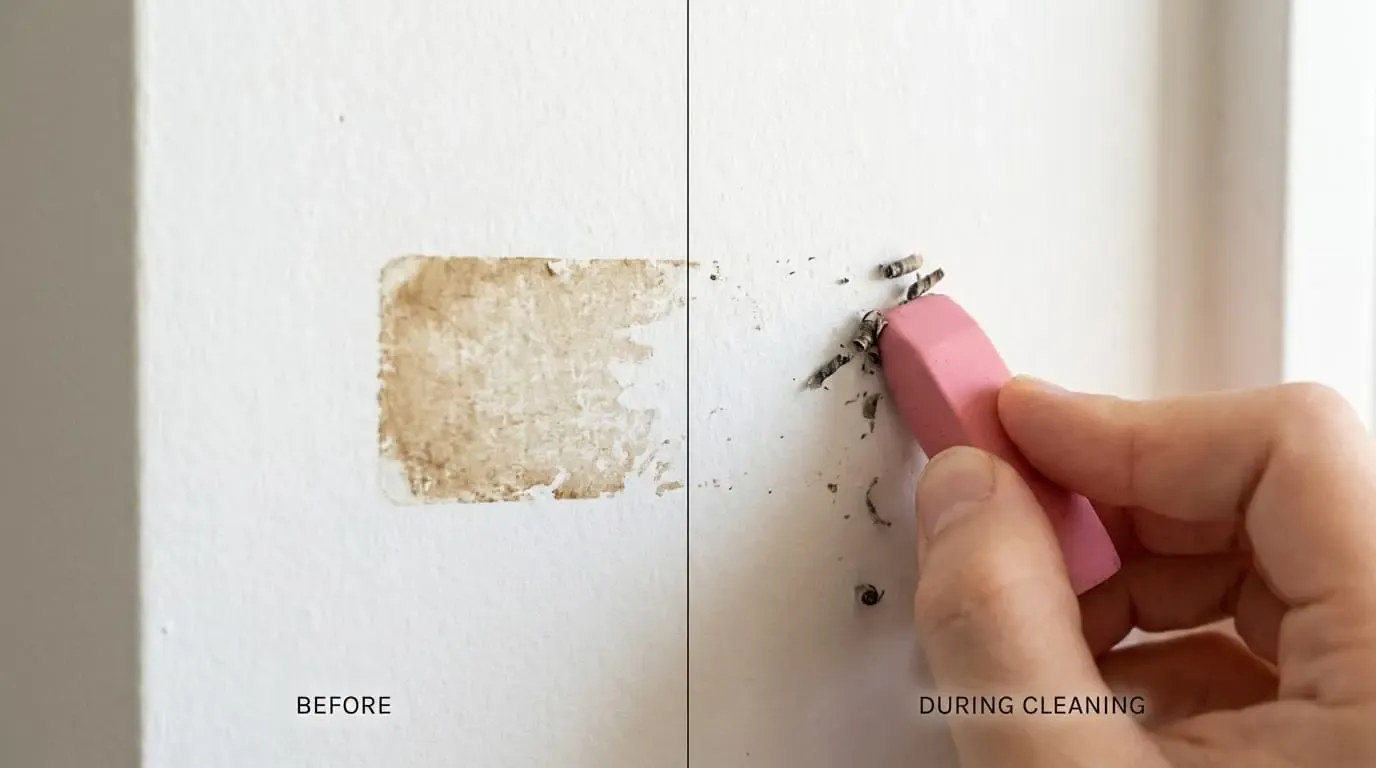
Once the hook or strip is off, there is often a residue patch. It looks worse than it is.
For Command strip residue: rub gently with a clean cloth or the rubber eraser on a pencil. The residue balls up and peels away. Do not use an abrasive pad it will scuff the paint finish.
For other adhesive residue: Goo Gone applied with a cotton ball, left for 3 minutes, and wiped clean handles most cases.
If the residue has discoloured the paint or left a faint rectangle: a slightly damp Magic Eraser on the area, very light pressure. This removes surface discoloration without removing paint in most cases. Heavy pressure will dull the paint finish.
If Paint Does Come Off
If a small amount of paint comes off despite a correct removal, it is typically fixable without repainting the whole wall.
Match the paint colour as closely as possible many landlords have leftover wall paint, and it is worth asking before buying a new can. Apply with a small touch-up brush in thin coats, feathering the edges. Let each coat dry fully before assessing whether another is needed.
For damage wider than 2 inches, a proper repair involves a light spackle fill, sanding when dry, and then painting. A patch that is properly repaired and matched is not chargeable in most jurisdictions it is considered normal wear and tear if done correctly.
Two Mistakes That Cause Most Adhesive Wall Damage
Pulling the hook and strip off together as a unit. When you pull the loaded hook body away from the wall, you pull the adhesive outward rather than stretching it downward. This shears the bond and takes paint with it. Always remove the hook from the strip first, then remove the strip separately.
Removing in cold weather without warming the adhesive. Adhesive that has been on a wall through a winter, in a rental with inconsistent heating, can be significantly stiffer than normal. Renters who skip the warm-up step and pull hard to compensate generate exactly the kind of force that pulls paint. Twenty seconds with a hair dryer removes this risk entirely.
Suggested Posts
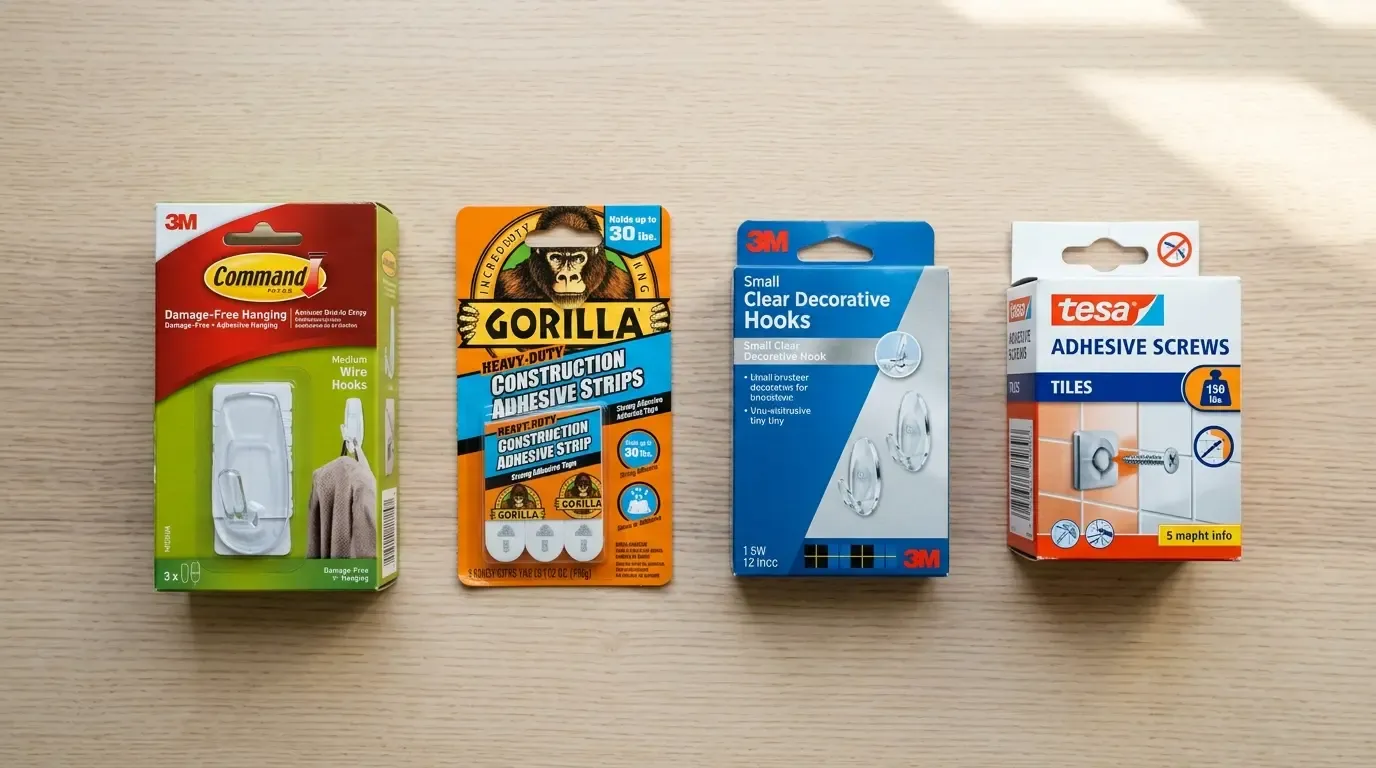 Best Adhesive Shelf Brands
A brand-by-brand ranking of adhesive shelving systems based on real weight performance, surface compatibility, and removal reliability for renters.
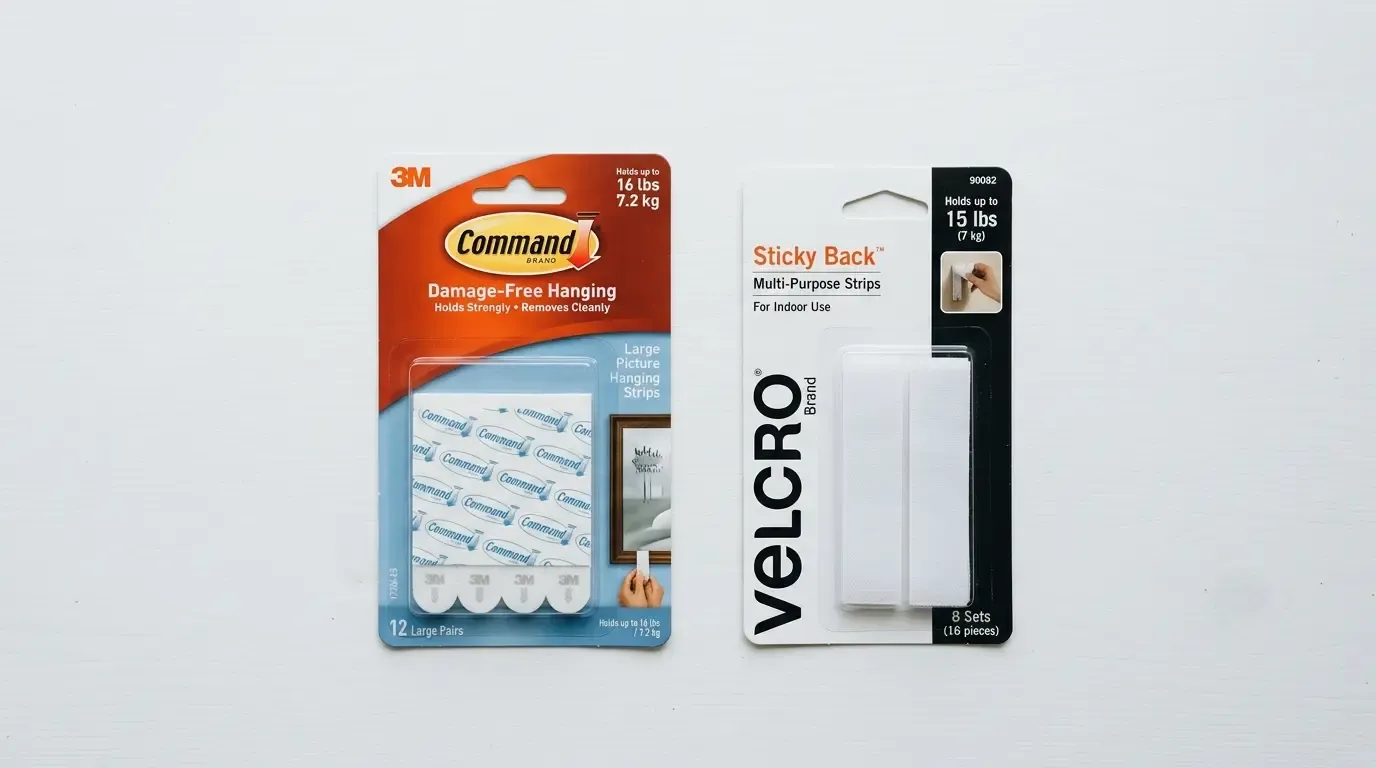 Command Strips vs Velcro Strips for Shelves
A direct comparison of Command strips and Velcro strips for shelf mounting covering load limits, surface behavior, and which one holds in real rental conditions.
 No Drill Book Shelves That Hold the Weight
Why adhesive shelves fail under books and which no-drill systems are actually built for the load.
Comments
No comments yet. Be the first to comment!