Renter-Friendly Solutions • 5 min read
No Drill Shelves Between Studs: What Works
 MyGlowHome Editorial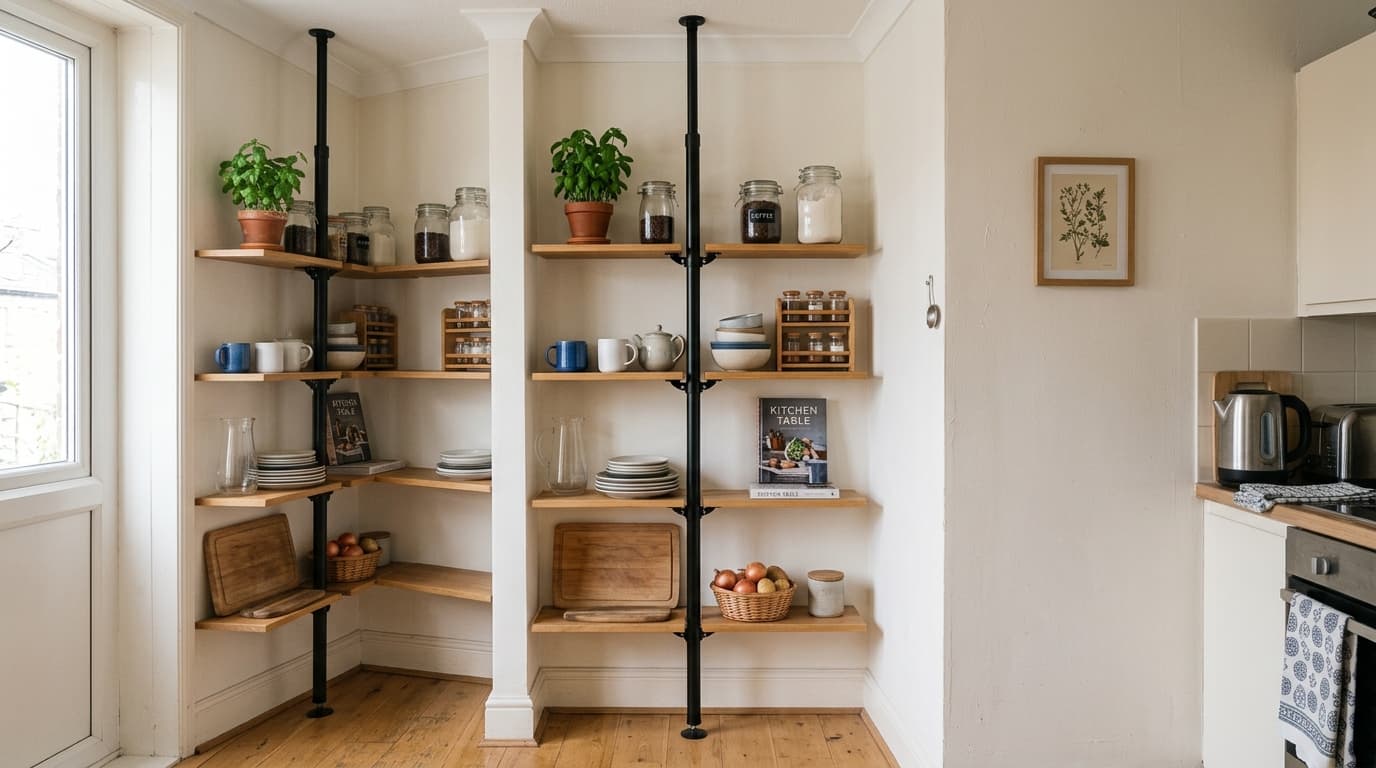
No Drill Shelves Between Studs: What Actually Holds
The standard advice is to find a stud. The problem is that the wall space where you actually need storage is almost always between them. A kitchen wall, a narrow bathroom stretch, the section beside a window: none of these cooperate with stud spacing. In a rental where drilling is not an option, the question becomes what you can actually do with that empty stretch of drywall.
The answer depends entirely on how much weight you need to hold. For a full breakdown of how each no-drill system type handles different loads and surfaces, see which no-drill storage system is right for your rental.
Why Stud Location Mostly Does Not Matter Here
Studs are the vertical framing members inside your walls, typically spaced 16 inches apart. A screw driven into a stud grips solid wood, which is why stud-mounted shelves handle serious loads. Drywall itself is gypsum board, usually half an inch thick, with no structural load-bearing capacity on its own.
For no-drill shelves, stud location is largely irrelevant because you are not anchoring into the wall at all. Adhesive systems bond to the painted drywall surface regardless of what is behind it. Freestanding and tension systems never involve the wall structurally. The between-studs problem only applies to systems that need a mechanical wall connection. No-drill systems sidestep that entirely.
What Holds on Drywall Without Studs
System | Real-World Capacity | Best For |
|---|---|---|
Adhesive strips (Command Large, 4 pairs) | 10 to 14 lbs in practice | Light decor, frames, small plants |
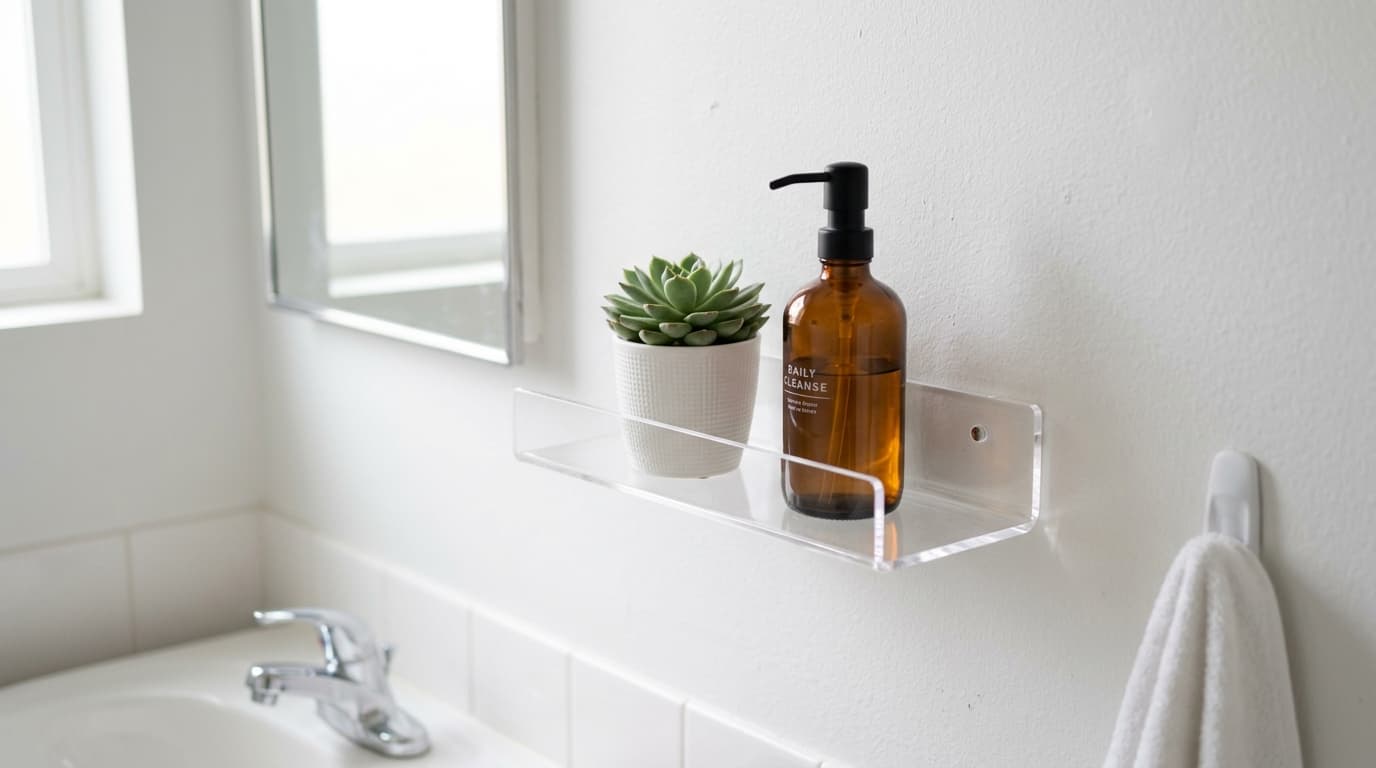
Adhesive shelf (OAPRIRE 12 inch) | 7 lbs per shelf | Small bathroom or bedroom display items |
Tension pole system | 30 to 40 lbs per shelf | Functional storage, closets, kitchen items |
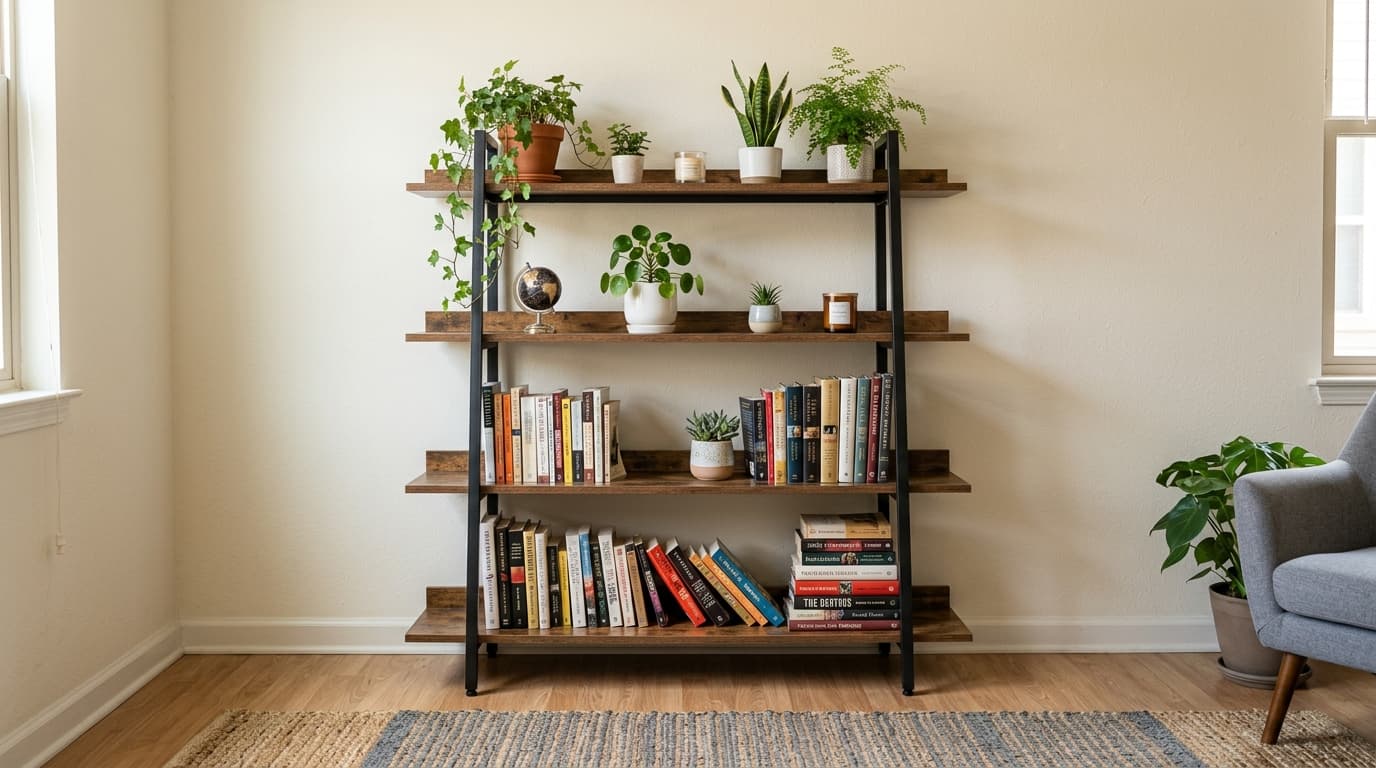
Freestanding unit (VASAGLE ULLS45BF) | 11 lbs per shelf, 110 lbs total | Heavy storage, books, all loads |
Over-door organizer |
The Options in Practice
Adhesive strips bond to the painted drywall surface and need no stud because they are not anchoring into the wall. Large Command strips hold up to 16 lbs across four pairs under ideal conditions. On a typical apartment wall, expect 10 to 14 lbs reliably. Clean with isopropyl alcohol, press firmly, wait 24 hours before loading. The failures that happen before that point are covered in no-drill storage mistakes that cause shelves to fall.
OAPRIRE Acrylic Floating Wall Shelves (OAPRIRE, 7 lbs per shelf at 12 inches) are purpose-built for this use case. Honest load rating, clean adhesive removal, straightforward install.
Tension pole systems press between floor and ceiling and transfer all load straight downward. No wall adhesion, no stud location, no surface compatibility concern. Standard tension systems hold 30 to 40 lbs per shelf and work especially well in closets, corners, and narrow spaces where a freestanding unit would take too much floor area. For room-specific setup ideas using tension poles, see the best no-drill storage setup for each room in a rental.
Freestanding shelving is the load ceiling of any no-drill approach. The VASAGLE 5-Tier Ladder Shelf (ULLS45BF, 11 lbs per shelf, 110 lbs total) holds entirely independently of wall or stud location. No adhesive, no surface concern.
Over-door organizers use the door rather than the wall, which makes stud location entirely irrelevant. Worth considering for lightweight storage where door access is convenient: cleaning supplies, pantry items, bathroom products. For the best over-door picks for rentals, see best over-the-door organizers for renters.
Where This Falls Short
If you need to hold significant weight from a wall-mounted shelf between studs and cannot drill, adhesive systems have a ceiling that freestanding and tension options do not. A foot of hardcover books weighs 12 to 15 lbs. Two feet is 24 to 30 lbs before accounting for the shelf itself. That is past the reliable limit of any adhesive system on a typical rental wall. For the full verified weight picture, see how much weight no-drill storage can actually hold.
For book storage specifically, a freestanding unit or tension system is the right answer. Trying to carry that load on adhesive strips between studs is asking the system to do something it was not built for.
A Note on the Floating Shelf Look
Freestanding and tension systems do not create the clean floating aesthetic. If the visual matters, a leaning shelf placed close to the wall and styled intentionally reads more like decor than storage furniture. For genuinely lightweight display shelves, adhesive options look identical to any other mounted shelf. The constraint is load, not location.
What Actually Works
For light decor and display: adhesive strips or an OAPRIRE shelf on properly prepped drywall. For anything heavier: tension pole or freestanding. The stud question drops out of the equation the moment you stop using systems that need a wall connection.
Suggested Posts
 No Drill Shelves on Plaster Walls
What works on plaster walls, what to test before committing, and which systems skip the wall entirely.
 No Drill Shelf Sagging: How to Fix It
Why no drill shelves sag and the practical steps that prevent it from the first install.
 How Long Do Adhesive Shelves Last
on heat, humidity, and surface conditions. Short Description: What actually determines adhesive shelf lifespan and how to get the most out of them.
Comments
No comments yet. Be the first to comment!