Renter-Friendly Solutions • 9 min read
Strongest Adhesive Hooks for Renters
 MyGlowHome Editorial
Why “Strongest” Is the Wrong Question Most of the Time
Most renters search for the strongest adhesive hooks expecting a simple answer. In reality, strength is not a single product feature it is a combination of surface condition, load type, and installation quality.
Many hooks fail not because they are weak, but because they are used outside their actual working conditions. This gap between expectation and real-world performance is where most frustration comes from.
If you want a broader breakdown of renter-safe hook types and for a full comparison of all no-drill systems, see which no-drill storage system is right for your rental.
How Adhesive Hooks Actually Behave in Real Homes
Adhesive hooks work through surface bonding, not structural support. That means their performance changes significantly depending on:
- Wall texture
- Moisture levels
- Weight distribution
- Time allowed for bonding
Instead of focusing only on marketing claims, it’s more useful to understand how different categories behave in practice.
Category 1: General Heavy-Duty Adhesive Hooks
These are the most common multi-purpose hooks found in most households.
Best practical use:
- Kitchen utensils
- Lightweight bags
- Bathroom accessories
A versatile renter-friendly option for organizing lightweight items is heavy-duty adhesive hooks designed for smooth surfaces where drilling isn’t possible while still supporting daily-use essentials.
What works well:
- Easy installation
- Widely available
- Suitable for light-to-medium everyday loads
Where they struggle:
- Overloaded use cases
- Rough or dusty wall surfaces
Category 2: Transparent Low-Profile Hooks
These hooks prioritize appearance over load capacity.
Best practical use:
- Minimal décor setups
- Lightweight decorative items
- Temporary arrangements in rentals
A discreet option for light organization is transparent adhesive hooks designed to blend into walls while holding small everyday items without drilling or visible hardware.
What works well:
- Visually clean installation
- Blends into modern interiors
Where they struggle:
- Lower tolerance for stress or repeated pulling
- Not suitable for functional storage loads
Category 3: Command Strips and Adhesive Tabs
These are premium adhesive-based fastening systems specifically engineered for damage-free removal and repositioning.
Best practical use:
- Wall hangings and lightweight frames
- Small shelves and ledges
- Picture organization
- Cord management
A reliable premium option for renter-safe installation is Command Strips specifically designed with 3M adhesive technology to remove cleanly without wall damage or residue, making them ideal for renters who want guaranteed wall safety.
What works well:
- Engineered specifically for damage-free removal
- Strong initial bond that's reliable in normal conditions
- Works on most wall surfaces including painted drywall
- Reusable tabs available for repositioning
- Tested and proven performance across millions of applications
Where they still fall short:
- Higher cost compared to standard adhesive hooks
- Not suitable for heavy or long-term loads
- Performance degrades on textured or moisture-prone surfaces
- Removal strips must be angled slowly to prevent wall damage
Command Strips differ from general adhesive hooks in that they are explicitly designed for removal without leaving residue a critical distinction for renters with security deposits on the line. However, this removal capability does not increase their weight capacity, and they should still be used within the manufacturer's specified load limits. If you're specifically using Command products, Command strip hacks that actually hold weight goes deeper on how to get reliable results from that system.
What Actually Determines Performance
Instead of comparing hooks only by category, real performance depends on three overlooked factors:
1. Surface Preparation
Clean, dry surfaces significantly increase bonding strength, while dust or moisture can reduce effectiveness immediately.
2. Load Behaviour
Static weight (hanging still objects) performs better than dynamic load (frequent pulling or movement).
3. Installation Timing
Hooks that are used immediately after installation often fail earlier due to incomplete bonding.
Real Use Scenarios
Kitchen Setup
Used for utensils, small tools, and lightweight storage items on smooth tile surfaces.
Bathroom Organization
Works for towels and lightweight containers when installed on clean, non-porous walls.
Entryway Storage
Suitable for keys, light bags, and everyday grab-and-go items.
Common Failure Patterns in Real Homes
Instead of labelling these as mistakes, it is more accurate to view them as failure patterns:
Pattern 1: Overestimating Load Capacity
Users rely on maximum advertised weight instead of safe working load.
Pattern 2: Ignoring Wall Conditions
Even strong hooks underperform on textured or damp surfaces.
Pattern 3: Concentrated Stress Points
Single-hook loading leads to premature failure under repeated use.
Most adhesive failures follow predictable patterns no-drill storage mistakes that cause shelves to fall breaks down the most common ones so you can avoid them upfront.
Better Approach: Distributed Load Design
Rather than relying on one hook, distributing weight across multiple hooks creates a more stable system. This approach is commonly used in real apartment setups where durability matters more than single-point strength.
How to Choose the Right Hook
- Under 0.5 lbs (keys, remotes, small cables): Small Command hooks
- 0.5–3 lbs (utensils, small bags, bathroom accessories): Medium Command hooks or transparent hooks
- 3–7 lbs (coats, heavier bags, kitchen tools): Large or Jumbo Command hooks on smooth painted walls only
- Over 7 lbs (backpacks, dog leashes, bulkier items): XL Heavyweight hooks and verify your wall surface is smooth before installing
Each category solves a different type of problem and should not be treated interchangeably, see how much weight no-drill storage can hold for detailed actual working limits by hook type and surface.
Command Strip Weight Limits: What the Numbers Actually Mean
Most adhesive hook posts never give you actual numbers. Here are the verified 3M published limits for Command hooks under ideal conditions on smooth, clean, painted drywall:
Hook Size | Rated Limit | Practical Working Limit |
|---|---|---|
Small | 0.5 lb | Light keys, small cables |
Medium | 3 lbs | Mugs, small bags, utensils |
Large | 5 lbs | Bags, light coats, tools |
Jumbo | 7.5 lbs | Heavier bags, dog leashes |
XL Heavyweight | 10–15 lbs |
Important: These are manufacturer maximums under ideal lab conditions. Apply a 60–70% safety rule for real rental use textured walls, humidity, and repeated loading all reduce effective capacity. A Large hook rated at 5 lbs should carry no more than 3 lbs reliably in most rental apartments.
The right hook is the one matched to the actual weight of the item you're hanging, not the highest-rated hook you can find.
Final Insight
Choosing the right no-drill hook is less about chasing the highest weight rating and more about understanding how each system behaves in real conditions. Adhesive hooks, rod-mounted hooks, suction systems, and magnetic hooks all solve different problems and none of them are interchangeable.
In practice, the most reliable setups come from combining the right hook type with the right surface, load, and environment. When that alignment exists, no-drill hooks can handle everyday storage surprisingly well. When it doesn’t, even the most heavily marketed options will fail quickly. The goal is not to find the strongest hook it’s to build a setup that works consistently in your specific space.
When you're ready to move out, removing adhesive hooks incorrectly is the fastest way to lose your deposit how to remove adhesive hooks without damage covers the right process.
Suggested Posts
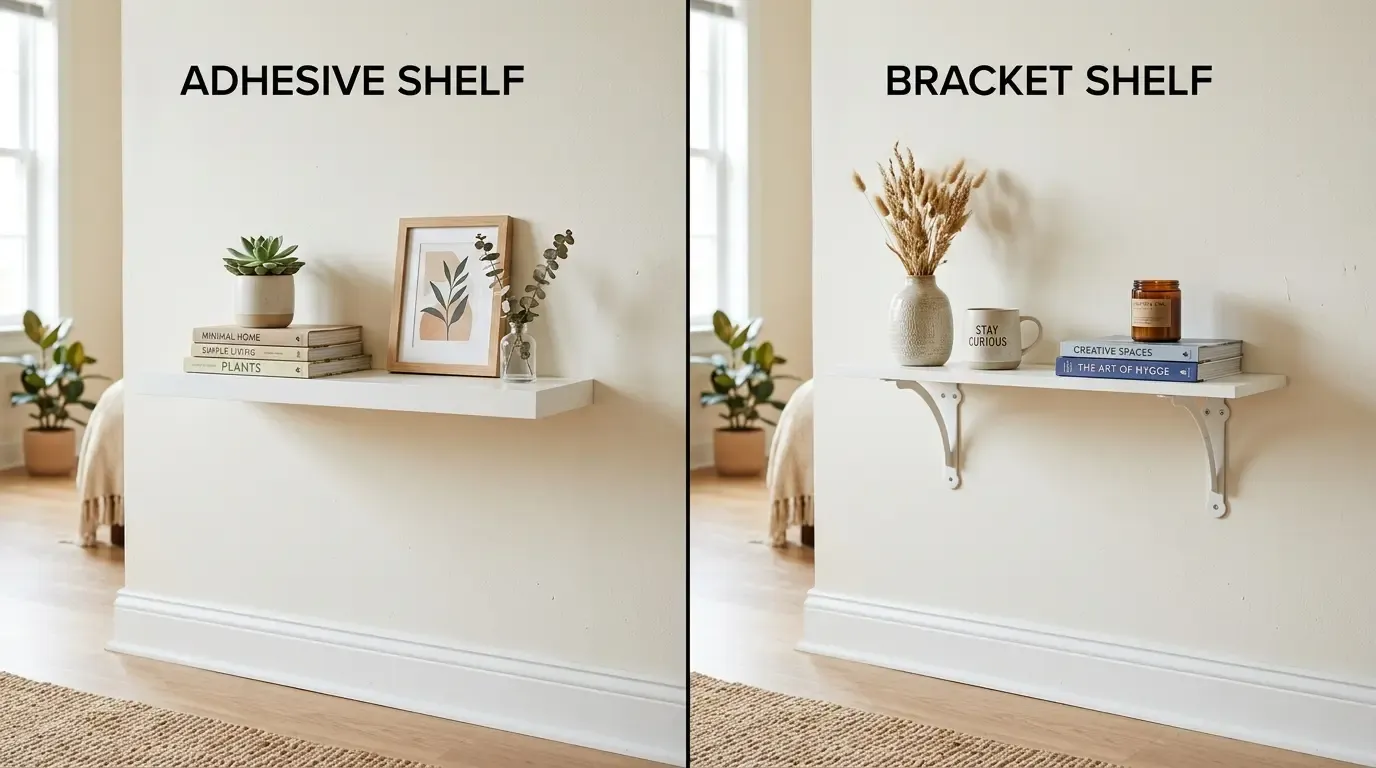 No-Drill vs Mounted Shelves for Renters
A direct comparison of no-drill and traditional mounted shelves weight capacity, surface damage, cost, and when each one makes sense for renters.
 No Drill Storage on Brick and Textured Walls
No drill storage on brick and textured walls why standard adhesive solutions fail and which approaches actually work when your rental walls are not smooth.
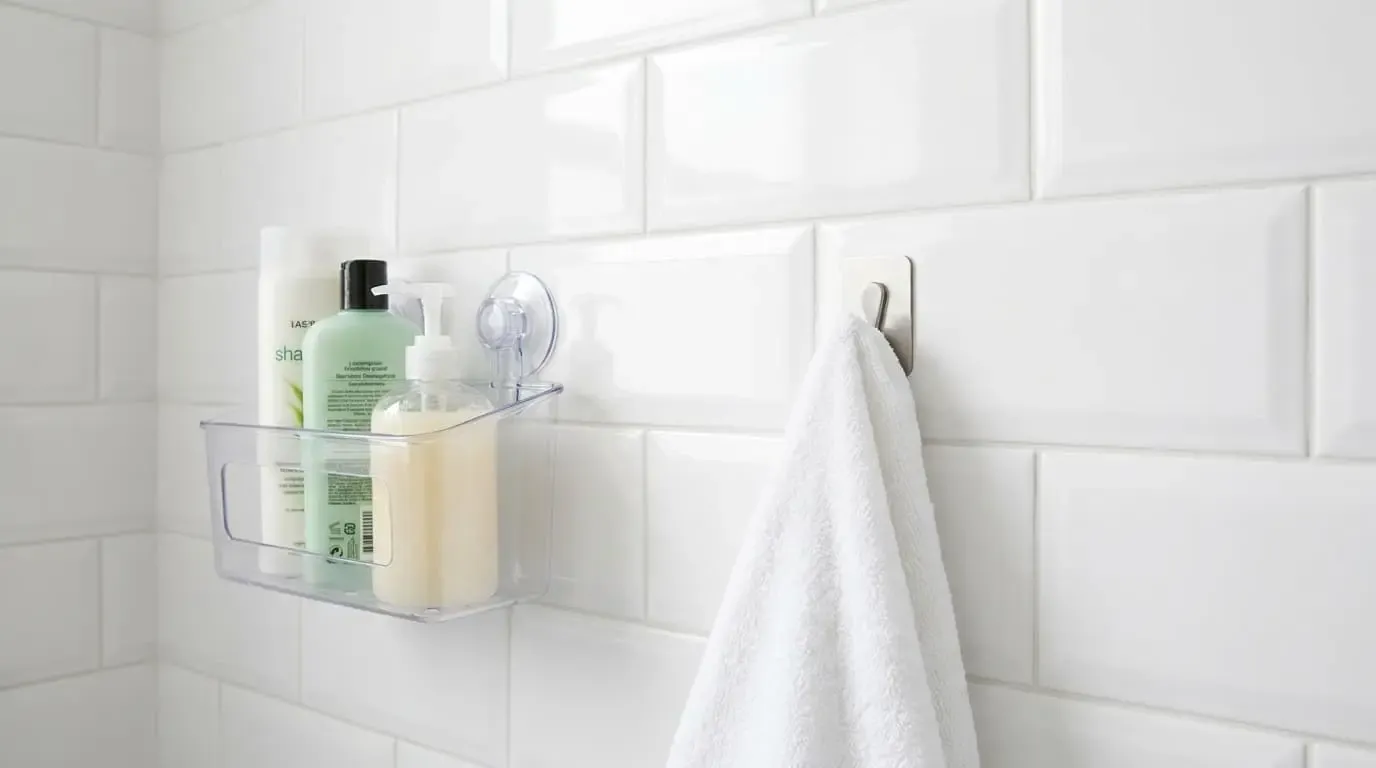 No Drill Storage on Tile Walls and What Actually Works
No drill storage on tile walls what works on glazed tile, what fails on matte and grout, and how to mount things securely without touching a drill.
Comments
No comments yet. Be the first to comment!